HGH 191AA vs. HGH Fragment 176–191: Structure, Signaling, and Research Evidence.
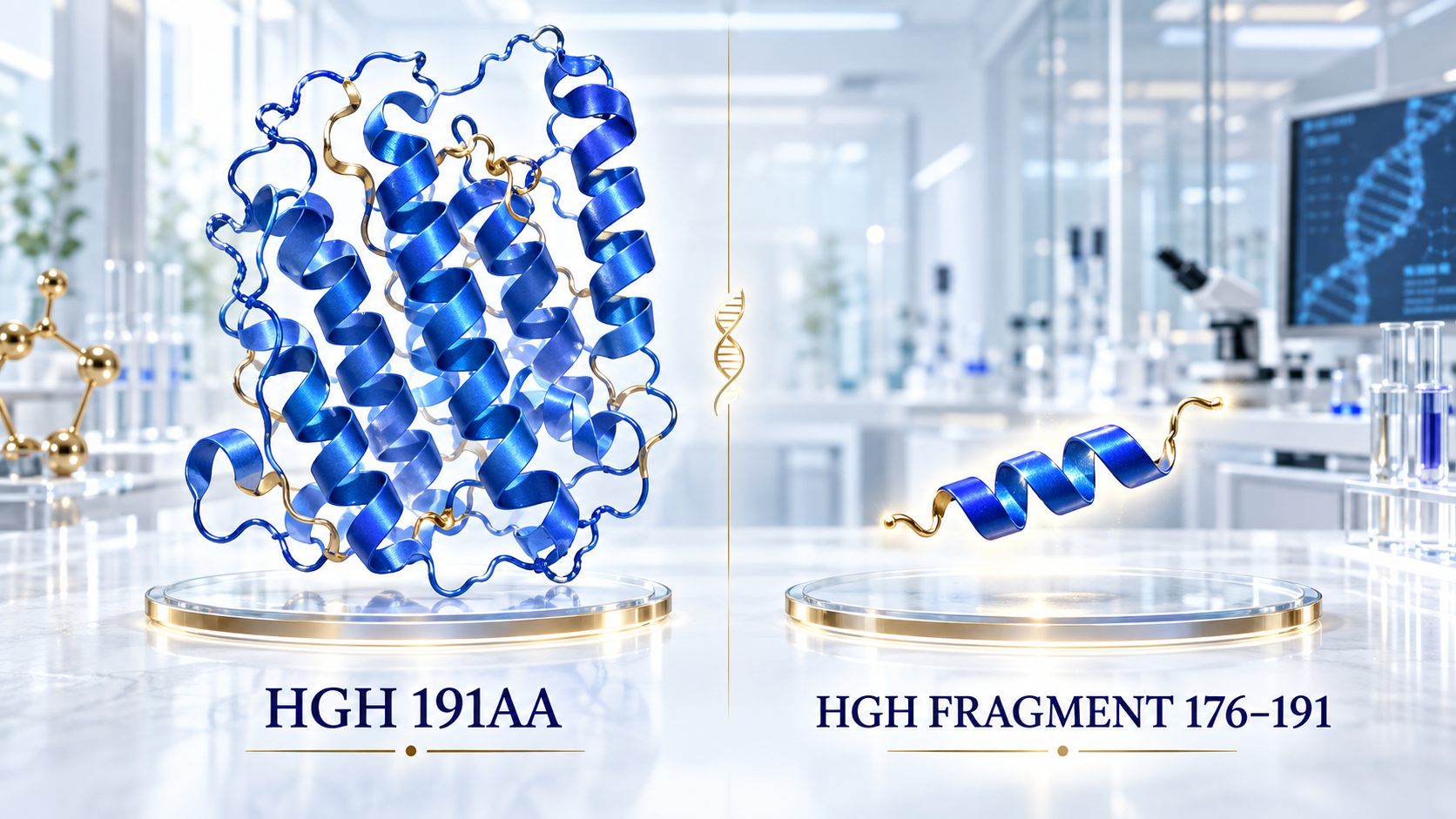
HGH 191AA vs. HGH Fragment 176–191
Human growth hormone and its C-terminal fragments are often discussed together because they share part of the same amino-acid sequence. That structural relationship, however, does not make them biologically equivalent.
HGH 191AA is the full-length, 191-amino-acid form of human growth hormone. Its three-dimensional structure supports binding to the growth hormone receptor (GHR), initiating canonical intracellular signaling across multiple tissues.
HGH Fragment 176–191 contains only the final 16 amino acids of that sequence. It represents a small C-terminal region of the parent molecule and has been studied primarily in relation to lipid-metabolism models. Removing most of the original protein also removes the complete structural framework required for conventional HGH receptor activity.
This article compares the two compounds as research materials. It does not provide dosing, administration, treatment, or medical guidance.
INSERT IMAGE 1 — Hero comparison
Caption: Full-length HGH 191AA and the isolated C-terminal HGH Fragment 176–191 are structurally related but functionally distinct research compounds.
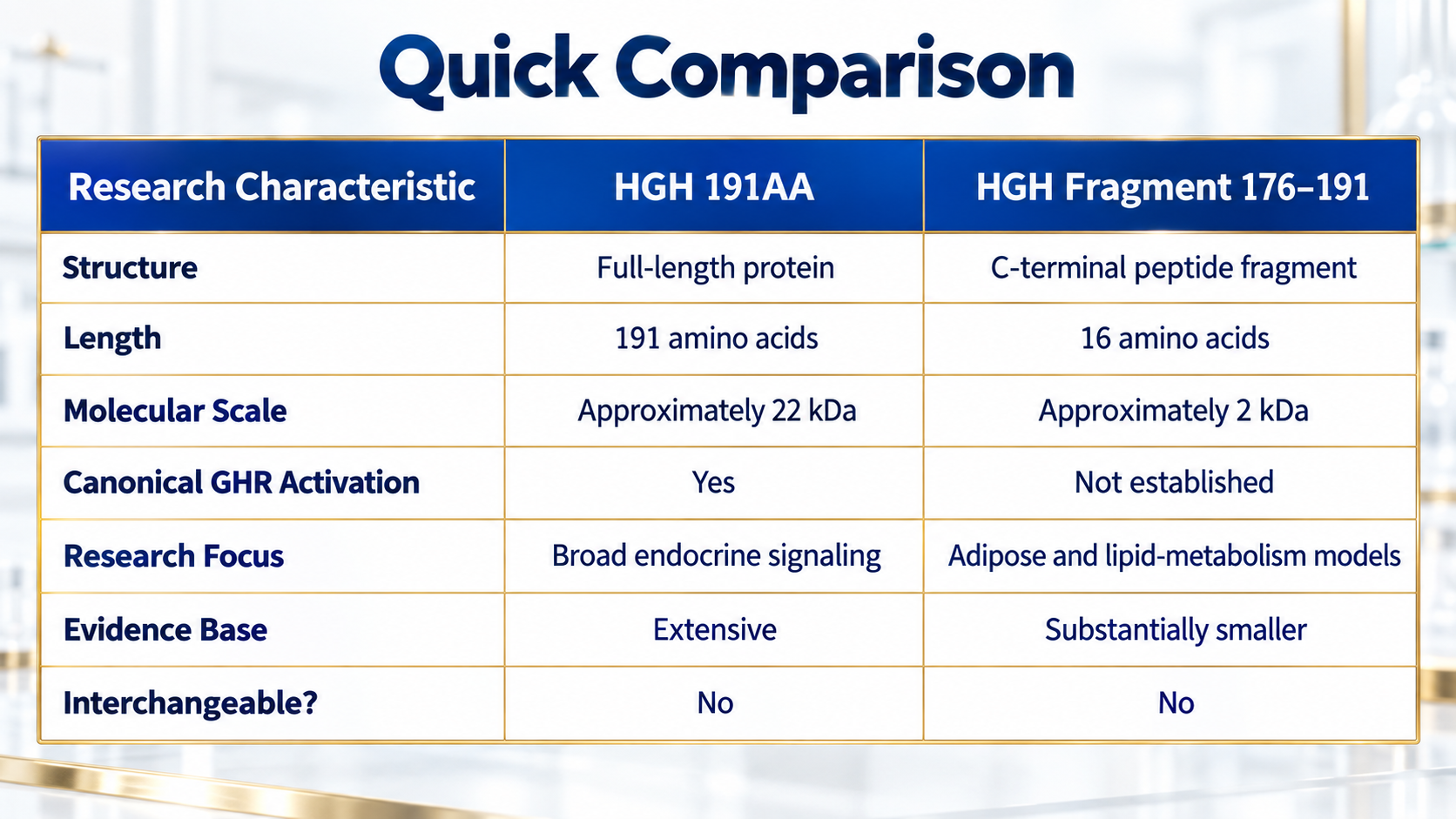
1. The Structural Difference: A Complete Protein vs. a Short Fragment
The major form of human growth hormone is a single-chain protein containing 191 amino acids and two disulfide bridges. Its biological activity depends not only on its amino-acid sequence but also on the way the complete chain folds into a specific three-dimensional structure.
HGH Fragment 176–191 represents residues 176 through 191 at the C-terminal end of the parent protein. It therefore contains only 16 of the 191 residues present in full-length HGH.
This distinction is fundamental. A peptide fragment may preserve a sequence found within a larger protein without reproducing the full protein’s receptor binding, conformation, pharmacology, or systemic signaling profile.
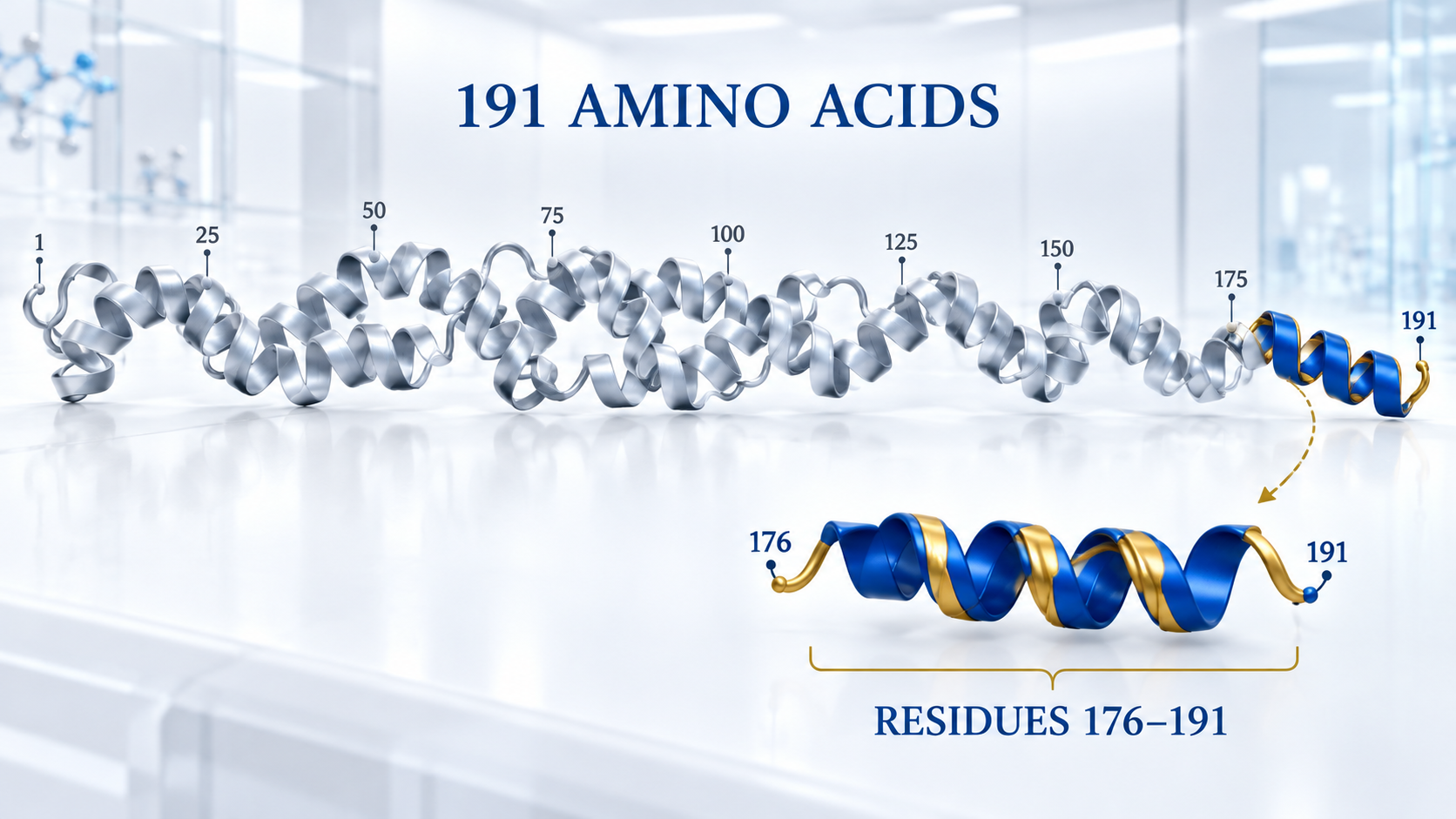
Caption: HGH Fragment 176–191 corresponds to the final 16 residues of the full 191-amino-acid HGH sequence.
2. HGH 191AA and Canonical Growth Hormone Receptor Signaling
Full-length HGH binds the growth hormone receptor, a class I cytokine receptor expressed in multiple tissues. Receptor engagement reorganizes the receptor complex and activates associated Janus kinase 2 (JAK2).
JAK2 activation produces phosphorylation events that recruit downstream signaling proteins, particularly STAT5. Activated STAT proteins enter the nucleus and regulate gene transcription. HGH can also influence MAPK/ERK and PI3K/AKT-associated signaling, depending on tissue and experimental context.
One important downstream response is hepatic regulation of insulin-like growth factor 1 (IGF-1). HGH biology is therefore broader than a single metabolic pathway: the complete protein participates in an interconnected endocrine network involving growth, substrate metabolism, tissue-specific signaling, and feedback regulation.
3. Why the Fragment Does Not Behave Like Full-Length HGH
The short C-terminal fragment does not preserve the complete receptor-binding surface or folded architecture of the 191-amino-acid protein. It should not be described as a miniature version of HGH that simply produces a weaker form of every HGH effect.
Published preclinical work on AOD-9604—a related C-terminal analog—reported metabolic activity in animal models without detectable interaction with the human growth hormone receptor. This supports the concept that experimental effects attributed to this region may occur outside canonical GHR signaling.
The exact receptor or complete molecular pathway responsible for all reported fragment-associated observations has not been definitively established. Claims that a specific non-GHR pathway is conclusively proven should therefore be treated cautiously.
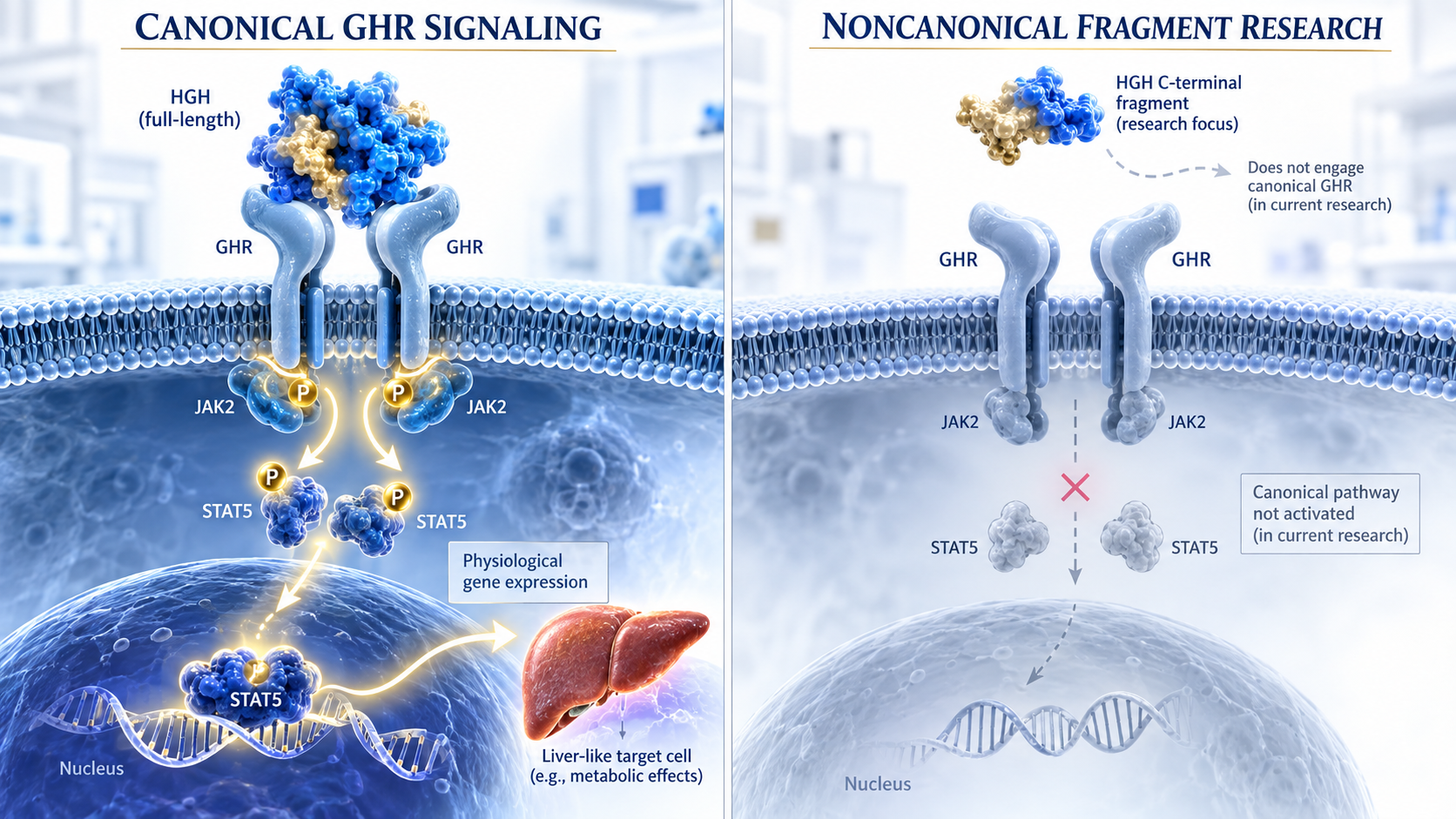
Full-length HGH activates canonical GHR–JAK2–STAT5 signaling. Current fragment research does not demonstrate equivalent activation of this pathway.
4. Broad Endocrine Signaling vs. Focused Metabolic Research
Because HGH 191AA engages GHR, it has been investigated across many biological systems, including liver, adipose tissue, skeletal muscle, bone, and growth-related physiology. Its effects vary by dose, exposure, tissue, nutritional state, and experimental model.
Research on the C-terminal fragment family has focused more narrowly on adipose biology, lipolysis, lipogenesis, beta-adrenergic responsiveness, and fat oxidation. In obese rodent models, AOD-9604 was reported to reduce body-weight gain and increase fat oxidation or lipolytic responsiveness without binding GHR.
Those findings are scientifically interesting, but they should not be converted into guaranteed human outcomes. Results from cell systems and animal models establish research hypotheses; they do not, by themselves, establish clinical effectiveness.
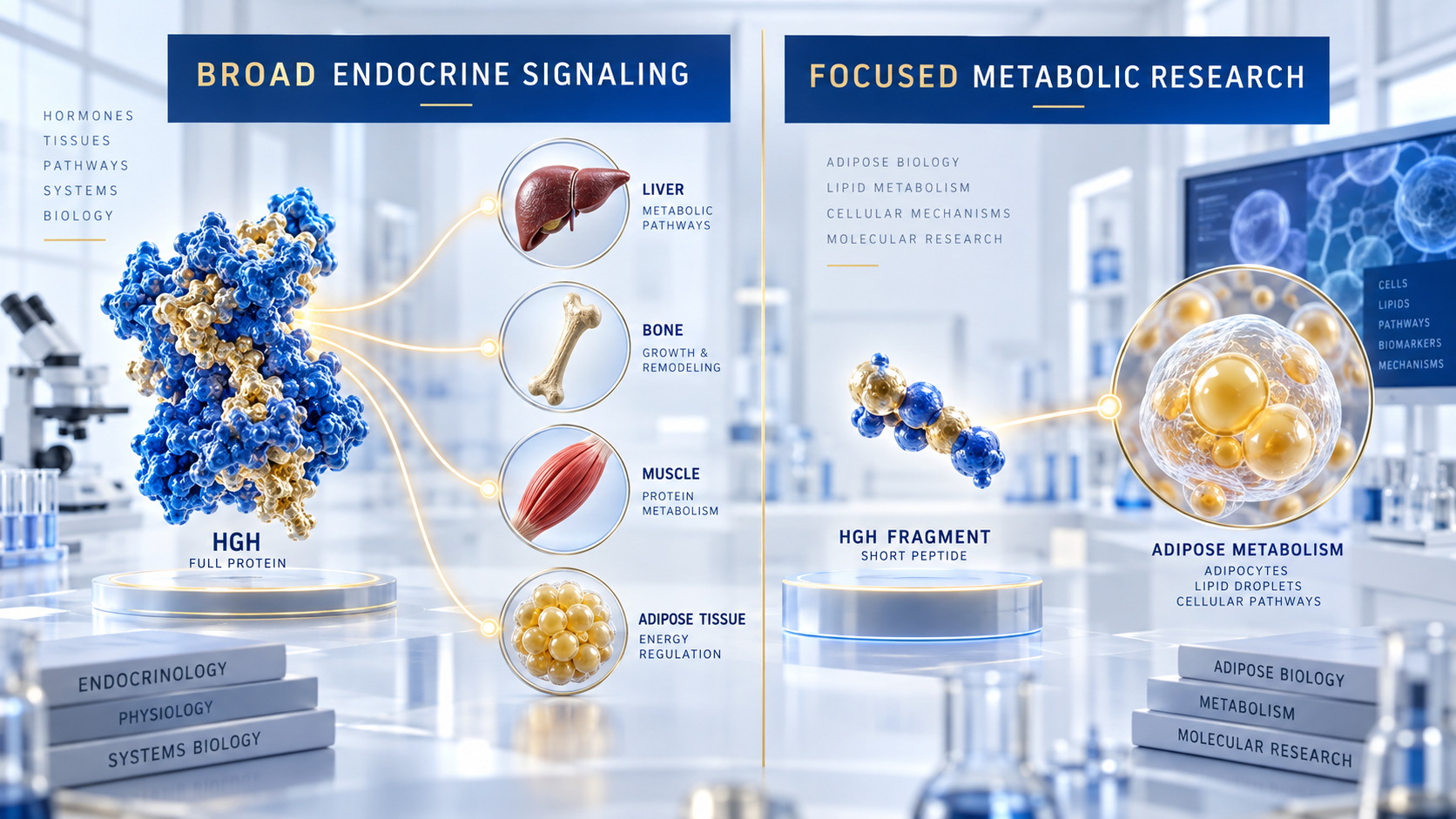
HGH 191AA is studied across broad endocrine systems, while C-terminal fragment research has concentrated primarily on adipose and lipid-metabolism models.
5. The IGF-1 Distinction
Full-length HGH can stimulate hepatic IGF-1 production through canonical receptor-dependent signaling. IGF-1 is therefore commonly used as a downstream marker when evaluating growth hormone activity in clinical and experimental settings.
The C-terminal analog literature does not show the same canonical GHR-driven IGF-1 response. That distinction is central to why HGH Fragment 176–191 should not be represented as equivalent to recombinant somatropin.
However, “does not reproduce the full HGH/IGF-1 axis” should not be expanded into a blanket statement that every possible biological effect, interaction, or risk has been completely characterized. The evidence base for the fragment remains much smaller.
6. HGH Fragment 176–191 Is Not Exactly the Same as AOD-9604
This is one of the most frequently overlooked distinctions in online comparisons.
HGH Fragment 176–191 is generally used to describe the unmodified 16-residue C-terminal sequence of human growth hormone.
AOD-9604 is a related 16-amino-acid synthetic analog described in the literature as Tyr-hGH177–191: residues 177–191 of HGH with an additional tyrosine at the N-terminus. It was developed to investigate metabolic activity associated with the C-terminal region.
Because the best-known animal and human publications frequently studied AOD-9604, those results cannot automatically be assigned to every product labeled “HGH Fragment 176–191.” Researchers should confirm the exact sequence, identity, purity, and analytical documentation of the material under investigation.
7. Comparing the Strength of the Evidence
Full-length recombinant HGH has decades of biochemical, pharmacological, clinical, and safety research. Somatropin products have been studied under regulated clinical-development programs for specific approved indications.
The fragment evidence base is substantially narrower. Early publications reported metabolic observations in rodent models, and human studies of AOD-9604 contributed tolerability data. However, the development program did not establish the fragment as an FDA-approved weight-management drug, and human efficacy evidence remains limited.
The scientifically responsible conclusion is therefore not that one molecule is universally “better.” They answer different research questions, and the strength of the evidence behind them is not equivalent.
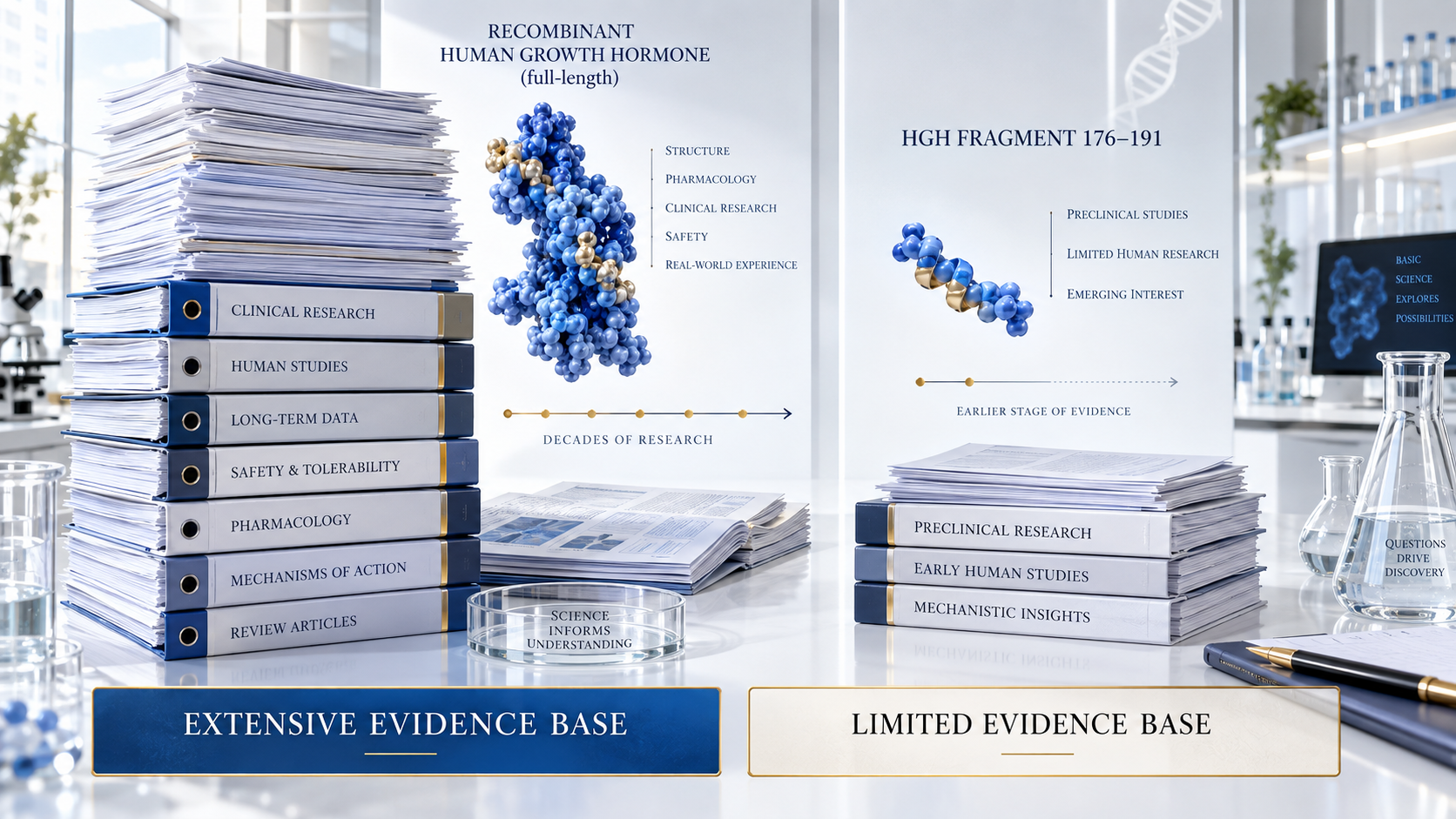
Full-length recombinant HGH has a far larger research record. Evidence involving the C-terminal fragment family remains earlier-stage and must be interpreted by exact molecular identity.
8. Why Product Identity Matters in Laboratory Research
Names used in the research-compound market are not always chemically precise. A label may refer to HGH Fragment 176–191, HGH 177–191, or AOD-9604 even though these descriptions are not automatically interchangeable.
Before comparing results, researchers should verify:
the complete amino-acid sequence;
whether an additional N-terminal residue or other modification is present;
molecular mass and salt or counterion form;
analytical identity and purity methods;
batch-specific Certificate of Analysis;
handling and storage requirements; and
whether the cited publication studied the same molecule supplied in the vial.
Without that information, a comparison may combine data from related but distinct compounds.
Conclusion
HGH 191AA and HGH Fragment 176–191 share a sequence relationship, but they differ profoundly in size, structure, receptor signaling, research scope, and evidentiary maturity.
HGH 191AA is a complete 191-amino-acid protein capable of activating the canonical growth hormone receptor network and influencing IGF-1-associated biology. HGH Fragment 176–191 is a short C-terminal peptide studied primarily as a focused research tool in metabolic and adipose-tissue models.
The fragment should not be described as full HGH without its unwanted effects, and findings involving AOD-9604 should not be automatically transferred to an unmodified 176–191 sequence. Accurate research interpretation begins with accurate molecular identity.
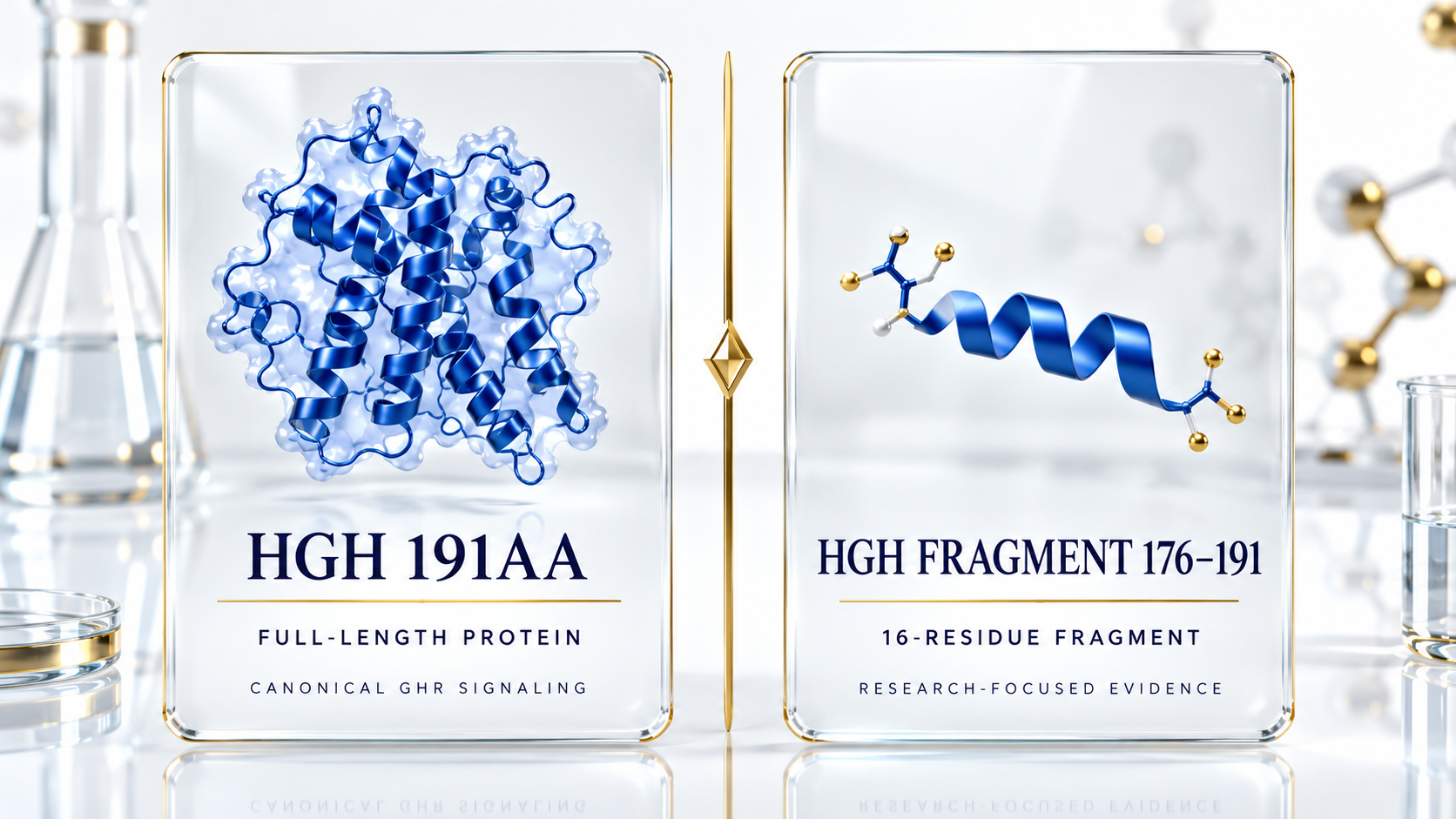
Structural relationship does not imply biological equivalence: full-length HGH and its C-terminal fragment represent distinct research materials.
Scientific References
United States Pharmacopeia. Somatropin. USP–NF. Defines somatropin as a protein hormone consisting of 191 amino-acid residues corresponding to the major human growth hormone component.
Brooks AJ, Waters MJ. The growth hormone receptor: mechanism of activation and clinical implications.Nature Reviews Endocrinology. 2010;6:515–525. doi:10.1038/nrendo.2010.123.
Waters MJ, Brooks AJ. JAK2 activation by growth hormone and other cytokines. Biochemical Journal.2015;466(1):1–11. doi:10.1042/BJ20141293.
Heffernan MA, Jiang WJ, Thorburn AW, Ng FM. Effects of oral administration of a synthetic fragment of human growth hormone on lipid metabolism. American Journal of Physiology—Endocrinology and Metabolism. 2000;279(3)–E507.
Ng FM, Sun J, Sharma L, Libinaka R, Jiang WJ, Gianello R. Metabolic studies of a synthetic lipolytic domain (AOD9604) of human growth hormone. Hormone Research. 2000;53(6):274–278. PMID: 11146367.
Heffernan MA, Thorburn AW, Fam B, et al. Increase of fat oxidation and weight loss in obese mice caused by chronic treatment with human growth hormone or a modified C-terminal fragment. International Journal of Obesity. 2001;25:1442–1449. PMID: 11673763.
Heffernan MA, Thorburn AW, Fam B, et al. The effects of human GH and its lipolytic fragment (AOD9604) on lipid metabolism following chronic treatment in obese mice and β3-AR knock-out mice. Endocrinology.2001;142(12):5182–5189. PMID: 11713213.
Thomas A, Kohler M, Mester J, Geyer H, Schänzer W, Petrou M, Thevis M. Detection and in vitro metabolism of AOD9604. Drug Testing and Analysis. 2015;7(1):31–38. PMID: 25208511.
Stier H, Vos E, Kenley DE. Safety and tolerability of the hexadecapeptide AOD9604 in humans. Journal of Endocrinology and Metabolism. 2013;3(1–2):7–15.
Research Use Only Notice
HGH 191AA and HGH Fragment 176–191 supplied by NexGen Peptide Sciences are sold strictly for in vitro research and laboratory use only. They are not drugs, dietary supplements, foods, cosmetics, or medical devices and are not intended for human or veterinary use, ingestion, injection, topical application, diagnosis, treatment, cure, mitigation, or prevention of disease.
NexGen Peptide Sciences does not provide dosing instructions, administration protocols, medical advice, or recommendations for human or animal use. Purchasers are responsible for maintaining appropriate facilities, equipment, procedures, training, and legal compliance when handling research materials.
NexGen Peptide Sciences is a chemical supplier. It is not a compounding pharmacy under Section 503A of the Federal Food, Drug, and Cosmetic Act and is not an outsourcing facility under Section 503B.
