SANA (MVD1): A Nitroalkene Salicylate and the Creatine-Dependent Thermogenesis Pathway.
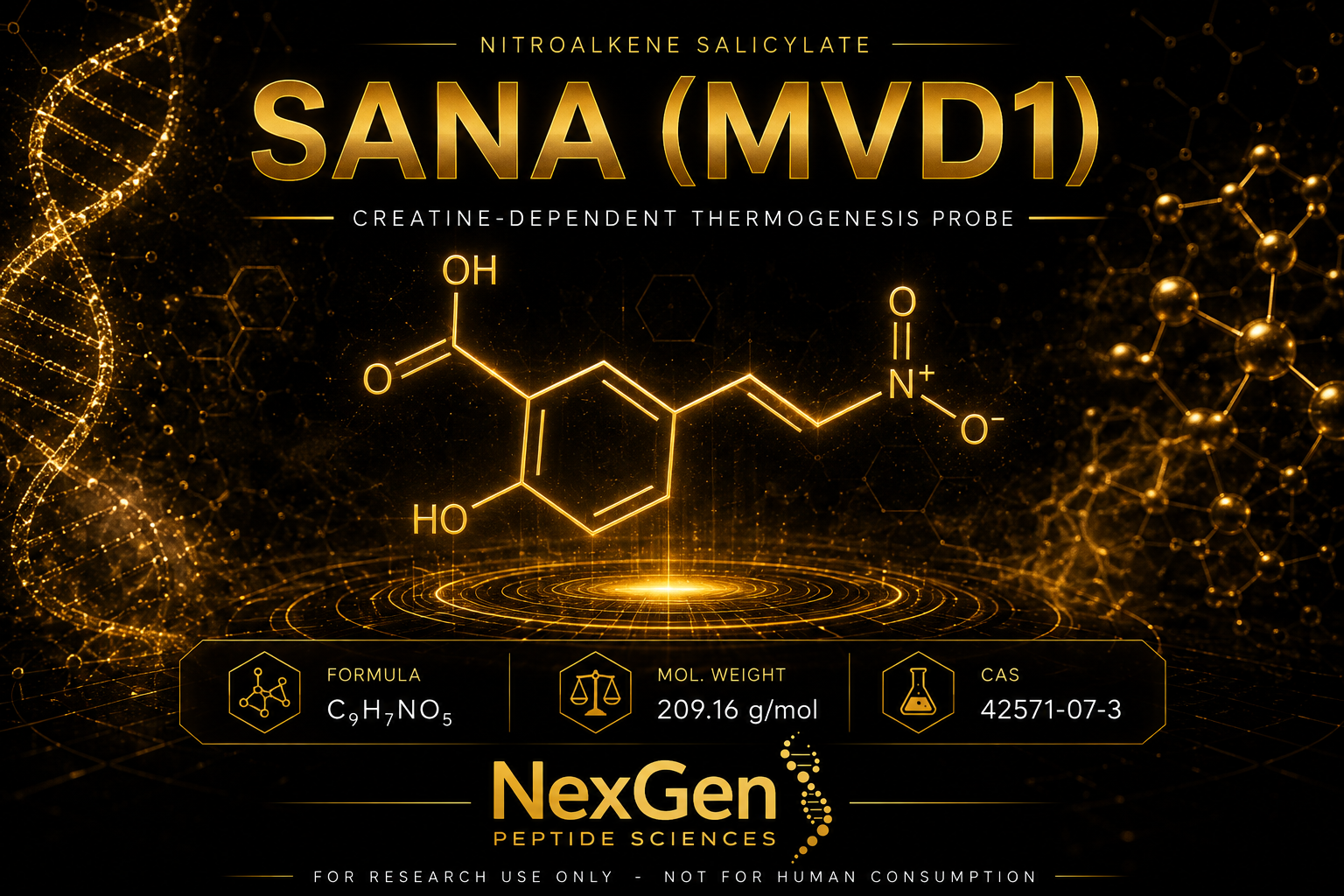
SANA (MVD1) is an investigational small molecule that has drawn attention for a mechanism almost nothing else in metabolic pharmacology shares: it appears to raise energy expenditure in adipose tissue through creatine metabolism rather than by acting on appetite. Chemically it is 5-(2-nitroethenyl)salicylic acid — a nitroalkene grafted onto the salicylate scaffold that gave us aspirin. Eolo Pharma developed the compound and assigned it the clinical code MVD1, and in June 2025 Nature Metabolism published its full preclinical characterization alongside a first-in-human Phase 1A/B trial.
This article covers what the published record actually shows: the chemistry, the mechanism and its open questions, the trial data, and — importantly for anyone sourcing the compound — the specific analytical problems that make SANA harder to verify than its simple structure suggests.
Chemical Identity of SANA (MVD1)
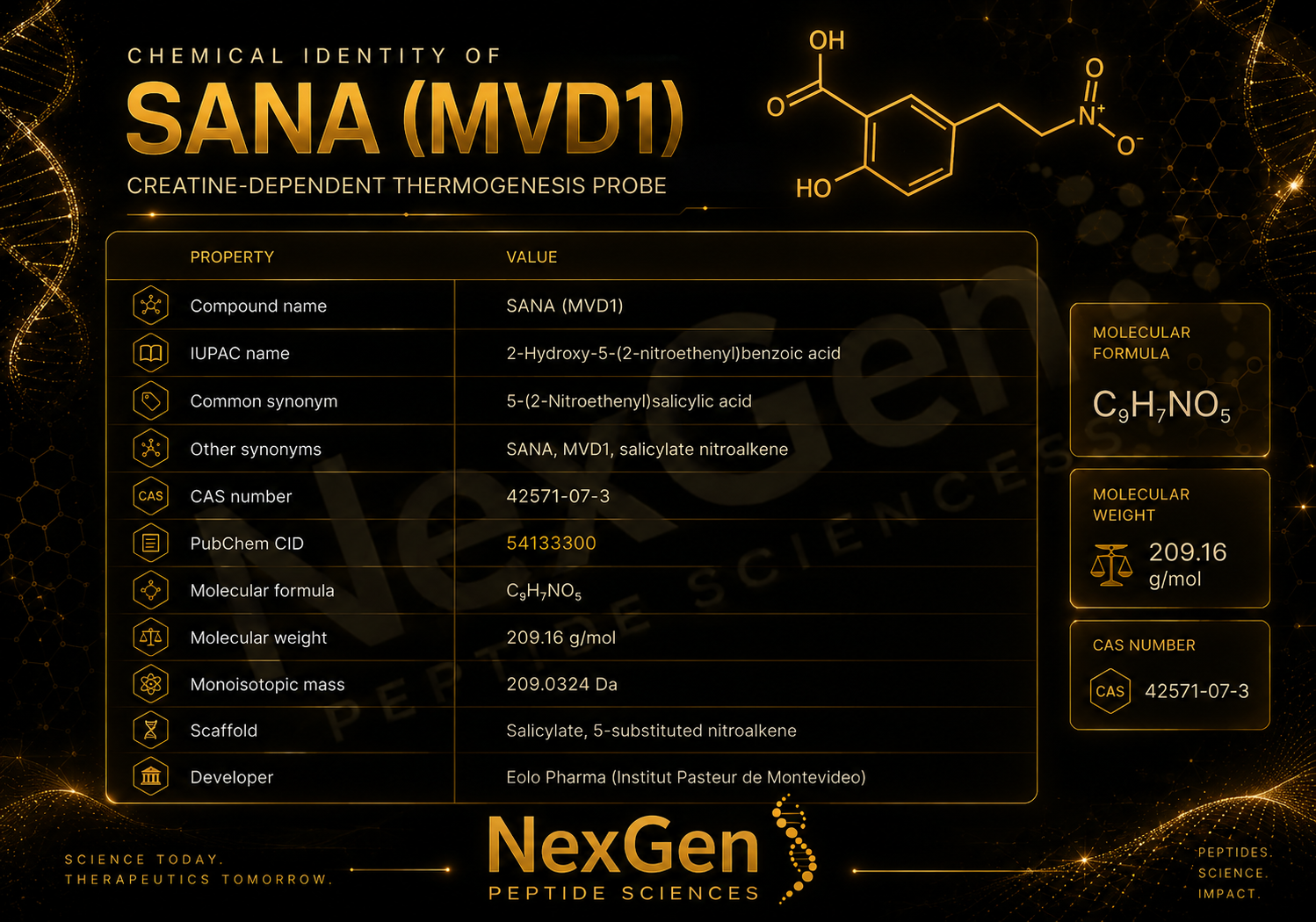
The structure is deceptively simple. Salicylic acid supplies the aromatic core, and a nitroethenyl (–CH=CH–NO₂) group occupies the 5-position. That single substituent does all the interesting work.
Why the Nitroalkene Group Matters
Nitroalkenes are electrophilic. They undergo reversible Michael addition with thiol groups, which lets them modify cysteine residues on proteins and shift signalling in ways the parent scaffold cannot . Researchers had already moved this reactive group onto other scaffolds — a vitamin E analogue, a benzoic acid derivative — and observed that the scaffold shapes where the nitroalkene acts while the nitroalkene supplies the reactivity.
SANA is the salicylate version of that strategy, and the structure–activity data are unusually clean. The published work tested four close relatives:
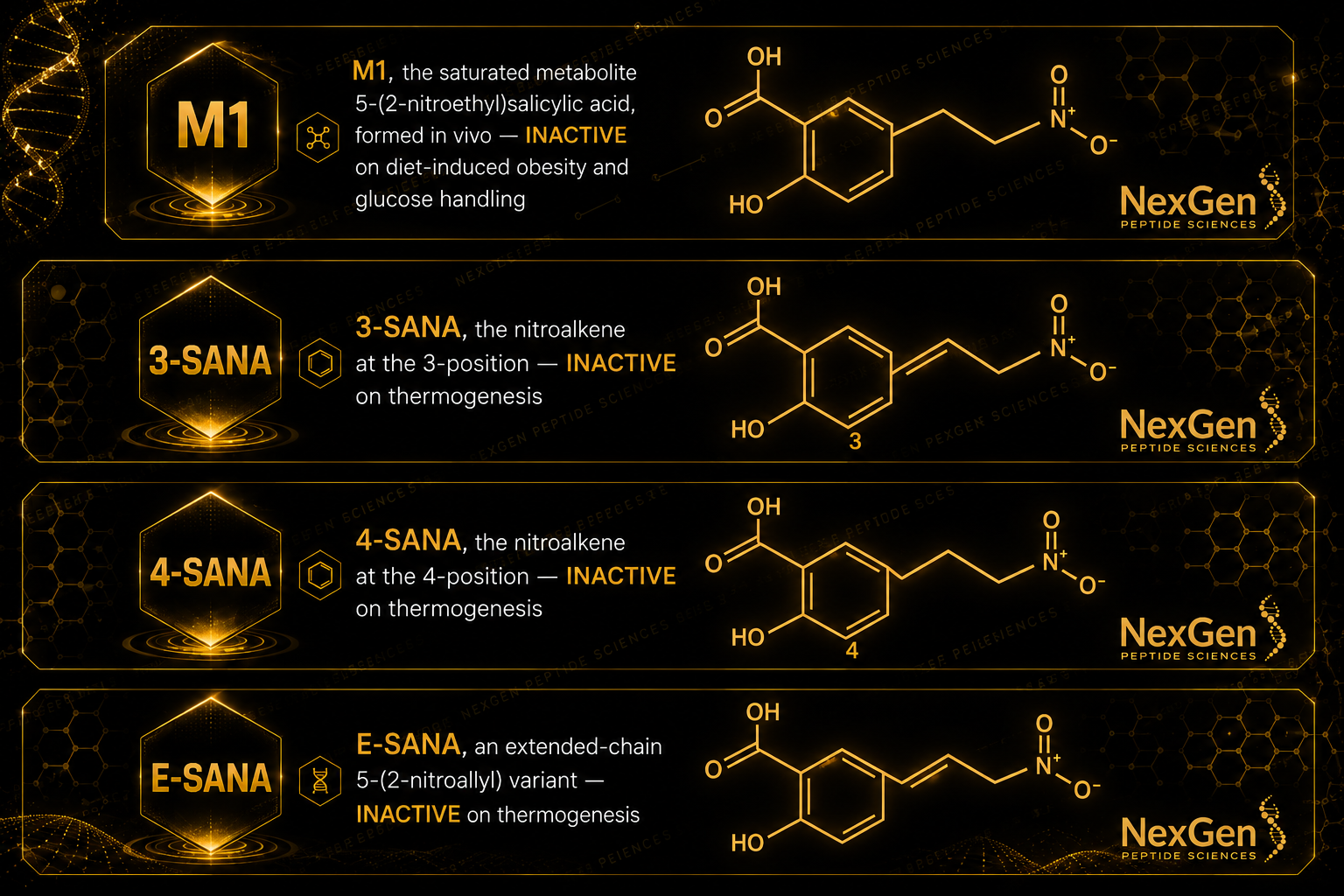
Only the 5-nitroethenyl arrangement activated thermogenesis or induced creatine kinase expression in brown adipose tissue . In other words, both the presence of the nitroalkene and its exact position on the ring are required. That finding matters enormously for sourcing, and we return to it below.
Mechanism: The Futile Creatine Cycle
To understand SANA (MVD1), you need the pathway it targets.
Classical non-shivering thermogenesis runs through uncoupling protein 1 (UCP1), which dissipates the mitochondrial proton gradient as heat. But a second, UCP1-independent route exists. In 2015, Kazak and colleagues described a creatine-driven substrate cycle in beige fat, in which creatine phosphorylation and phosphocreatine hydrolysis run simultaneously — burning ATP and releasing heat without any net work . Later work identified creatine kinase B (CKB) as a controller of this futile cycle in thermogenic fat , and subsequent studies confirmed the cycle can power thermogenesis in classical brown adipose tissue independently of UCP1].
SANA appears to switch this pathway on pharmacologically. The evidence in the Nature Metabolism paper is layered:
Proteomics pointed the way. Unbiased proteomic analysis of inguinal white adipose tissue from treated mice showed enrichment of catabolism, oxidative phosphorylation and thermogenesis pathways. Glycine amidinotransferase (GATM) — the rate-limiting enzyme in creatine synthesis — appeared only in the treated group.
Creatine levels rose. Mass spectrometry confirmed increased total creatine in both inguinal white and brown adipose tissue].
Gene expression followed. Treatment upregulated Ckmt1 and Ckm in white adipose tissue, Ckmt2 and Ckm in brown adipose tissue, plus creatine synthesis and transport genes Gatm, Oat, Prodh and Slc6a8 .
Knockouts isolated the pathway. SANA still drove weight and fat mass loss in UCP1-knockout mice, and still protected AMPK(α1)-knockout mice from diet-induced obesity — ruling out both conventional mechanisms].
Creatine depletion abolished the effect. Treating mice with β-guanidinopropionic acid, a creatine antagonist, eliminated the thermogenic response entirely.
That last experiment is the cleanest piece of evidence. Remove creatine, and the compound stops working.
What the Preclinical Data Showed
Across rodent models of diet-induced obesity, the published findings were consisten.
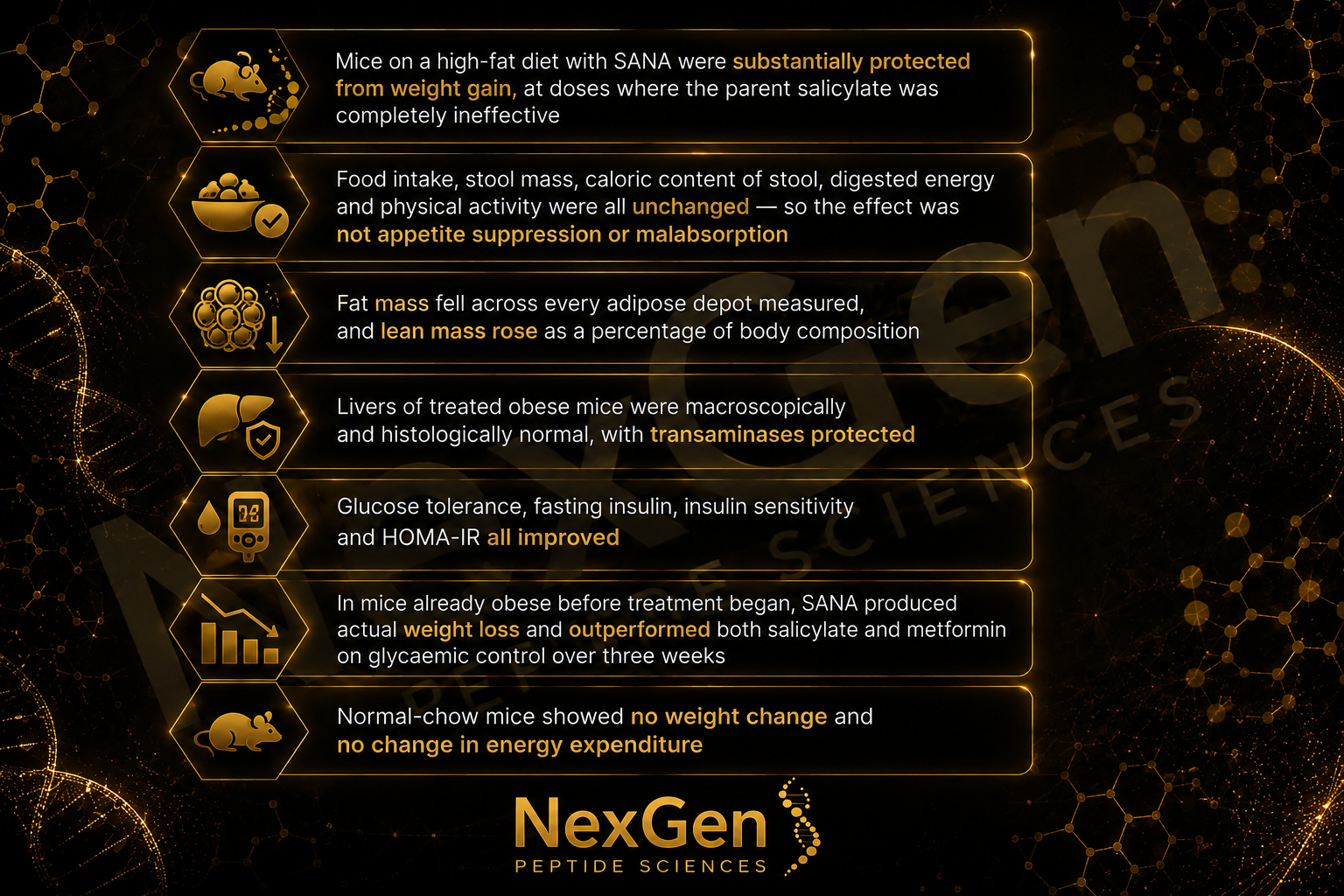
One caveat worth stating precisely, because it is often overstated elsewhere: the paper reports an increase in the percentage of lean mass. That reflects preferential loss of fat, not demonstrated accretion of new lean tissue. Aerobic exercise capacity, electromyographic shivering response, skeletal muscle creatine kinase expression and cardiac mitochondrial respiration were all unaffected.
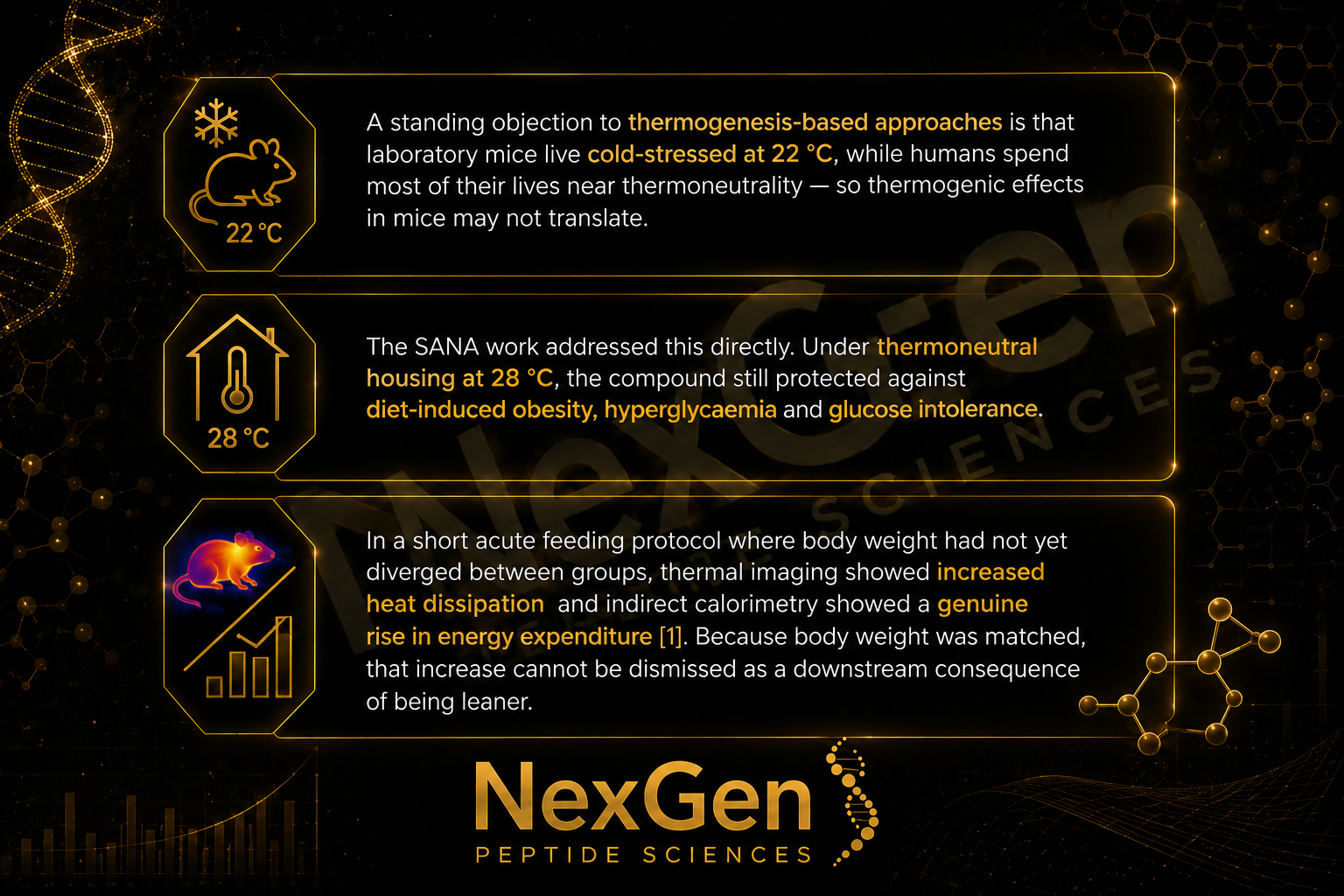
THERMONEUTRALITY: A CRITICAL TRANSLATIONAL TEST
The Phase 1A/B Human Trial
Eolo Pharma ran a randomized, double-blind, placebo-controlled first-in-human trial, registered with the Australian New Zealand Clinical Trials Registry as ACTRN12622001519741. The compound was referred to as MVD1 throughout clinical development.
Design. A single ascending dose (SAD) arm enrolled 17 healthy lean volunteers across 200–800 mg. A multiple ascending dose (MAD) arm enrolled 24 volunteers with overweight or obesity at 200–400 mg per day for 15 days, conducted as an inpatient study with a high-carbohydrate diet provided ad libitum. The primary endpoint was safety; secondary endpoints covered tolerability and pharmacokinetics; body weight, glucose and insulin were exploratory.
Safety. Two participants experienced adverse events judged definitively drug-related — reversible renal tubular damage evidenced by proteinuria and glucosuria — both at the highest single dose (800 mg). No definitively drug-related adverse events occurred during the multiple-dose phase. The most frequent possibly-related events were headache and soft stools. No severe adverse events were reported, and liver function was normal in all participants after 15 days. Notably, no moderate or severe gastrointestinal adverse effects were recorded.
Pharmacokinetics. Profiles resembled those seen in mice. Day 15 exposure was comparable to day 1, indicating the compound does not accumulate.
Exploratory findings. In the highest MAD cohort (200 mg every 12 hours), participants showed a significant decrease in body weight over 15 days — roughly 3%, which the authors note is comparable to semaglutide over the same interval. Plasma glucose, insulin, HOMA-IR and fructosamine all improved. Placebo participants showed no such changes.
The limitation the authors themselves stress. The trial was designed and powered for safety, not efficacy, with a small number of volunteers and limited measurements. The efficacy signals are preliminary and require a Phase 2 trial with longer treatment, larger samples and extended endpoints before they can be considered validated.
What the Evidence Reveals About the Mechanism
Honest coverage requires acknowledging that the futile creatine cycle is an actively debated field, not settled biology.
Nicholls and Brand published a critical assessment questioning whether creatine cycling contributes meaningfully to brown adipose tissue thermogenesis on bioenergetic grounds [5]. The identity of the controlling kinase also remains unresolved: CKB is the only isoform genetically demonstrated to mediate creatine kinase activity in mouse adipocyte mitochondria , yet SANA upregulated Ckmt1, Ckm and Ckmt2 — and notably did notaffect Ckb, even though cold exposure does. There are species differences too, with CKB reported as exclusively cytosolic in human adipose cells but mitochondrial in mouse adipocytes.
The authors are candid about this. Their own reading is that SANA does not fully phenocopy cold-elicited creatine-dependent thermogenesis, and may work through different kinases. They also state plainly that the molecular target of SANA remains undetermined.
One safety-relevant observation deserves attention: Ckmt1-knockout mice treated with SANA showed roughly 50% mortality within a week at standard housing temperature, rescued entirely by thermoneutral housing]. The interpretation offered is that the compound may commit animals to creatine-dependent thermoregulation at the expense of thermogenic flexibility. That is a genuine mechanistic finding, and any research design involving creatine-pathway-compromised models should account for it.
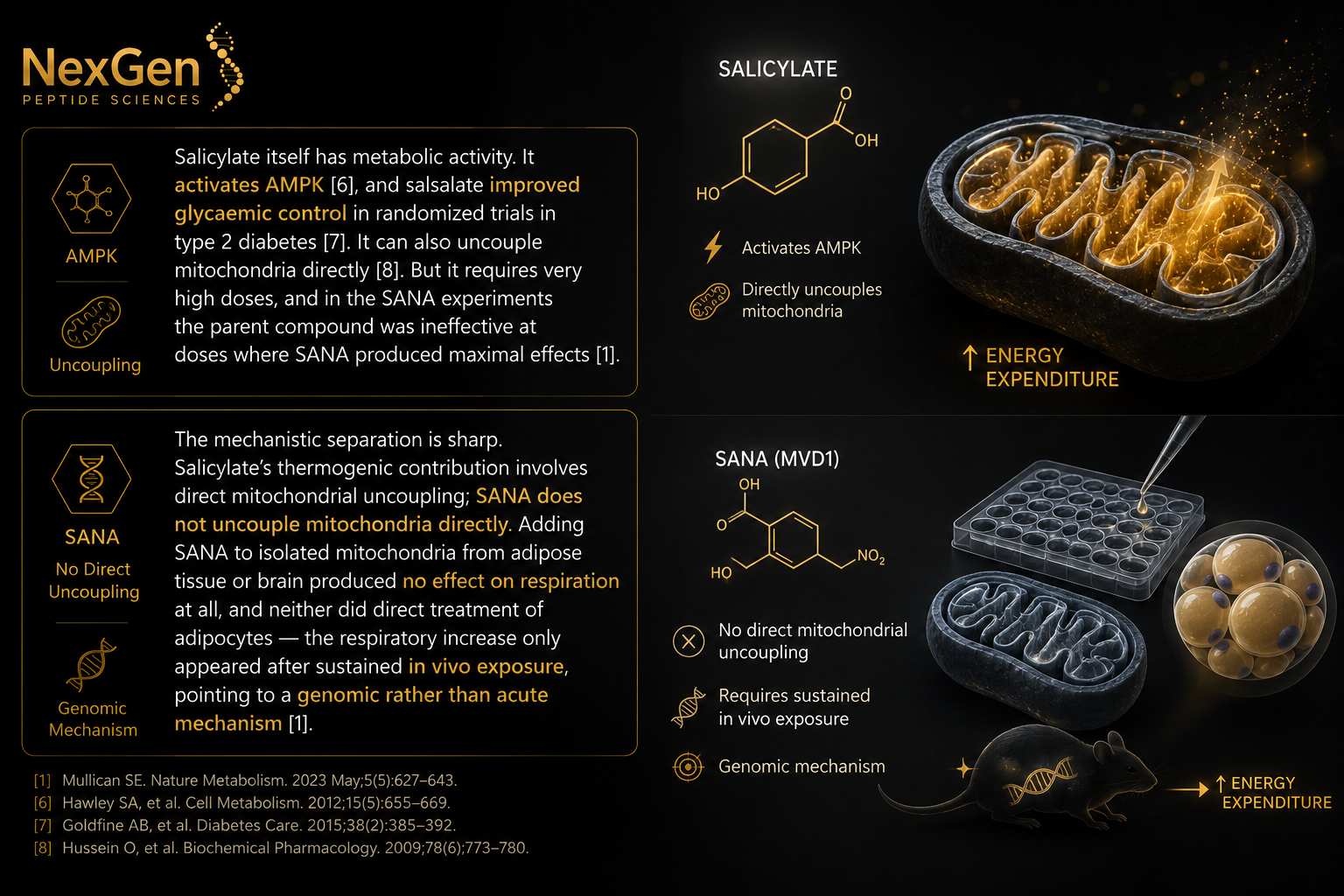
SANA Compared With the Salicylate Scaffold
Analytical Considerations: Why SANA Is Harder to Verify Than It Looks
This is where SANA (MVD1) becomes an unusually demanding compound to authenticate, and it follows directly from the structure–activity data above.
Mass spectrometry alone cannot confirm identity. The inactive regioisomers 3-SANA and 4-SANA share SANA’s molecular formula (C₉H₇NO₅) and its monoisotopic mass (209.0324 Da) exactly. They are isobaric. No MS method — nominal or high-resolution — distinguishes them on mass. A certificate showing the correct molecular ion is entirely compatible with a batch of biologically inactive regioisomer.
Alkene geometry is also mass-silent. The active compound is the E (trans) isomer. A Z-configured batch would be indistinguishable by mass and difficult to catch by reversed-phase HPLC without an authenticated standard.
What MS does catch. The saturated metabolite M1, 5-(2-nitroethyl)salicylic acid, is C₉H₉NO₅ at 211.048 Da — a +2.02 Da shift that mass spectrometry resolves cleanly. M1 was confirmed inactive in vivo [1], so this is a meaningful check, just not a sufficient one.
The method that actually resolves it is NMR. Aromatic substitution patterns distinguish the 3-, 4- and 5-regioisomers through their coupling patterns, and vinyl proton coupling constants separate E from Z geometry. For this compound class, ¹H NMR is not a supplementary technique — it is the primary identity method, with HPLC quantifying purity and MS confirming molecular mass. This is the orthogonal-methods logic that runs through our whole.https://www.nexgenpeptidesciences.com/store/p//sana-mvd1-research-compound programme, and SANA is close to a textbook case for it.
Handling implications of the nitroalkene. Because the nitroalkene is an electrophilic Michael acceptor that reacts with low-molecular-weight thiols [1], thiol-containing buffer components — dithiothreitol, β-mercaptoethanol, high free glutathione — will quench it. Design in vitro work accordingly. The published formulation work used pH-controlled solubilization in phosphate buffer around pH 6.5, and DMSO stocks are standard for cell work. Store cold, desiccated and protected from light.
Regulatory Status
SANA (MVD1) is an investigational compound in early clinical development. It has no approved brand name, no marketing authorization in any jurisdiction, and no FDA approval for human use. It remains the proprietary lead candidate of Eolo Pharma. Nexgen Peptide Sciences supplies it strictly for in vitro and laboratory research use only — not for human or veterinary use, ingestion, injection or topical application.
Frequently Asked Questions
What is SANA (MVD1)? An investigational nitroalkene derivative of salicylate, 5-(2-nitroethenyl)salicylic acid, studied as a research tool for creatine-dependent thermogenesis and adipose tissue energy metabolism.
How does SANA work? Published data indicate it activates non-shivering thermogenesis in brown and white adipose tissue through a creatine-dependent pathway, independent of UCP1 and AMPK. Creatine depletion abolishes the effect. The direct molecular target has not yet been identified.
Why is SANA also called MVD1? MVD1 is the clinical development code Eolo Pharma assigned to the compound. Both names refer to the same molecule.
Is SANA approved for human use? No. It has completed a Phase 1A/B safety trial and remains investigational.
Why does the isomer matter so much? Because the 3- and 4-position regioisomers and the saturated metabolite were all shown to be biologically inactive. Since the regioisomers are isobaric with SANA, mass spectrometry cannot rule them out — NMR is required for confident identity confirmation.
References
Cal K, Leyva A, Rodríguez-Duarte J, et al. A nitroalkene derivative of salicylate, SANA, induces creatine-dependent thermogenesis and promotes weight loss. Nature Metabolism. 2025;7(8):1550–1569. doi:10.1038/s42255-025-01311-z. https://www.nature.com/articles/s42255-025-01311-z
Kazak L, Chouchani ET, Jedrychowski MP, et al. A creatine-driven substrate cycle enhances energy expenditure and thermogenesis in beige fat. Cell. 2015;163(3):643–655. doi:10.1016/j.cell.2015.09.035
Rahbani JF, Roesler A, Hussain MF, et al. Creatine kinase B controls futile creatine cycling in thermogenic fat. Nature. 2021;590(7846):480–485. doi:10.1038/s41586-021-03221-y. https://www.nature.com/articles/s41586-021-03221-y
Bunk J, Ersin M, Hussain MF, et al. The futile creatine cycle powers UCP1-independent thermogenesis in classical brown adipose tissue. Nature Communications. 2025. doi:10.1038/s41467-025-58294-4. https://www.nature.com/articles/s41467-025-58294-4
Nicholls DG, Brand MD. A critical assessment of the role of creatine in brown adipose tissue thermogenesis. Nature Metabolism. 2023;5:21–28. https://www.nature.com/articles/s42255-022-00718-2
Hawley SA, Fullerton MD, Ross FA, et al. The ancient drug salicylate directly activates AMP-activated protein kinase. Science. 2012;336(6083):918–922.
Goldfine AB, Fonseca V, Jablonski KA, et al. The effects of salsalate on glycemic control in patients with type 2 diabetes: a randomized trial. Annals of Internal Medicine. 2010;152(6):346–357.
Smith BK, Ford RJ, Desjardins EM, et al. Salsalate (salicylate) uncouples mitochondria, improves glucose homeostasis, and reduces liver lipids independent of AMPK-β1. Diabetes. 2016;65(11):3352–3361.
National Center for Biotechnology Information. PubChem Compound Summary for CID 54133300, 2-Hydroxy-5-(2-nitroethenyl)benzoic acid. https://pubchem.ncbi.nlm.nih.gov/compound/54133300
SANA (MVD1) is sold strictly for in vitro research and laboratory use only. It is not a drug, supplement, food or cosmetic, and is not intended for human or veterinary use, ingestion, injection or topical application.
This Research Use Only (“RUO”) Policy applies to research materials supplied by NexGen Peptide Sciences(“NexGen,” “we,” “us,” or “our”).
NexGen Peptide Sciences supplies research materials intended exclusively for legitimate laboratory, analytical, in-vitro, and pre-clinical research applications.
All products designated Research Use Only (RUO) are not intended for human or veterinary use or consumption.
Products sold by NexGen Peptide Sciences are not offered as drugs, dietary supplements, food products, cosmetics, or medical devices and are not represented as approved by the U.S. Food and Drug Administration (“FDA”) for therapeutic or diagnostic use.
NexGen Peptide Sciences does not provide dosing instructions, administration protocols, medical advice, or recommendations for human or animal use.
RUO products must not be used for diagnostic, therapeutic, preventative, or consumptive purposes or represented by the purchaser as intended for such purposes.
By purchasing RUO products from NexGen Peptide Sciences, the purchaser acknowledges and agrees that:
Products are purchased solely for legitimate research purposes.
Products are not intended for human or animal administration or consumption.
The purchaser is responsible for determining and complying with all applicable federal, state, local, and international laws and regulations.
The purchaser is responsible for maintaining appropriate facilities, equipment, procedures, training, and personnel for handling research materials.
The purchaser will not represent NexGen Peptide Sciences RUO products as products intended for human or veterinary use.
NexGen Peptide Sciences does not authorize use of its RUO products outside their stated research purpose. Any unauthorized use, handling, representation, resale, or application is contrary to the products’ designated intended use and is undertaken independently of NexGen Peptide Sciences.
Nexgen Peptide Sciences is a chemical supplier. NexGen Peptide Sciences is not a compounding pharmacy or chemical compounding facility as defined under Section 503A of the Federal Food, Drug, and Cosmetic Act, and is not an outsourcing facility as defined under Section 503B of that Act.
This policy should be read together with the Terms and Conditions, product-specific documentation, and other applicable policies published by NexGen Peptide Sciences.