SS-31 and MOTS-C: The Mitochondrial Stack Guide
# SS-31 and MOTS-C: The Mitochondrial Stack Guide
Mitochondrial decline starts in your 30s and accelerates from there. By the time most people feel it — fatigue that doesn't resolve with sleep, slower recovery, mental fog — the underlying dysfunction has been building for years.
SS-31 (elamipretide) and MOTS-C address this from two different angles. They're not redundant — they're complementary. This guide breaks down how each works, how to introduce them, and what you can realistically expect from running both.
What SS-31 Does
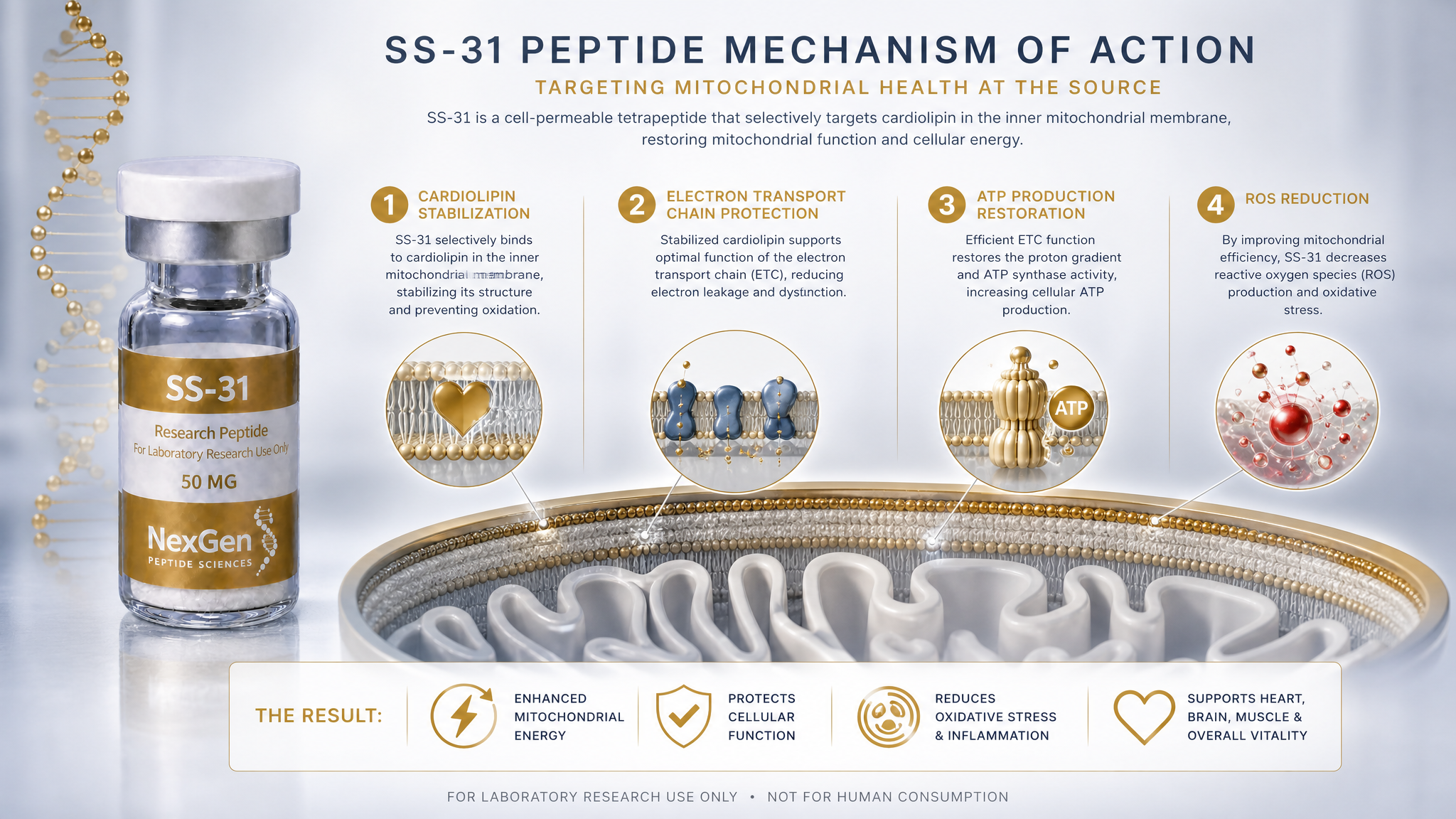
SS-31 is a synthetic tetrapeptide specifically designed to target the inner mitochondrial membrane.
Its primary mechanism involves binding to cardiolipin, a phospholipid essential for maintaining the architecture of mitochondrial cristae and efficient electron transport chain function.
Preclinical studies suggest that SS-31 may help researchers investigate:
Mitochondrial membrane stability
Oxidative stress regulation
ATP production efficiency
Electron transport chain performance
Cellular bioenergetics under stress
Unlike signaling peptides, SS-31 works directly on mitochondrial structure rather than altering hormonal or receptor pathways.
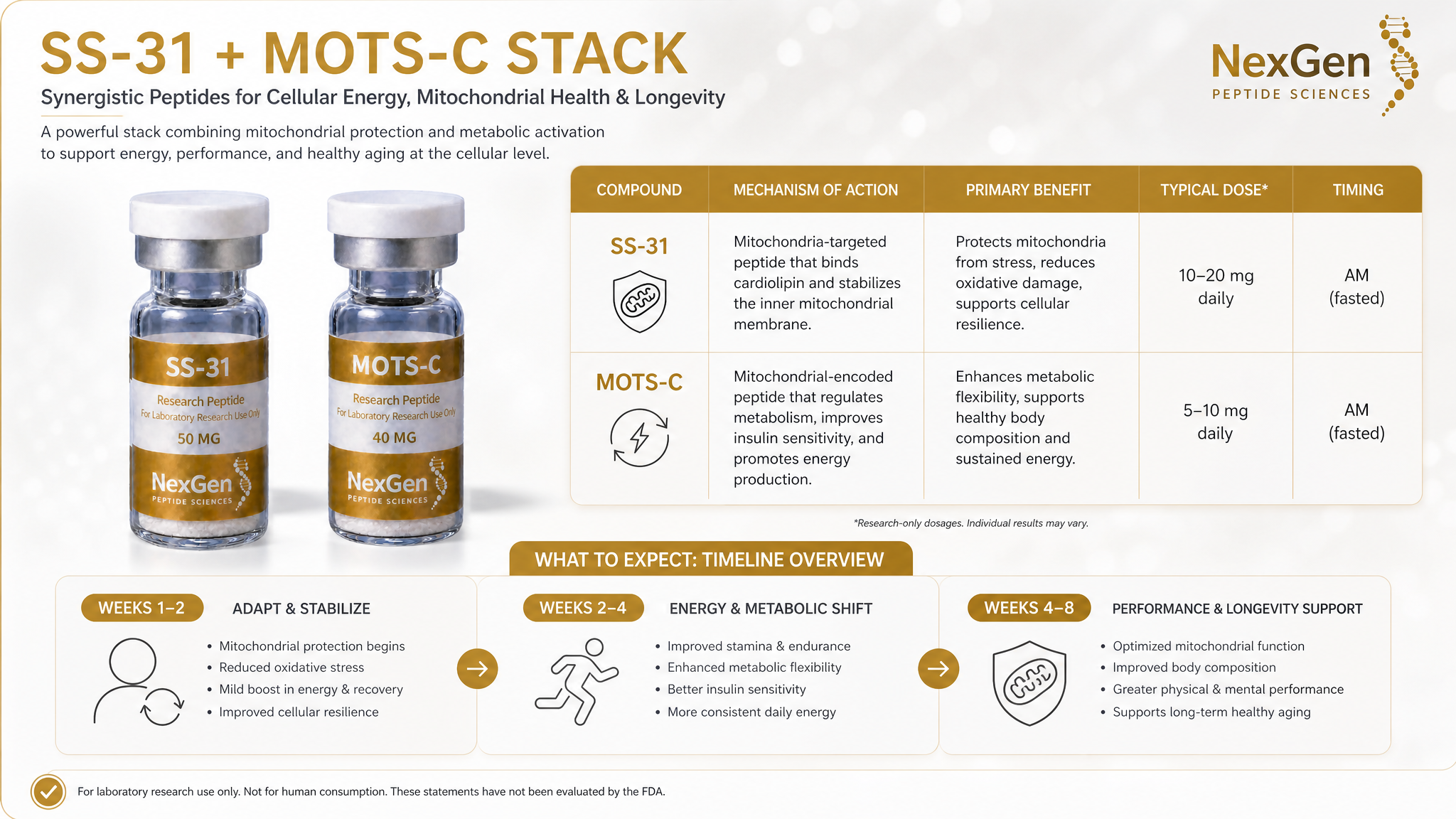
SS-31 is a mitochondria-targeted tetrapeptide (D-Arg-Dmt-Lys-Phe-NH2). It binds to cardiolipin — a phospholipid embedded in the inner mitochondrial membrane that's essential for electron transport chain (ETC) function.
When mitochondria are under oxidative stress (from aging, high training volume, chronic illness, or metabolic dysfunction), cardiolipin gets oxidized and the ETC slows. ATP production drops. ROS (reactive oxygen species) increase. The mitochondria start signaling apoptosis.
SS-31 stabilizes cardiolipin and restores ETC function. The clinical research is actually extensive — SS-31 has been tested in heart failure (NEJM-published trial), ischemia-reperfusion injury, kidney disease, and age-related muscle loss. It's one of the few research peptides with meaningful human trial data.
What users typically report:
Better stamina and reduced fatigue at training loads that previously felt hard
Faster recovery between sessions
Clearer thinking, especially in the afternoon
Some notice improved sleep quality
Standard protocol:
Dose: 5–10mg per day, subQ
Timing: morning (energy-focused) or pre-workout
Cycle: 4–8 weeks, 2–4 week break, reassess
What MOTS-C Does
MOTS-c is very different.
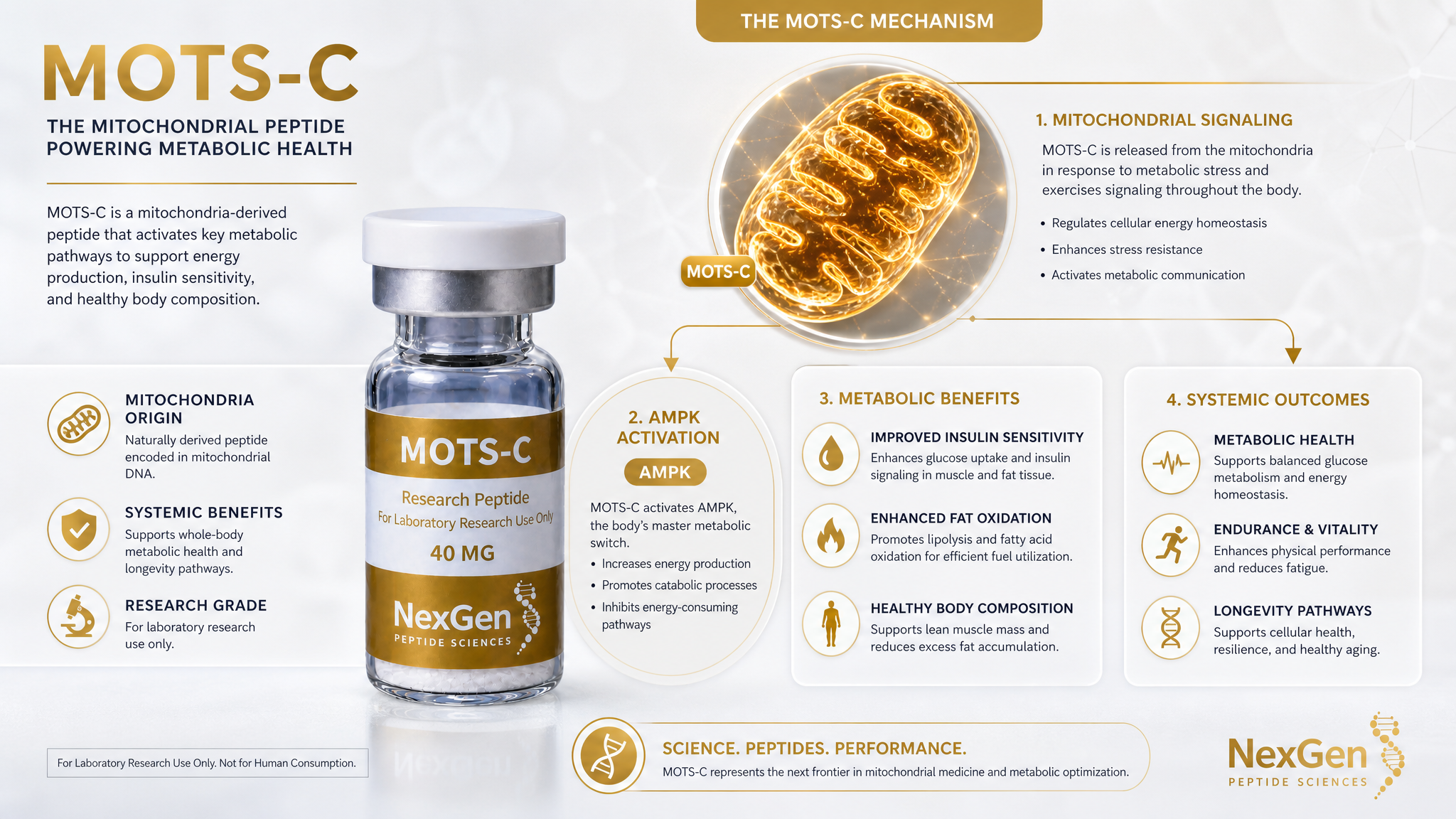
Instead of acting directly on mitochondrial membranes, MOTS-c is a mitochondrial-derived signaling peptide encoded within mitochondrial DNA.
During metabolic stress, research suggests MOTS-c can influence communication between mitochondria and the nucleus by activating pathways such as:
AMPK
Cellular glucose utilization
Fat oxidation
Metabolic flexibility
Exercise-like cellular adaptation
Because of these signaling properties, MOTS-c has become an important research tool for studying metabolism and mitochondrial adaptation
MOTS-c (mitochondrial open reading frame of the 12S rRNA-c) is a 16-amino acid peptide naturally encoded by mitochondrial DNA. It functions as a metabolic "exercise mimetic" by regulating cellular energy homeostasis, promoting fat oxidation, and improving insulin sensitivity.
MOTS-C also appears to improve muscle glucose uptake independently of insulin, which is relevant for anyone doing body recomposition alongside a GLP-1 like Reta.
MOTS-C is a mitochondria-derived peptide encoded in the mitochondrial genome itself — specifically the 12S rRNA. It acts as a metabolic signaling molecule, upregulating AMPK activity and improving insulin sensitivity.
Where SS-31 protects and repairs existing mitochondrial infrastructure, MOTS-C improves how cells handle energy substrates — particularly fat oxidation. AMPK activation redirects fuel utilization toward fat burning at rest and during low-intensity activity (Zone 2 cardio territory).
Key Benefits
Metabolic Optimization: Activates AMPK (the body's master energy switch) to boost cellular glucose uptake and fat burning.
Exercise Mimicry: Promotes metabolic flexibility and endurance, essentially mimicking the beneficial cellular stress response triggered by intense workouts.
Insulin Regulation: Counters diet-induced and age-related insulin resistance.
Cellular Longevity: Helps protect cells under stress and regulates anti-inflammatory pathways
What users typically report:
Improved endurance and aerobic capacity
Better fat oxidation (noticeable during cardio)
Reduced energy crashes between meals
Metabolic clarity — body handles fuel more efficiently
Standard protocol:
Dose: 5–10mg per week (split as 500mcg daily or 1mg every other day)
Higher doses (10–15mg/week) used in heavy endurance athletes
Timing: morning, daily or EOD
Cycle: 4–8 weeks, 2–4 week break
Running This Stack Alongside Semaglutide or Reta
GLP-1 agonists (semaglutide, tirzepatide, retatrutide) already improve metabolic efficiency by reducing caloric intake, improving insulin sensitivity, and decreasing systemic inflammation. MOTS-C adds to this — AMPK activation and improved fat oxidation compound on the metabolic improvements from GLP-1.
For someone on a microdose of semaglutide for inflammation specifically (not high-dose weight loss), MOTS-C is a logical addition. You're targeting inflammation from the GLP-1 side and mitochondrial metabolic function from the MOTS-C side — different mechanisms.
SS-31 is also appropriate alongside GLP-1 use — particularly if the primary driver is longevity/cellular health rather than just weight loss.
No known interactions between SS-31, MOTS-C, and GLP-1 agonists. Running all three is well-tolerated in practice.
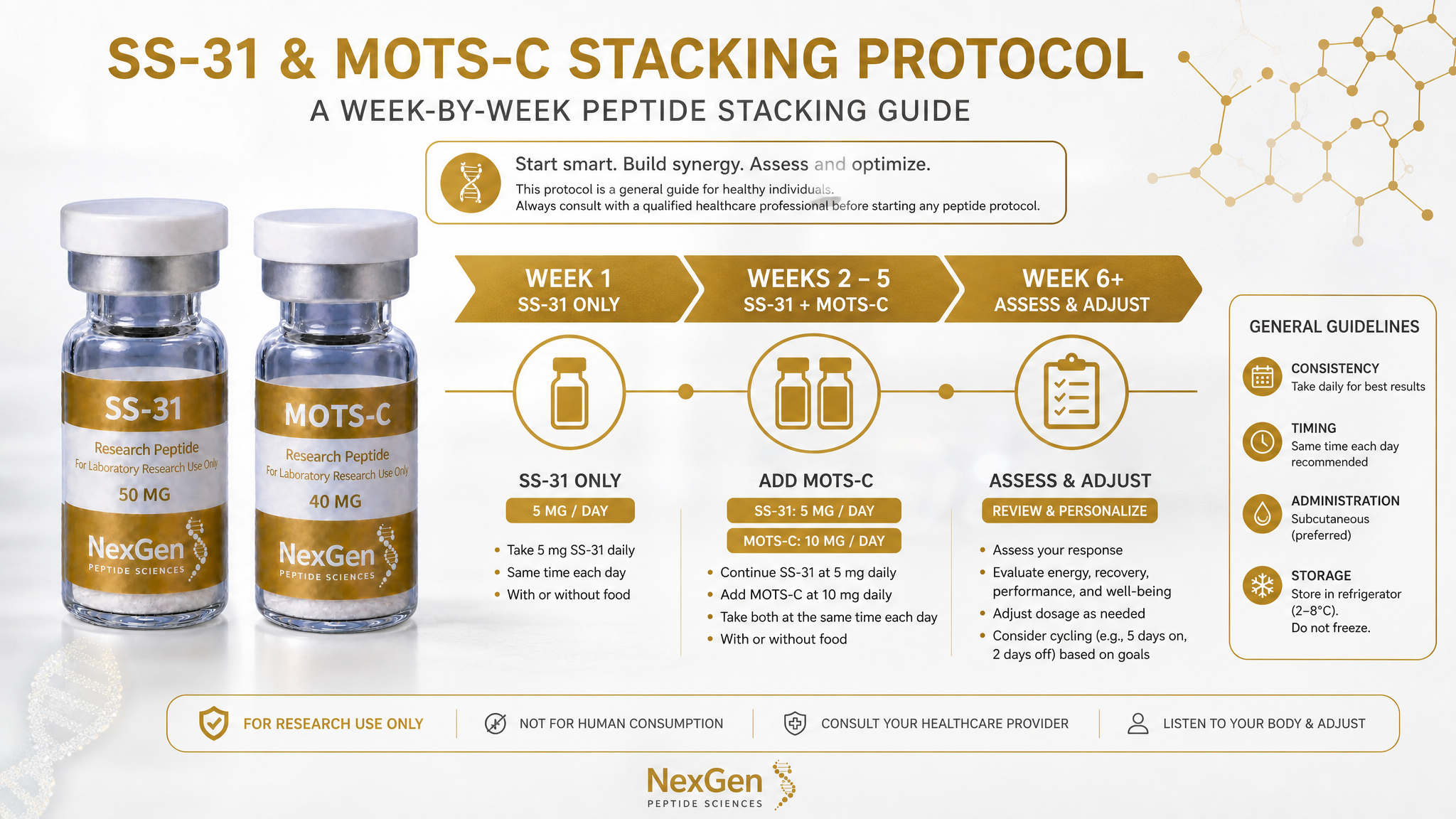
What to Expect (Realistic Timeline)
Week 1–2: Subtle shifts — some people notice less afternoon fatigue, slightly better workout recovery. Don't expect dramatic changes yet.
Week 2–4: More consistent energy through the day, improved performance on sustained cardio, reduced DOMS between sessions.
Week 4–8: Cumulative improvements in body composition (especially if combined with adequate protein and Zone 2 cardio), better sleep quality for many users, clearer cognitive baseline.
This stack is not a stimulant. It won't give you an immediate hit. The mechanism is cellular repair and metabolic optimization — that takes weeks to show up meaningfully.
---
Frequently Asked Questions
Q: Can I inject SS-31 and MOTS-C in the same syringe?
Yes — they can be drawn into the same syringe for a single injection if both are in aqueous solution. Keep them stored in separate vials.
Q: Can I stack this with NAD+ or Glutathione?
Absolutely. NAD+ (NMN, NR, or IV) supports the same mitochondrial energy pathways and adds sirtuin activation to the stack. Glutathione adds antioxidant support. These four together are an aggressive but well-supported longevity protocol.
Q: Is MOTS-C or SS-31 better for endurance athletes?
For pure endurance (high weekly volume), MOTS-C has the edge — the AMPK/fat oxidation mechanism directly improves performance at aerobic paces. SS-31's ROS protection is additive, especially at high training loads where mitochondrial damage accumulates.
Q: Are there any side effects to watch for?
SS-31: mild injection site irritation in some users, otherwise very clean profile. MOTS-C: minimal reported sides. Neither is immunosuppressive or hormonal.
Q: How do I know it's working?
Track your fatigue, workout recovery, and aerobic performance. The changes are gradual — having a log to compare against week 1 makes the difference visible.
Current Research Perspective
While enthusiasm surrounding mitochondrial peptides continues to grow, it's important to recognize that much of the available evidence comes from laboratory and animal research.
Researchers are still working to better understand:
Long-term mitochondrial adaptations
Optimal experimental models
Interactions between structural and signaling pathways
Potential translational applications
As mitochondrial biology continues to evolve, combinations such as SS-31 and MOTS-c remain valuable tools for exploring how cellular energy systems respond to aging and metabolic stress.
Research Disclaimer
This Research Use Only (“RUO”) Policy applies to research materials supplied by NexGen Peptide Sciences(“NexGen,” “we,” “us,” or “our”).
NexGen Peptide Sciences supplies research materials intended exclusively for legitimate laboratory, analytical, in-vitro, and pre-clinical research applications.
All products designated Research Use Only (RUO) are not intended for human or veterinary use or consumption.
Products sold by NexGen Peptide Sciences are not offered as drugs, dietary supplements, food products, cosmetics, or medical devices and are not represented as approved by the U.S. Food and Drug Administration (“FDA”) for therapeutic or diagnostic use.
NexGen Peptide Sciences does not provide dosing instructions, administration protocols, medical advice, or recommendations for human or animal use.
RUO products must not be used for diagnostic, therapeutic, preventative, or consumptive purposes or represented by the purchaser as intended for such purposes.
By purchasing RUO products from NexGen Peptide Sciences, the purchaser acknowledges and agrees that:
Products are purchased solely for legitimate research purposes.
Products are not intended for human or animal administration or consumption.
The purchaser is responsible for determining and complying with all applicable federal, state, local, and international laws and regulations.
The purchaser is responsible for maintaining appropriate facilities, equipment, procedures, training, and personnel for handling research materials.
The purchaser will not represent NexGen Peptide Sciences RUO products as products intended for human or veterinary use.
NexGen Peptide Sciences does not authorize use of its RUO products outside their stated research purpose. Any unauthorized use, handling, representation, resale, or application is contrary to the products’ designated intended use and is undertaken independently of NexGen Peptide Sciences.
Nexgen Peptide Sciences is a chemical supplier. NexGen Peptide Sciences is not a compounding pharmacy or chemical compounding facility as defined under Section 503A of the Federal Food, Drug, and Cosmetic Act, and is not an outsourcing facility as defined under Section 503B of that Act.
This policy should be read together with the Terms and Conditions, product-specific documentation, and other applicable policies published by NexGen Peptide Sciences.