 Image 1 of 3
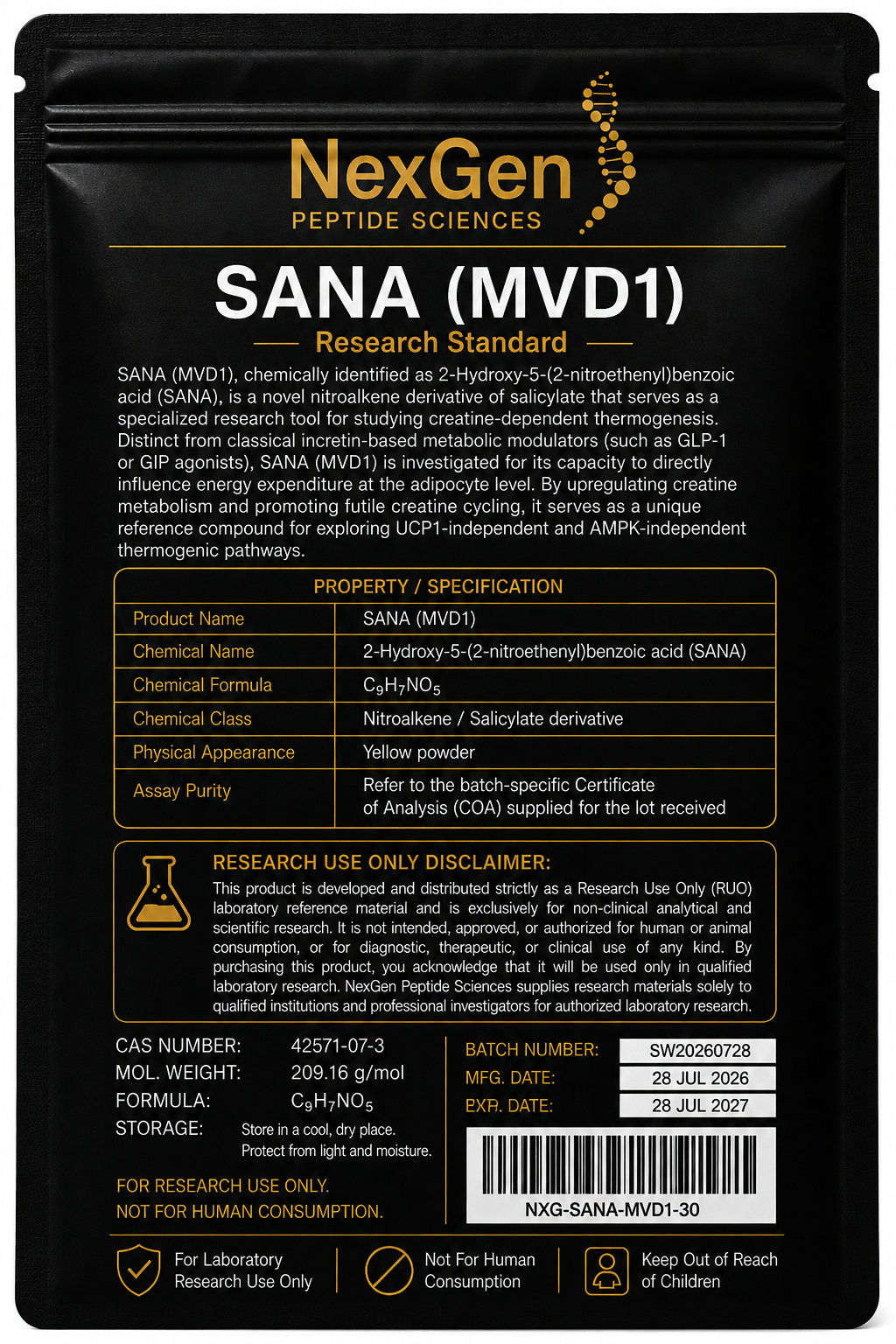 Image 2 of 3
 Image 3 of 3
SANA (MVD1), chemically identified as 5-(2-nitroethenyl)salicylic acid, is a novel nitroalkene derivative of salicylate that serves as a specialized research tool for studying creatine-dependent thermogenesis. Distinct from classical incretin-based metabolic modulators (such as GLP-1 or GIP agonists), SANA (MVD1) is investigated for its capacity to directly influence energy expenditure at the adipocyte level. By upregulating creatine metabolism and promoting futile creatine cycling, it serves as a unique reference compound for exploring UCP1-independent and AMPK-independent thermogenic pathways.
PROPERTY- SPECIFICATION
Product Name: SANA (MVD1)
Chemical Name: 5-(2-Nitroethenyl)salicylic acid
Chemical Formula: C₉H₇NO₅
Physical Appearance: Yellow Powder
Assay Purity: Refer to the batch-specific Certificate of Analysis (COA) supplied for the lot received
SANA (MVD1) represents a distinct mechanistic class in metabolic research, focusing on the acceleration of ATP hydrolysis through futile cycles.
Creatine-Dependent Thermogenesis: The compound is characterized by its ability to upregulate genes associated with creatine metabolism and enhance creatine kinase activity within adipose tissue.
Thermogenic Pathway: Unlike classical brown adipose thermogenesis, which relies on Uncoupling Protein 1 (UCP1), SANA functions through a UCP1-independent pathway, driving heat output via the hydrolysis of ATP in a futile creatine cycling loop.
Pathway Independence: Preclinical data suggests the compound operates independently of the canonical AMPK energy-sensor pathway, distinguishing it from pharmaceutical agents that modulate systemic appetite or metabolic signaling sensors.
Lean Mass Preservation: Research models contrast the metabolic profile of SANA with that of incretin-based agonists, often citing its potential to preserve lean mass during periods of increased energy expenditure.
SANA (MVD1) is an essential reagent for laboratories investigating the nuances of adipose tissue metabolism and bioenergetics.
Primary fields of in vitro laboratory investigation include:
Creatine-Dependent Thermogenesis: Mapping the specific molecular steps of creatine-driven futile cycling.
Adipocyte Bioenergetics: Measuring direct energy expenditure and ATP hydrolysis rates in isolated adipose cells.
Metabolic Comparative Research: Using SANA as a baseline to differentiate outcomes against incretin-class (GLP-1/GIP) compounds.
Nitroalkene/Salicylate SAR Studies: Investigating the structure-activity relationship of nitroalkene derivatives on metabolic endpoints.
UCP1-Independent Research: Utilizing the compound as a tool to bypass classical brown fat activation models.
To maintain the chemical stability and experimental viability of the compound:
Storage Environment: Store in a cool, dry place. Ensure the compound is protected from humidity to prevent degradation of the lyophilized powder.
Light Sensitivity: Maintain in a light-protected environment, as nitroalkene compounds can be sensitive to photodegradation.
Container Integrity: Keep the container tightly sealed when not in use to ensure atmospheric stability.
Aseptic Technique: Handle with clean laboratory tools to prevent contamination of the reference material.
COMPOUND CLASS - Nitroalkene / Salicylate derivative
CAS NUMBER- 42571-07-3
OTHER NAMES2 -Hydroxy-5-(2-nitrovinyl)benzoic acid, Benzoic acid, 2-hydroxy-5-(2-nitroethenyl)-, (E)-2-Hydroxy-5-(2-nitrovinyl)benzoic acid
IUPAC NAME2-hydroxy-5-(2-nitroethenyl)benzoic acid
MOLECULAR FORMULA- C9H7NO5
MOLECULAR WEIGHT- 209.157
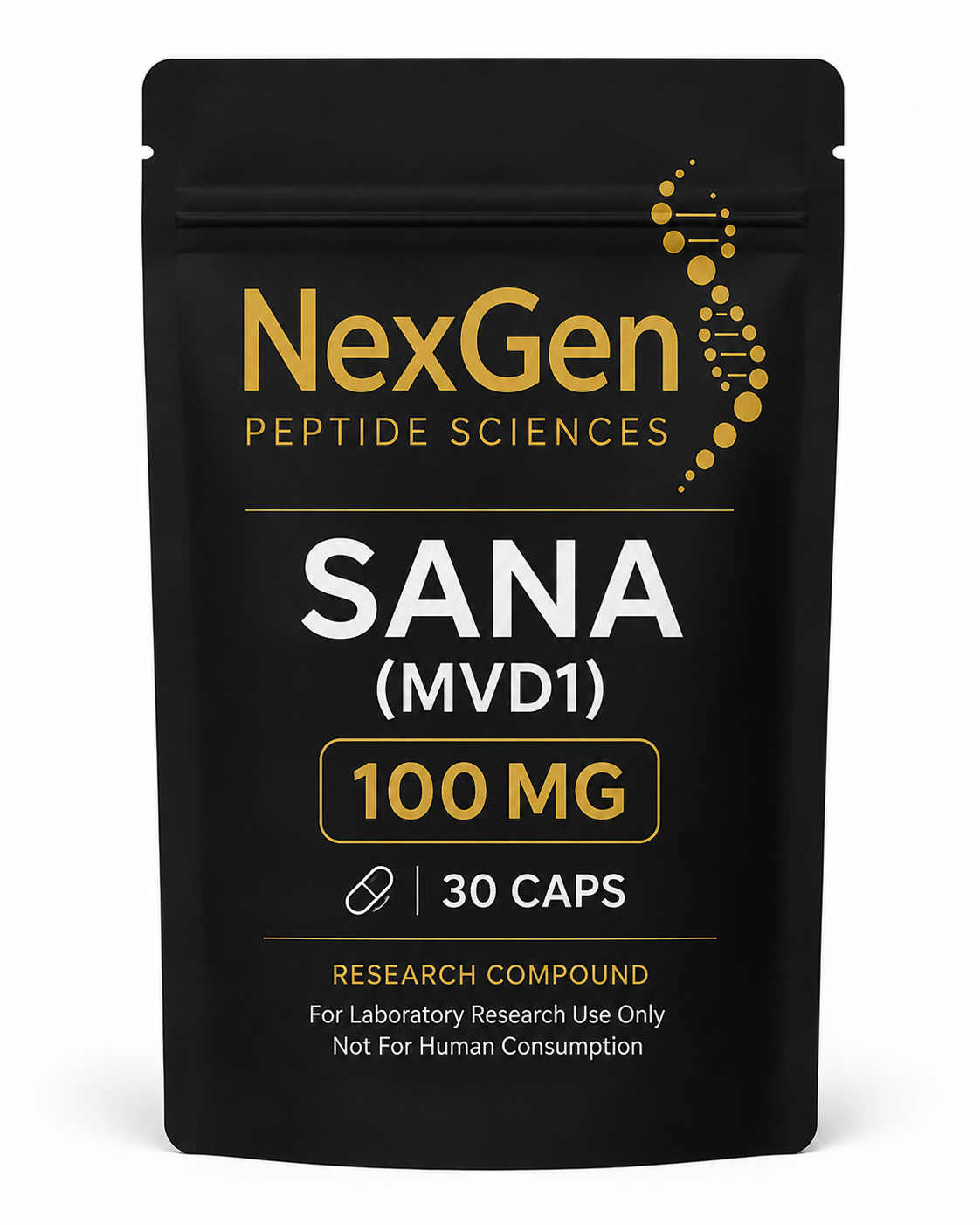
CAPSULE CONCENTRATION - 100mg x 30ct
Research Use Only
All products supplied by Nexgen Peptide Sciences are intended strictly for laboratory research use. They are not drugs, dietary supplements, food, cosmetics, not intended to diagnose, treat, cure, or prevent any disease or veterinary products, and are not for human or animal consumption.
Regulatory Status
Nexgen Peptide Sciences is a chemical supplier. NexGen Peptide Sciences is not a compounding pharmacy or chemical compounding facility as defined under Section 503A of the Federal Food, Drug, and Cosmetic Act, and is not an outsourcing facility as defined under Section 503B of that Act.
Intended Use and Handling
The products we offer are not intended for human use. They are intended for in-vitro and pre-clinical research purposes only. The customer acknowledges that risks exist in the handling, use, and distribution of these products, and certifies that it has the proper equipment, facilities, and personnel to manage those risks, and knowingly accepts them. These chemicals are not intended to be used, and should not be used, in inappropriate applications — including, without limitation, as food additives, drugs, cosmetics, or household chemicals, or in any application outside of in-vitro laboratory research, pre-clinical research, or laboratory chemical synthesis and materials testing.
Customer Responsibility
By purchasing these products, the customer agrees to the above. In the event the customer uses, or causes others to use, these products outside of these restrictions, the customer accepts all risk of doing so, absolves Nexgen Peptide Sciences of any responsibility for such actions, and agrees to indemnify and hold Nexgen Peptide Sciences harmless against any third-party claims arising from them.
This product is in powder form and is not reconstituted. All materials sold on this site are for laboratory research purposes only and are subject to our Terms and Conditions.
SANA (MVD1), chemically identified as 5-(2-nitroethenyl)salicylic acid, is a novel nitroalkene derivative of salicylate that serves as a specialized research tool for studying creatine-dependent thermogenesis. Distinct from classical incretin-based metabolic modulators (such as GLP-1 or GIP agonists), SANA (MVD1) is investigated for its capacity to directly influence energy expenditure at the adipocyte level. By upregulating creatine metabolism and promoting futile creatine cycling, it serves as a unique reference compound for exploring UCP1-independent and AMPK-independent thermogenic pathways.
PROPERTY- SPECIFICATION
Product Name: SANA (MVD1)
Chemical Name: 5-(2-Nitroethenyl)salicylic acid
Chemical Formula: C₉H₇NO₅
Physical Appearance: Yellow Powder
Assay Purity: Refer to the batch-specific Certificate of Analysis (COA) supplied for the lot received
SANA (MVD1) represents a distinct mechanistic class in metabolic research, focusing on the acceleration of ATP hydrolysis through futile cycles.
Creatine-Dependent Thermogenesis: The compound is characterized by its ability to upregulate genes associated with creatine metabolism and enhance creatine kinase activity within adipose tissue.
Thermogenic Pathway: Unlike classical brown adipose thermogenesis, which relies on Uncoupling Protein 1 (UCP1), SANA functions through a UCP1-independent pathway, driving heat output via the hydrolysis of ATP in a futile creatine cycling loop.
Pathway Independence: Preclinical data suggests the compound operates independently of the canonical AMPK energy-sensor pathway, distinguishing it from pharmaceutical agents that modulate systemic appetite or metabolic signaling sensors.
Lean Mass Preservation: Research models contrast the metabolic profile of SANA with that of incretin-based agonists, often citing its potential to preserve lean mass during periods of increased energy expenditure.
SANA (MVD1) is an essential reagent for laboratories investigating the nuances of adipose tissue metabolism and bioenergetics.
Primary fields of in vitro laboratory investigation include:
Creatine-Dependent Thermogenesis: Mapping the specific molecular steps of creatine-driven futile cycling.
Adipocyte Bioenergetics: Measuring direct energy expenditure and ATP hydrolysis rates in isolated adipose cells.
Metabolic Comparative Research: Using SANA as a baseline to differentiate outcomes against incretin-class (GLP-1/GIP) compounds.
Nitroalkene/Salicylate SAR Studies: Investigating the structure-activity relationship of nitroalkene derivatives on metabolic endpoints.
UCP1-Independent Research: Utilizing the compound as a tool to bypass classical brown fat activation models.
To maintain the chemical stability and experimental viability of the compound:
Storage Environment: Store in a cool, dry place. Ensure the compound is protected from humidity to prevent degradation of the lyophilized powder.
Light Sensitivity: Maintain in a light-protected environment, as nitroalkene compounds can be sensitive to photodegradation.
Container Integrity: Keep the container tightly sealed when not in use to ensure atmospheric stability.
Aseptic Technique: Handle with clean laboratory tools to prevent contamination of the reference material.
COMPOUND CLASS - Nitroalkene / Salicylate derivative
CAS NUMBER- 42571-07-3
OTHER NAMES2 -Hydroxy-5-(2-nitrovinyl)benzoic acid, Benzoic acid, 2-hydroxy-5-(2-nitroethenyl)-, (E)-2-Hydroxy-5-(2-nitrovinyl)benzoic acid
IUPAC NAME2-hydroxy-5-(2-nitroethenyl)benzoic acid
MOLECULAR FORMULA- C9H7NO5
MOLECULAR WEIGHT- 209.157
CAPSULE CONCENTRATION - 100mg x 30ct
Research Use Only
All products supplied by Nexgen Peptide Sciences are intended strictly for laboratory research use. They are not drugs, dietary supplements, food, cosmetics, not intended to diagnose, treat, cure, or prevent any disease or veterinary products, and are not for human or animal consumption.
Regulatory Status
Nexgen Peptide Sciences is a chemical supplier. NexGen Peptide Sciences is not a compounding pharmacy or chemical compounding facility as defined under Section 503A of the Federal Food, Drug, and Cosmetic Act, and is not an outsourcing facility as defined under Section 503B of that Act.
Intended Use and Handling
The products we offer are not intended for human use. They are intended for in-vitro and pre-clinical research purposes only. The customer acknowledges that risks exist in the handling, use, and distribution of these products, and certifies that it has the proper equipment, facilities, and personnel to manage those risks, and knowingly accepts them. These chemicals are not intended to be used, and should not be used, in inappropriate applications — including, without limitation, as food additives, drugs, cosmetics, or household chemicals, or in any application outside of in-vitro laboratory research, pre-clinical research, or laboratory chemical synthesis and materials testing.
Customer Responsibility
By purchasing these products, the customer agrees to the above. In the event the customer uses, or causes others to use, these products outside of these restrictions, the customer accepts all risk of doing so, absolves Nexgen Peptide Sciences of any responsibility for such actions, and agrees to indemnify and hold Nexgen Peptide Sciences harmless against any third-party claims arising from them.
This product is in powder form and is not reconstituted. All materials sold on this site are for laboratory research purposes only and are subject to our Terms and Conditions.