 Image 1 of 2
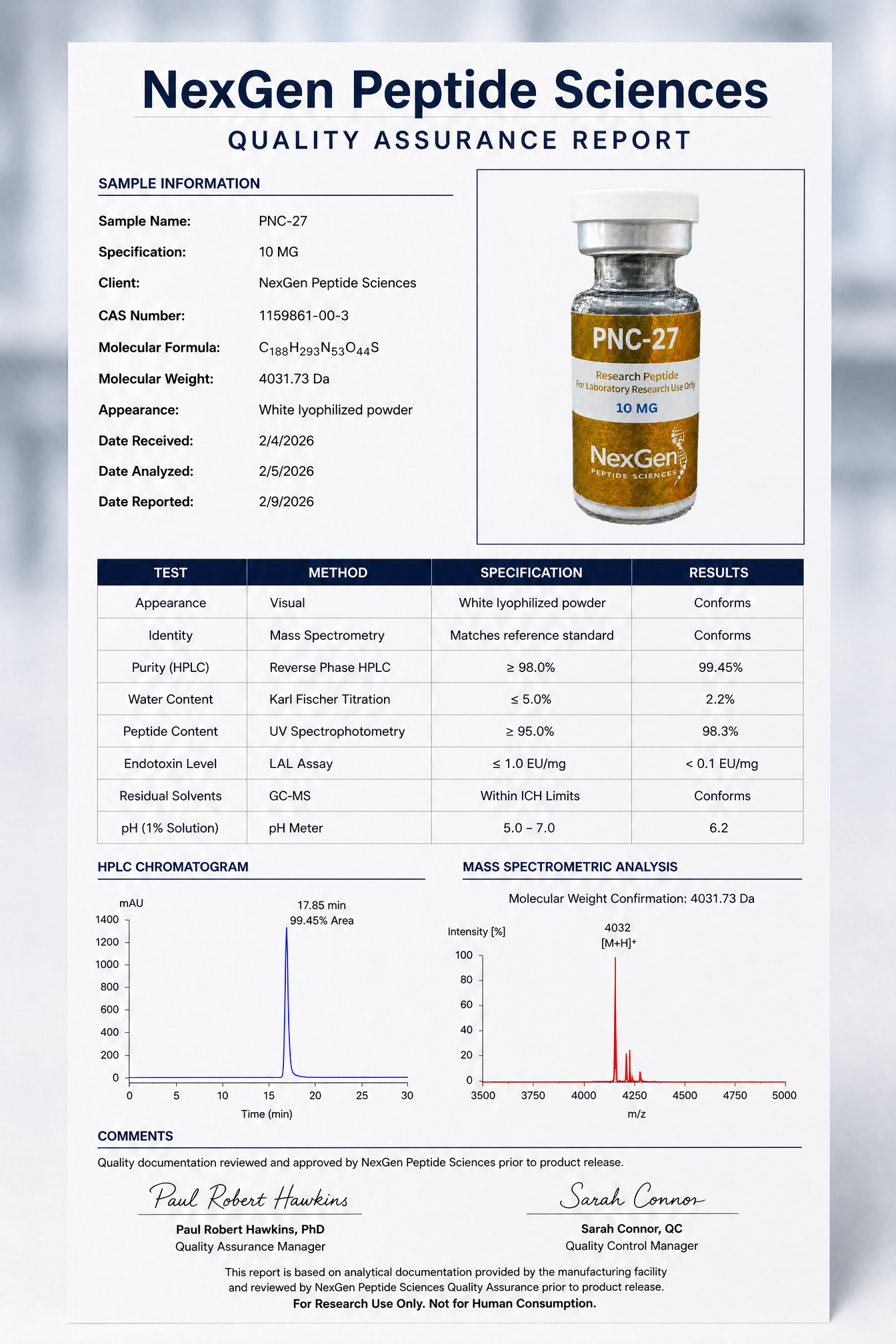 Image 2 of 2
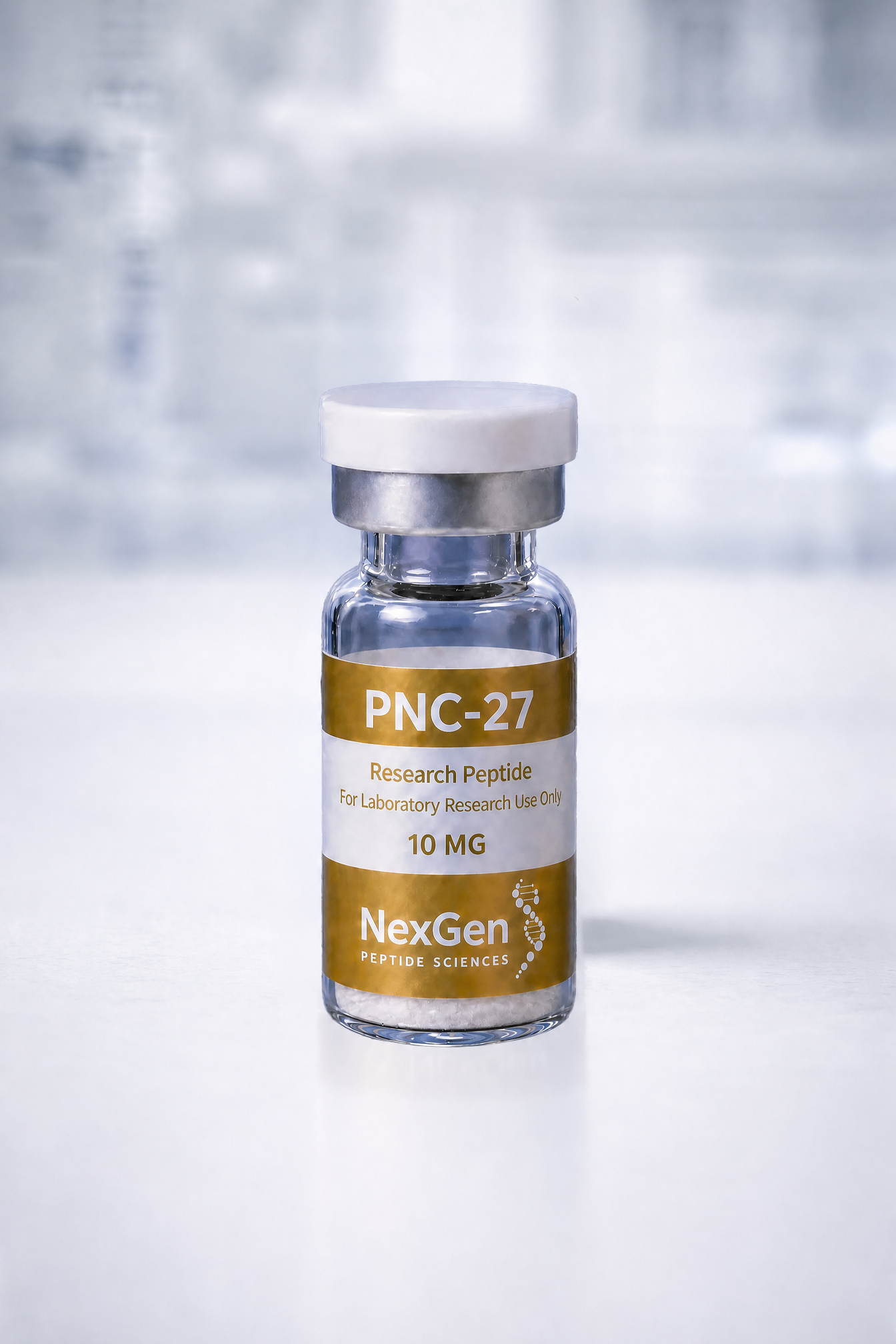
PNC-27 - 10 MG
⭐ ⭐ ⭐ ⭐ ⭐ 4.9/4 Based on verified feedback
PNC-27 - Target: Oncology, Molecular Pathophysiology, and Experimental Therapeutics.
PNC-27 is primarily used in clinical research to explore its potential as an anticancer therapy. It is investigated for treating various cancers, including melanoma, prostate cancer, breast cancer, and leukemia, by inducing selective necrosis in tumor cells while sparing healthy tissues.
Studies focus on its ability to manage advanced solid tumors, with some trials reporting tumor regression and disease stabilization in patients with limited treatment options. PNC-27 is also examined for its synergistic effects with chemotherapy agents like paclitaxel, particularly in ovarian cancer, to enhance tumor cell destruction.
Core Focal Point: HDM-2 Target Profiling and Selectively Induced Membranolytic Necrosis.
1. Molecular Design & Engineering.
PNC-27 is a synthetic, chimeric 32-amino acid peptide originally designed by a supercomputer in 2000. It consists of two distinct segments fused together:
The Warhead Segment (Residues 12–26 of p53): This portion matches the exact sequence of the human p53 tumor suppressor protein that naturally binds to HDM-2 (Human Double Minute 2, also known as MDM-2 in mice).
The Delivery Segment (Penetratin Sequence): A highly specialized, transmembrane-penetrating leader sequence derived from Antennapedia. It anchors the peptide and forces it into the plasma membrane.
2. 🎯 The Cellular Mechanism: The "Battering Ram"
To explain PNC-27 to your class, map out this molecular sequence. It exploits a unique structural mistake that only cancer cells make:
[Normal Cell: HDM-2 trapped inside the nucleus] ──► [PNC-27 ignored; cell is completely safe]

[Cancer Cell: HDM-2 is abnormally expressed on the outer cell membrane]
                                    │
                                    ▼
                     [PNC-27 Administered to Body]
                                    │
                                    ▼
       [PNC-27's Warhead Domain Binds 1:1 with Membrane-Bound HDM-2]
                                    │
                                    ▼
      [Complexes Aggregate to Form Open Transmembrane Pores (Holes)]
                                    │
                                    ▼
    [Extracellular Fluid Rushes In ──► Osmotic Lysis & Tumoral Necrosis]
Step 1: Exploiting the Cancer Biomarker (HDM-2)
In a healthy, normal cell, the HDM-2 protein stays strictly inside the nucleus, where it acts as a regulator to degrade excess p53. However, cancer cells abnormally transport large amounts of full-length HDM-2 out to their external cell membranes. Healthy cells never do this.
Step 2: Aggregation and Pore Formation.
When introduced, PNC-27 travels through the body. It completely ignores healthy cells because they have no surface HDM-2. When it finds a cancer cell, the p53 domain binds tightly (in a 1:1 molecular ratio) to the membrane-bound HDM-2. The penetratin segment then loops into the membrane, causing these PNC-27/HDM-2 complexes to stick together in layered, ring-shaped structures.
Step 3: Death by Osmotic Lysis (Explosion)
These ring structures form a physical transmembrane pore (an open hole) straight through the cancer cell’s protective wall. Extracellular fluid rapidly floods inside the cancer cell, causing it to swell up and pop. This induces necrosis (sudden cell lysis) rather than slow apoptosis, destroying the tumor cell in minutes.
3. Diseases & Malignancies That Benefit From PNC-27.
Because almost all solid tumors and blood cancers overexpress HDM-2 on their surfaces to survive, PNC-27 behaves as a broad-spectrum anti-cancer agent across a vast array of malignancies:
1. Highly Metastatic Pancreatic Cancer
The Disease: One of the most aggressive, chemotherapy-resistant cancers, which rapidly forms dense stroma around its cells to block traditional medication.
The Benefit: In preclinical testing, PNC-27 successfully eradicated high-metastatic-potential pancreatic tumor cells (such as the TUC-3 line) without damaging pancreatic tissue.
2. Acute & Chronic Myelogenous Leukemia (AML / CML)
The Disease: Blood and bone marrow cancers that severely compromise the immune system. Traditional chemo wipes out a patient's healthy bone marrow stem cells, causing dangerous white blood cell crashes.
The Benefit: Studies show PNC-27 induces rapid necrosis in human acute myelogenous leukemia cells. Crucially, it leaves healthy hematopoetic stem cells completely alone, meaning it does not cause bone marrow suppression.
3. Solid Epithelial Tumors (Breast, Cervical, and Colon Cancer)
The Disease: Advanced cancers that form dense, physical tumor masses.
The Benefit: Highly effective against human breast cancer cells (MCF-7), cervical cancer, and colon cancer cells. Because it punctures the membrane physically, it functions successfully even in "p53-null" cancer lines that are entirely resistant to ordinary radiation therapy.
"Most cancer drugs are chemical poisons that try to corrupt the cell from the inside out, often killing healthy cells by accident. PNC-27 is a biological drill. It targets a protein marker that only cancer cells display on their outer walls, boring holes into their membranes and causing them to burst, while leaving normal tissue completely unharmed."
Potential Risks.
Waste Filtration Load: Because it triggers massive, rapid necrosis (cell popping) rather than slow cellular recycling, destroying a very large tumor too quickly can flood the bloodstream with cellular debris, putting a heavy filtration burden on the patient’s liver and kidneys.
Product Details
• Compound: PNC-27
• Quantity: 10 mg
• Form: Lyophilized Powder
• Purity: ≥99% (if applicable)
• Storage: Store in a controlled laboratory environment, protected from light and moisture
Research Use Only
All products supplied by Nexgen Peptide Sciences are intended strictly for laboratory research use. They are not drugs, dietary supplements, food, cosmetics, not intended to diagnose, treat, cure, or prevent any disease or veterinary products, and are not for human or animal consumption.
Regulatory Status
Nexgen Peptide Sciences is a chemical supplier. NexGen Peptide Sciences is not a compounding pharmacy or chemical compounding facility as defined under Section 503A of the Federal Food, Drug, and Cosmetic Act, and is not an outsourcing facility as defined under Section 503B of that Act.
Intended Use and Handling
The products we offer are not intended for human use. They are intended for in-vitro and pre-clinical research purposes only. The customer acknowledges that risks exist in the handling, use, and distribution of these products, and certifies that it has the proper equipment, facilities, and personnel to manage those risks, and knowingly accepts them. These chemicals are not intended to be used, and should not be used, in inappropriate applications — including, without limitation, as food additives, drugs, cosmetics, or household chemicals, or in any application outside of in-vitro laboratory research, pre-clinical research, or laboratory chemical synthesis and materials testing.
Customer Responsibility
By purchasing these products, the customer agrees to the above. In the event the customer uses, or causes others to use, these products outside of these restrictions, the customer accepts all risk of doing so, absolves Nexgen Peptide Sciences of any responsibility for such actions, and agrees to indemnify and hold Nexgen Peptide Sciences harmless against any third-party claims arising from them.
This product is in powder form and is not reconstituted. All materials sold on this site are for laboratory research purposes only and are subject to our Terms and Conditions.
By purchasing, the buyer confirms this product will be used strictly for laboratory research purposes.
⭐ ⭐ ⭐ ⭐ ⭐ 4.9/4 Based on verified feedback
PNC-27 - Target: Oncology, Molecular Pathophysiology, and Experimental Therapeutics.
PNC-27 is primarily used in clinical research to explore its potential as an anticancer therapy. It is investigated for treating various cancers, including melanoma, prostate cancer, breast cancer, and leukemia, by inducing selective necrosis in tumor cells while sparing healthy tissues.
Studies focus on its ability to manage advanced solid tumors, with some trials reporting tumor regression and disease stabilization in patients with limited treatment options. PNC-27 is also examined for its synergistic effects with chemotherapy agents like paclitaxel, particularly in ovarian cancer, to enhance tumor cell destruction.
Core Focal Point: HDM-2 Target Profiling and Selectively Induced Membranolytic Necrosis.
1. Molecular Design & Engineering.
PNC-27 is a synthetic, chimeric 32-amino acid peptide originally designed by a supercomputer in 2000. It consists of two distinct segments fused together:
The Warhead Segment (Residues 12–26 of p53): This portion matches the exact sequence of the human p53 tumor suppressor protein that naturally binds to HDM-2 (Human Double Minute 2, also known as MDM-2 in mice).
The Delivery Segment (Penetratin Sequence): A highly specialized, transmembrane-penetrating leader sequence derived from Antennapedia. It anchors the peptide and forces it into the plasma membrane.
2. 🎯 The Cellular Mechanism: The "Battering Ram"
To explain PNC-27 to your class, map out this molecular sequence. It exploits a unique structural mistake that only cancer cells make:
[Normal Cell: HDM-2 trapped inside the nucleus] ──► [PNC-27 ignored; cell is completely safe]

[Cancer Cell: HDM-2 is abnormally expressed on the outer cell membrane]
                                    │
                                    ▼
                     [PNC-27 Administered to Body]
                                    │
                                    ▼
       [PNC-27's Warhead Domain Binds 1:1 with Membrane-Bound HDM-2]
                                    │
                                    ▼
      [Complexes Aggregate to Form Open Transmembrane Pores (Holes)]
                                    │
                                    ▼
    [Extracellular Fluid Rushes In ──► Osmotic Lysis & Tumoral Necrosis]
Step 1: Exploiting the Cancer Biomarker (HDM-2)
In a healthy, normal cell, the HDM-2 protein stays strictly inside the nucleus, where it acts as a regulator to degrade excess p53. However, cancer cells abnormally transport large amounts of full-length HDM-2 out to their external cell membranes. Healthy cells never do this.
Step 2: Aggregation and Pore Formation.
When introduced, PNC-27 travels through the body. It completely ignores healthy cells because they have no surface HDM-2. When it finds a cancer cell, the p53 domain binds tightly (in a 1:1 molecular ratio) to the membrane-bound HDM-2. The penetratin segment then loops into the membrane, causing these PNC-27/HDM-2 complexes to stick together in layered, ring-shaped structures.
Step 3: Death by Osmotic Lysis (Explosion)
These ring structures form a physical transmembrane pore (an open hole) straight through the cancer cell’s protective wall. Extracellular fluid rapidly floods inside the cancer cell, causing it to swell up and pop. This induces necrosis (sudden cell lysis) rather than slow apoptosis, destroying the tumor cell in minutes.
3. Diseases & Malignancies That Benefit From PNC-27.
Because almost all solid tumors and blood cancers overexpress HDM-2 on their surfaces to survive, PNC-27 behaves as a broad-spectrum anti-cancer agent across a vast array of malignancies:
1. Highly Metastatic Pancreatic Cancer
The Disease: One of the most aggressive, chemotherapy-resistant cancers, which rapidly forms dense stroma around its cells to block traditional medication.
The Benefit: In preclinical testing, PNC-27 successfully eradicated high-metastatic-potential pancreatic tumor cells (such as the TUC-3 line) without damaging pancreatic tissue.
2. Acute & Chronic Myelogenous Leukemia (AML / CML)
The Disease: Blood and bone marrow cancers that severely compromise the immune system. Traditional chemo wipes out a patient's healthy bone marrow stem cells, causing dangerous white blood cell crashes.
The Benefit: Studies show PNC-27 induces rapid necrosis in human acute myelogenous leukemia cells. Crucially, it leaves healthy hematopoetic stem cells completely alone, meaning it does not cause bone marrow suppression.
3. Solid Epithelial Tumors (Breast, Cervical, and Colon Cancer)
The Disease: Advanced cancers that form dense, physical tumor masses.
The Benefit: Highly effective against human breast cancer cells (MCF-7), cervical cancer, and colon cancer cells. Because it punctures the membrane physically, it functions successfully even in "p53-null" cancer lines that are entirely resistant to ordinary radiation therapy.
"Most cancer drugs are chemical poisons that try to corrupt the cell from the inside out, often killing healthy cells by accident. PNC-27 is a biological drill. It targets a protein marker that only cancer cells display on their outer walls, boring holes into their membranes and causing them to burst, while leaving normal tissue completely unharmed."
Potential Risks.
Waste Filtration Load: Because it triggers massive, rapid necrosis (cell popping) rather than slow cellular recycling, destroying a very large tumor too quickly can flood the bloodstream with cellular debris, putting a heavy filtration burden on the patient’s liver and kidneys.
Product Details
• Compound: PNC-27
• Quantity: 10 mg
• Form: Lyophilized Powder
• Purity: ≥99% (if applicable)
• Storage: Store in a controlled laboratory environment, protected from light and moisture
Research Use Only
All products supplied by Nexgen Peptide Sciences are intended strictly for laboratory research use. They are not drugs, dietary supplements, food, cosmetics, not intended to diagnose, treat, cure, or prevent any disease or veterinary products, and are not for human or animal consumption.
Regulatory Status
Nexgen Peptide Sciences is a chemical supplier. NexGen Peptide Sciences is not a compounding pharmacy or chemical compounding facility as defined under Section 503A of the Federal Food, Drug, and Cosmetic Act, and is not an outsourcing facility as defined under Section 503B of that Act.
Intended Use and Handling
The products we offer are not intended for human use. They are intended for in-vitro and pre-clinical research purposes only. The customer acknowledges that risks exist in the handling, use, and distribution of these products, and certifies that it has the proper equipment, facilities, and personnel to manage those risks, and knowingly accepts them. These chemicals are not intended to be used, and should not be used, in inappropriate applications — including, without limitation, as food additives, drugs, cosmetics, or household chemicals, or in any application outside of in-vitro laboratory research, pre-clinical research, or laboratory chemical synthesis and materials testing.
Customer Responsibility
By purchasing these products, the customer agrees to the above. In the event the customer uses, or causes others to use, these products outside of these restrictions, the customer accepts all risk of doing so, absolves Nexgen Peptide Sciences of any responsibility for such actions, and agrees to indemnify and hold Nexgen Peptide Sciences harmless against any third-party claims arising from them.
This product is in powder form and is not reconstituted. All materials sold on this site are for laboratory research purposes only and are subject to our Terms and Conditions.
By purchasing, the buyer confirms this product will be used strictly for laboratory research purposes.