 Image 1 of 2
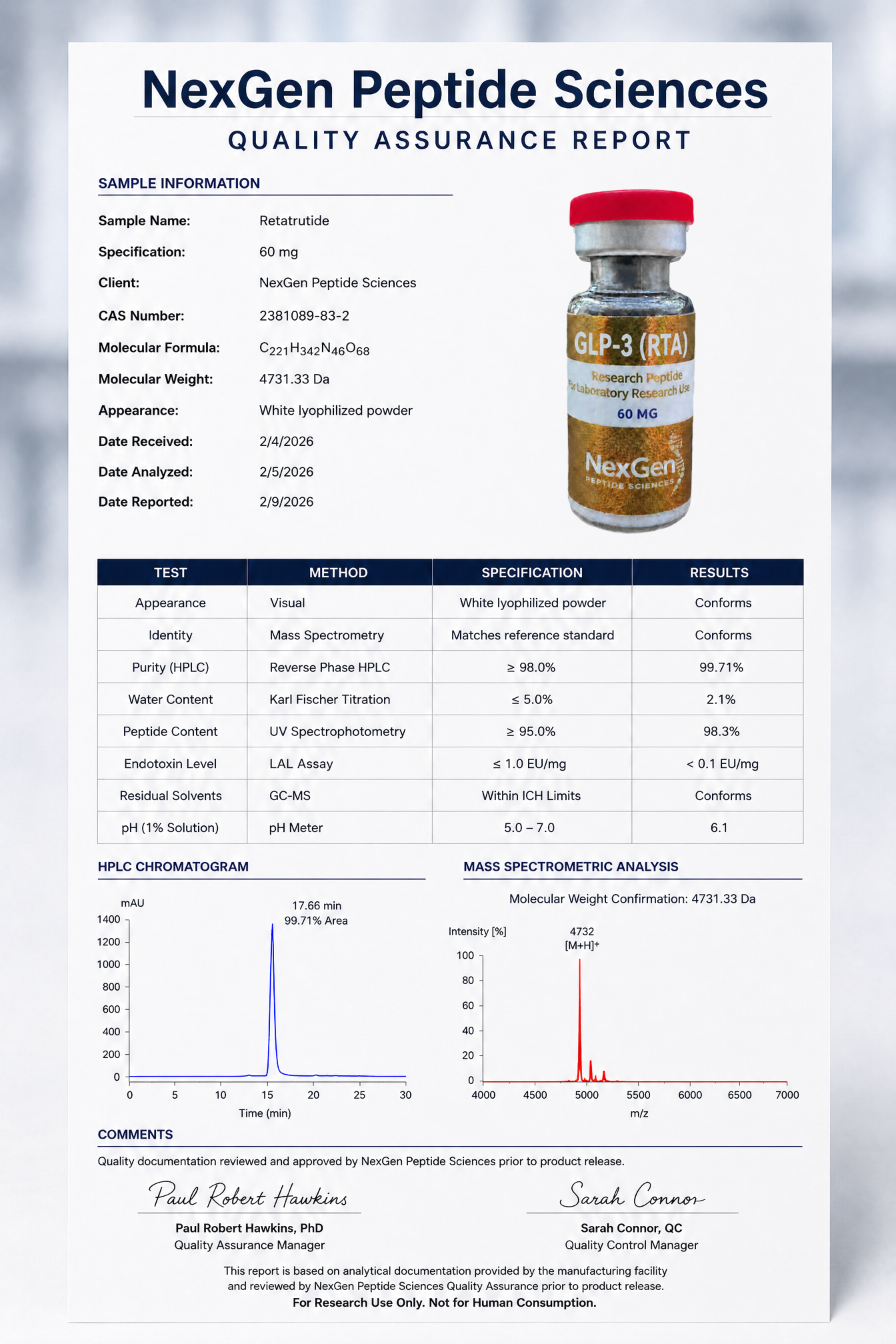 Image 2 of 2
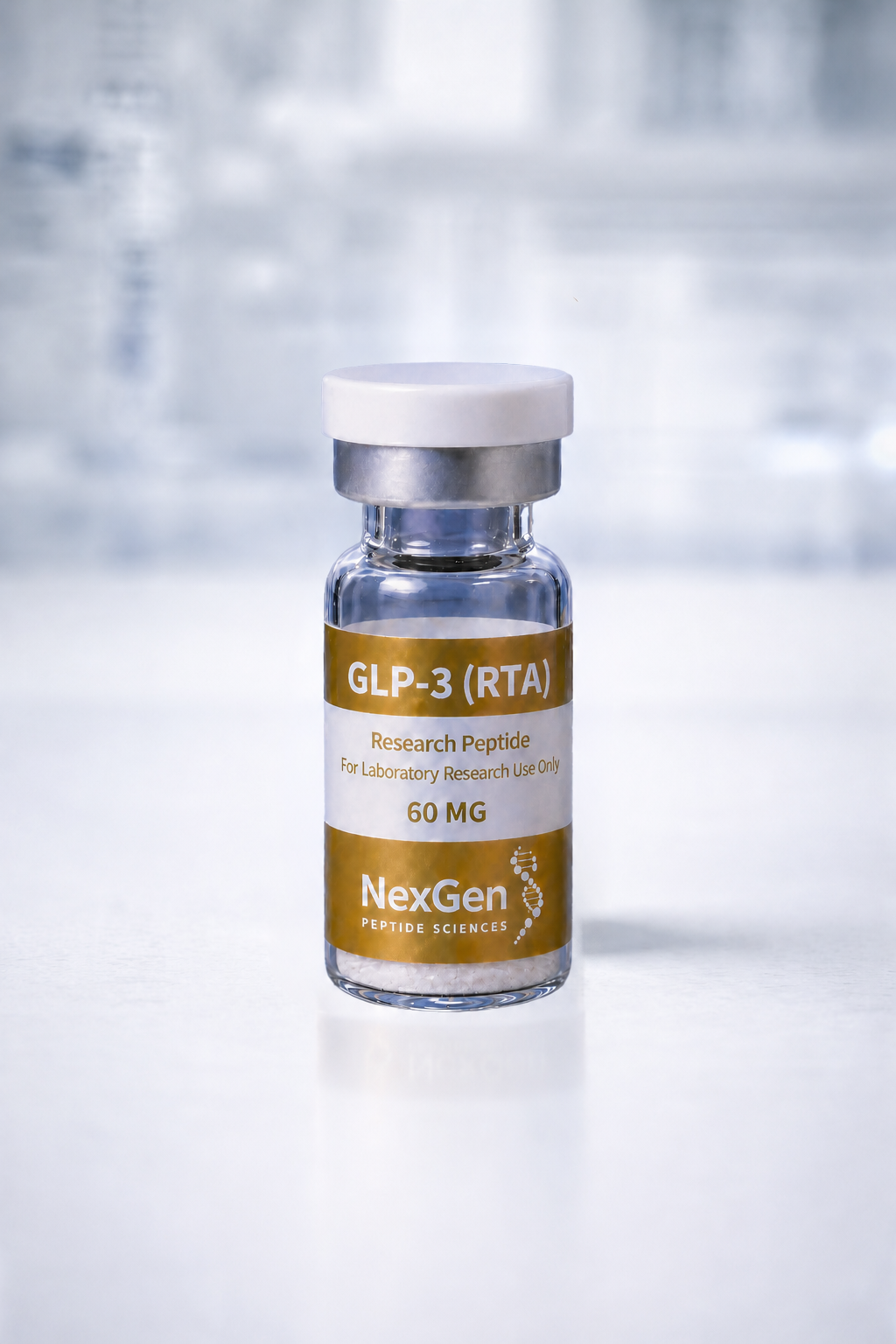
GLP-3 (RTA) 60 MG | Research Compound
⭐ ⭐ ⭐ ⭐ ⭐ 4.9/395 Based on verified feedback
Consistent quality • Professional handling • Reliable delivery
🔴 HIGH DEMAND
$220.00
GLP-3 (RTA) 60 MG – Research Peptide
Triple Agonist Mechanism of Action (MOA)
Unlike single-target drugs Retatrutide acts like a "metabolic orchestra conductor" by simultaneously activating three major nutrient-sensing receptors:
GLP-1 (Glucagon-Like Peptide-1) Receptor Agonism: Stimulates insulin secretion in a glucose-dependent manner, delays gastric emptying (slowing digestion), and acts on the brain's hypothalamus to suppress appetite.
GIP (Glucose-Dependent Insulinotropic Polypeptide) Receptor Agonism: Synergizes with GLP-1 to enhance insulin secretion, improves lipid (fat) buffering capability in adipose tissue, and crucially reduces the severity of nausea typically triggered by high-dose GLP-1 stimulation.
Glucagon Receptor Agonism: This is Retatrutide's unique edge. Glucagon normally raises blood sugar, but its hyper-glycemic effect is entirely neutralized by the co-activation of GLP-1 and GIP. Instead, glucagon safely drives weight loss by increasing energy expenditure (calories burned) and directly accelerating lipolysis (fat breakdown) in the liver.
3. Key Clinical Trial Insights
Data published across the Phase 2 and ongoing Phase 3 trials highlight unprecedented weight loss metrics:
Total Body Weight Loss
In Phase 3 data, participants on the highest weekly dose (12 mg) experienced a mean weight loss of up to 28% of their starting body weight over 68 to 80 weeks (an average of over 70 lbs). This makes it the most potent anti-obesity pharmacological agent tested to date.
The "Appetite Paradox" & Body Composition.
Because the glucagon pathway independently upregulates energy expenditure and fat-burning pathways, some patients experience massive fat loss even with a less suppressed appetite compared to older peptides. Furthermore, data indicates Retatrutide targets adipose tissue so precisely that it preserves crucial lean muscle mass exceptionally well during rapid weight loss.
Fatty Liver Reversal.
In Phase 2 sub-studies, Retatrutide achieved an astonishing 82% average reduction in liver fat, completely clearing non-alcoholic fatty liver disease (NAFLD/MASLD) in a majority of the trial participants
Product Details:
• Compound:GLP-3
• Quantity: 60 mg
• Form: Lyophilized Powder
• Purity: ≥99% (if applicable)
• Storage: Store in a controlled laboratory environment, protected from light and moisture
This Research Use Only (“RUO”) Policy applies to research materials supplied by NexGen Peptide Sciences(“NexGen,” “we,” “us,” or “our”).
NexGen Peptide Sciences supplies research materials intended exclusively for legitimate laboratory, analytical, in-vitro, and pre-clinical research applications.
All products designated Research Use Only (RUO) are not intended for human or veterinary use or consumption.
Products sold by NexGen Peptide Sciences are not offered as drugs, dietary supplements, food products, cosmetics, or medical devices and are not represented as approved by the U.S. Food and Drug Administration (“FDA”) for therapeutic or diagnostic use.
NexGen Peptide Sciences does not provide dosing instructions, administration protocols, medical advice, or recommendations for human or animal use.
RUO products must not be used for diagnostic, therapeutic, preventative, or consumptive purposes or represented by the purchaser as intended for such purposes.
By purchasing RUO products from NexGen Peptide Sciences, the purchaser acknowledges and agrees that:
Products are purchased solely for legitimate research purposes.
Products are not intended for human or animal administration or consumption.
The purchaser is responsible for determining and complying with all applicable federal, state, local, and international laws and regulations.
The purchaser is responsible for maintaining appropriate facilities, equipment, procedures, training, and personnel for handling research materials.
The purchaser will not represent NexGen Peptide Sciences RUO products as products intended for human or veterinary use.
NexGen Peptide Sciences does not authorize use of its RUO products outside their stated research purpose. Any unauthorized use, handling, representation, resale, or application is contrary to the products’ designated intended use and is undertaken independently of NexGen Peptide Sciences.
Nexgen Peptide Sciences is a chemical supplier. NexGen Peptide Sciences is not a compounding pharmacy or chemical compounding facility as defined under Section 503A of the Federal Food, Drug, and Cosmetic Act, and is not an outsourcing facility as defined under Section 503B of that Act.
This policy should be read together with the Terms and Conditions, product-specific documentation, and other applicable policies published by NexGen Peptide Sciences.
GLP-3 (RTA) 60 MG | Research Compound
⭐ ⭐ ⭐ ⭐ ⭐ 4.9/395 Based on verified feedback
Consistent quality • Professional handling • Reliable delivery
🔴 HIGH DEMAND
$220.00
GLP-3 (RTA) 60 MG – Research Peptide
Triple Agonist Mechanism of Action (MOA)
Unlike single-target drugs Retatrutide acts like a "metabolic orchestra conductor" by simultaneously activating three major nutrient-sensing receptors:
GLP-1 (Glucagon-Like Peptide-1) Receptor Agonism: Stimulates insulin secretion in a glucose-dependent manner, delays gastric emptying (slowing digestion), and acts on the brain's hypothalamus to suppress appetite.
GIP (Glucose-Dependent Insulinotropic Polypeptide) Receptor Agonism: Synergizes with GLP-1 to enhance insulin secretion, improves lipid (fat) buffering capability in adipose tissue, and crucially reduces the severity of nausea typically triggered by high-dose GLP-1 stimulation.
Glucagon Receptor Agonism: This is Retatrutide's unique edge. Glucagon normally raises blood sugar, but its hyper-glycemic effect is entirely neutralized by the co-activation of GLP-1 and GIP. Instead, glucagon safely drives weight loss by increasing energy expenditure (calories burned) and directly accelerating lipolysis (fat breakdown) in the liver.
3. Key Clinical Trial Insights
Data published across the Phase 2 and ongoing Phase 3 trials highlight unprecedented weight loss metrics:
Total Body Weight Loss
In Phase 3 data, participants on the highest weekly dose (12 mg) experienced a mean weight loss of up to 28% of their starting body weight over 68 to 80 weeks (an average of over 70 lbs). This makes it the most potent anti-obesity pharmacological agent tested to date.
The "Appetite Paradox" & Body Composition.
Because the glucagon pathway independently upregulates energy expenditure and fat-burning pathways, some patients experience massive fat loss even with a less suppressed appetite compared to older peptides. Furthermore, data indicates Retatrutide targets adipose tissue so precisely that it preserves crucial lean muscle mass exceptionally well during rapid weight loss.
Fatty Liver Reversal.
In Phase 2 sub-studies, Retatrutide achieved an astonishing 82% average reduction in liver fat, completely clearing non-alcoholic fatty liver disease (NAFLD/MASLD) in a majority of the trial participants
Product Details:
• Compound:GLP-3
• Quantity: 60 mg
• Form: Lyophilized Powder
• Purity: ≥99% (if applicable)
• Storage: Store in a controlled laboratory environment, protected from light and moisture
This Research Use Only (“RUO”) Policy applies to research materials supplied by NexGen Peptide Sciences(“NexGen,” “we,” “us,” or “our”).
NexGen Peptide Sciences supplies research materials intended exclusively for legitimate laboratory, analytical, in-vitro, and pre-clinical research applications.
All products designated Research Use Only (RUO) are not intended for human or veterinary use or consumption.
Products sold by NexGen Peptide Sciences are not offered as drugs, dietary supplements, food products, cosmetics, or medical devices and are not represented as approved by the U.S. Food and Drug Administration (“FDA”) for therapeutic or diagnostic use.
NexGen Peptide Sciences does not provide dosing instructions, administration protocols, medical advice, or recommendations for human or animal use.
RUO products must not be used for diagnostic, therapeutic, preventative, or consumptive purposes or represented by the purchaser as intended for such purposes.
By purchasing RUO products from NexGen Peptide Sciences, the purchaser acknowledges and agrees that:
Products are purchased solely for legitimate research purposes.
Products are not intended for human or animal administration or consumption.
The purchaser is responsible for determining and complying with all applicable federal, state, local, and international laws and regulations.
The purchaser is responsible for maintaining appropriate facilities, equipment, procedures, training, and personnel for handling research materials.
The purchaser will not represent NexGen Peptide Sciences RUO products as products intended for human or veterinary use.
NexGen Peptide Sciences does not authorize use of its RUO products outside their stated research purpose. Any unauthorized use, handling, representation, resale, or application is contrary to the products’ designated intended use and is undertaken independently of NexGen Peptide Sciences.
Nexgen Peptide Sciences is a chemical supplier. NexGen Peptide Sciences is not a compounding pharmacy or chemical compounding facility as defined under Section 503A of the Federal Food, Drug, and Cosmetic Act, and is not an outsourcing facility as defined under Section 503B of that Act.
This policy should be read together with the Terms and Conditions, product-specific documentation, and other applicable policies published by NexGen Peptide Sciences.