 Image 1 of 2
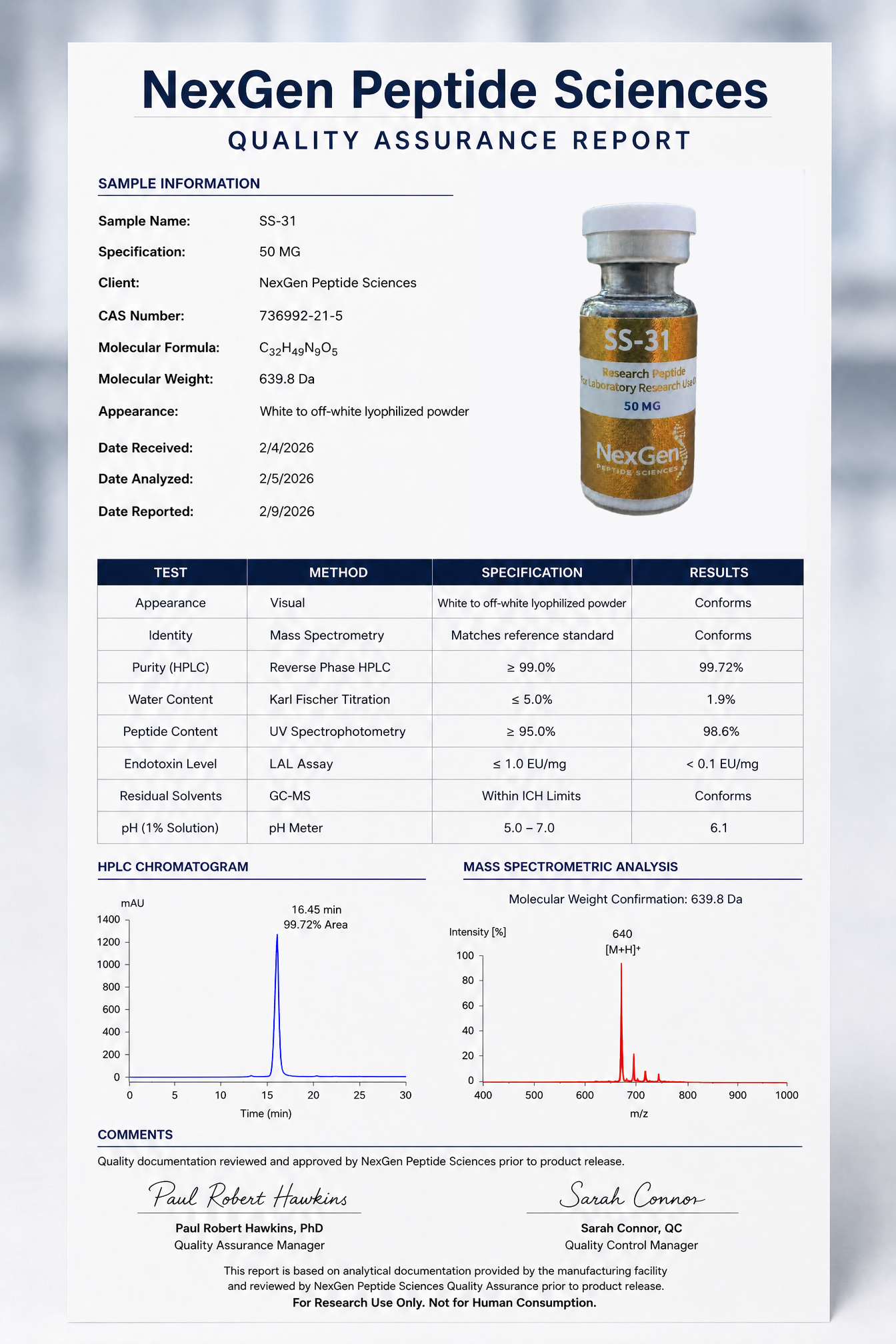 Image 2 of 2
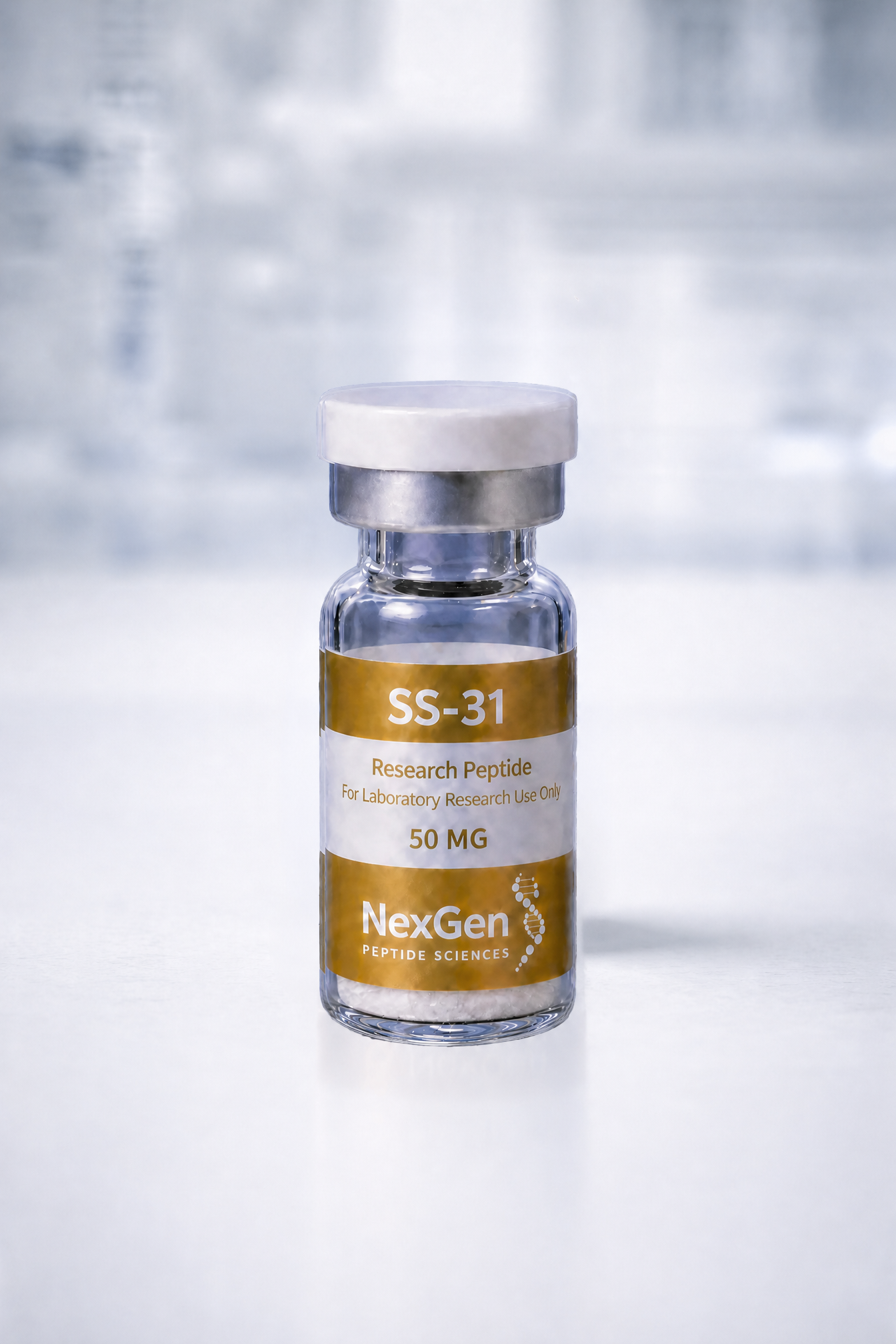
SS-31 50 MG
⭐ ⭐ ⭐ ⭐ ⭐ 4.9/59 Based on verified feedback
SS-31 (also known as elamipretide or Bendavia) is a synthetic, cell-permeable peptide that targets mitochondria to reduce oxidative stress and restore cellular energy production. It is primarily researched for treating mitochondrial diseases (like Barth Syndrome) and conditions impacted by age-related mitochondrial dysfunction.
How It Works
Cardiolipin Binding: SS-31 specifically binds to cardiolipin, a vital lipid exclusively located in the inner mitochondrial membrane.
Energy Optimization: By binding to cardiolipin, it helps cytochrome c function as an efficient electron carrier for ATP (energy) production rather than a peroxidase.
Damage Reduction: It scavenges reactive oxygen species (ROS) and protects the mitochondria from swelling or cell death during stress
SS-31, also known as Elamipretide, is a synthetic mitochondrial-targeted peptide with antioxidant properties, specifically designed to protect mitochondria from oxidative damage. By selectively binding to cardiolipin in the mitochondrial membrane, SS-31 helps to stabilize mitochondria, improve energy production, and reduce cellular damage caused by reactive oxygen species (ROS). Due to its role in supporting mitochondrial health, SS-31 has shown promise in clinical research for conditions associated with mitochondrial dysfunction, such as age-related muscle decline, neurodegenerative diseases, and cardiovascular health.
Most Common Uses
Treatment of Mitochondrial Diseases
SS-31 is widely studied for its potential to treat mitochondrial diseases, such as Leigh syndrome and Barth syndrome. These conditions arise from impaired mitochondrial function, leading to energy deficits in cells. SS-31 helps stabilize mitochondrial membranes, improve energy production, and reduce oxidative stress, offering potential benefits for patients with these rare genetic disorders.
Cardiovascular Health
SS-31 shows promise in supporting heart function, especially in conditions like heart failure and ischemic heart disease. Research indicates that SS-31 can protect heart tissue from damage during reduced blood flow, enhance energy production in cardiac cells, and reduce inflammation, making it a candidate for improving outcomes in heart-related conditions.
Neuroprotection
SS-31 is being explored for its role in protecting nerve cells in neurodegenerative disorders, such as Alzheimer’s and Parkinson’s diseases. By reducing oxidative damage and supporting mitochondrial function in neurons, SS-31 may help slow the progression of these conditions and preserve cognitive and motor functions.
Kidney Protection
SS-31 also shows potential in protecting kidney function, particularly in acute kidney injury and chronic kidney disease. Its ability to reduce oxidative stress and stabilize mitochondrial function in renal cells may help prevent damage from toxins, ischemia, or other stressors, supporting kidney health in at-risk patients.
Skeletal Muscle Function
SS-31 is investigated for its effects on improving skeletal muscle performance, especially in age-related muscle decline and muscular dystrophies. By enhancing mitochondrial efficiency, SS-31 may improve muscle strength and endurance, offering potential benefits for elderly individuals or those with muscle-wasting conditions.
Mechanism of Action
SS-31 is a synthetic tetrapeptide designed to target and support mitochondrial function. Its unique structure allows it to interact with mitochondria in a highly specific way, addressing cellular stress and energy deficits. The mechanism of action of SS-31 centers on its ability to stabilize mitochondrial membranes, enhance energy production, and reduce oxidative damage, making it a promising therapeutic for various conditions.
SS-31 selectively binds to cardiolipin, a phospholipid found in the inner mitochondrial membrane. Cardiolipin plays an essential role in maintaining the structure and function of mitochondria, particularly in supporting the activity of enzymes involved in ATP production. It stabilizes cardiolipin, preventing its peroxidation under conditions of oxidative stress. This interaction helps preserve the integrity of the mitochondrial membrane, ensuring efficient electron transport and ATP synthesis.
The peptide also reduces the production of reactive oxygen species (ROS) within mitochondria. Excessive ROS can damage cellular components, including proteins, lipids, and DNA, leading to impaired mitochondrial function. SS-31 mitigates this damage by neutralizing ROS and enhancing the activity of antioxidant defenses, creating a more balanced cellular environment.
Additionally, SS-31 improves mitochondrial dynamics, including processes like fusion and fission, which maintain mitochondrial health and adaptability. By supporting these processes, SS-31 helps cells respond to metabolic demands and stressors, promoting resilience in tissues with high energy needs, such as the heart, brain, and skeletal muscles.
Through these actions, SS-31 enhances cellular energy production, protects against oxidative damage, and supports mitochondrial stability, offering potential benefits for diseases characterized by mitochondrial dysfunction.
Dosages
SS-31 is commonly administered via subcutaneous injection at doses ranging from 10 mg to 40 mg daily. These trials often involve a regimen of daily injections over weeks or months to assess improvements in mitochondrial function and symptom relief. For example, studies in Barth syndrome have used 40 mg daily subcutaneous doses to evaluate effects on cardiac and skeletal muscle function.
For cardiovascular conditions, such as heart failure or ischemic heart disease, intravenous administration of SS-31 has been explored. Doses in these studies typically range from 0.005 mg/kg to 0.25 mg/kg, often given as a single infusion or repeated doses over a short period. These regimens aim to protect cardiac tissue and enhance energy production during stress, such as during reperfusion after a heart attack.
In trials targeting acute kidney injury, SS-31 has been administered intravenously at doses around 0.05 mg/kg to 0.25 mg/kg, often as a single dose or short-term infusion. These doses focus on reducing oxidative stress and preserving renal function in high-risk settings, such as post-surgical recovery.
Most commonly in a research setting, SS-31 is used in the 2mg dose once per day.
Product Details
• Compound: SS-31
• Quantity: 50 mg
• Form: Lyophilized Powder
• Purity: ≥99% (if applicable)
• Storage: Store in a controlled laboratory environment, protected from light and moisture
Research Use Only
All products supplied by Nexgen Peptide Sciences are intended strictly for laboratory research use. They are not drugs, dietary supplements, food, cosmetics, not intended to diagnose, treat, cure, or prevent any disease or veterinary products, and are not for human or animal consumption.
Regulatory Status
Nexgen Peptide Sciences is a chemical supplier. NexGen Peptide Sciences is not a compounding pharmacy or chemical compounding facility as defined under Section 503A of the Federal Food, Drug, and Cosmetic Act, and is not an outsourcing facility as defined under Section 503B of that Act.
Intended Use and Handling
The products we offer are not intended for human use. They are intended for in-vitro and pre-clinical research purposes only. The customer acknowledges that risks exist in the handling, use, and distribution of these products, and certifies that it has the proper equipment, facilities, and personnel to manage those risks, and knowingly accepts them. These chemicals are not intended to be used, and should not be used, in inappropriate applications — including, without limitation, as food additives, drugs, cosmetics, or household chemicals, or in any application outside of in-vitro laboratory research, pre-clinical research, or laboratory chemical synthesis and materials testing.
Customer Responsibility
By purchasing these products, the customer agrees to the above. In the event the customer uses, or causes others to use, these products outside of these restrictions, the customer accepts all risk of doing so, absolves Nexgen Peptide Sciences of any responsibility for such actions, and agrees to indemnify and hold Nexgen Peptide Sciences harmless against any third-party claims arising from them.
Assumption of Risk: "By purchasing, the buyer acknowledges that they are a qualified researcher, that products are not misbranded, and that they assume all risks associated with the handling and use of these products"
This product is in powder form and is not reconstituted. All materials sold on this site are for laboratory research purposes only and are subject to our Terms and Conditions.
By purchasing, the buyer confirms this product will be used strictly for laboratory research purposes.
⭐ ⭐ ⭐ ⭐ ⭐ 4.9/59 Based on verified feedback
SS-31 (also known as elamipretide or Bendavia) is a synthetic, cell-permeable peptide that targets mitochondria to reduce oxidative stress and restore cellular energy production. It is primarily researched for treating mitochondrial diseases (like Barth Syndrome) and conditions impacted by age-related mitochondrial dysfunction.
How It Works
Cardiolipin Binding: SS-31 specifically binds to cardiolipin, a vital lipid exclusively located in the inner mitochondrial membrane.
Energy Optimization: By binding to cardiolipin, it helps cytochrome c function as an efficient electron carrier for ATP (energy) production rather than a peroxidase.
Damage Reduction: It scavenges reactive oxygen species (ROS) and protects the mitochondria from swelling or cell death during stress
SS-31, also known as Elamipretide, is a synthetic mitochondrial-targeted peptide with antioxidant properties, specifically designed to protect mitochondria from oxidative damage. By selectively binding to cardiolipin in the mitochondrial membrane, SS-31 helps to stabilize mitochondria, improve energy production, and reduce cellular damage caused by reactive oxygen species (ROS). Due to its role in supporting mitochondrial health, SS-31 has shown promise in clinical research for conditions associated with mitochondrial dysfunction, such as age-related muscle decline, neurodegenerative diseases, and cardiovascular health.
Most Common Uses
Treatment of Mitochondrial Diseases
SS-31 is widely studied for its potential to treat mitochondrial diseases, such as Leigh syndrome and Barth syndrome. These conditions arise from impaired mitochondrial function, leading to energy deficits in cells. SS-31 helps stabilize mitochondrial membranes, improve energy production, and reduce oxidative stress, offering potential benefits for patients with these rare genetic disorders.
Cardiovascular Health
SS-31 shows promise in supporting heart function, especially in conditions like heart failure and ischemic heart disease. Research indicates that SS-31 can protect heart tissue from damage during reduced blood flow, enhance energy production in cardiac cells, and reduce inflammation, making it a candidate for improving outcomes in heart-related conditions.
Neuroprotection
SS-31 is being explored for its role in protecting nerve cells in neurodegenerative disorders, such as Alzheimer’s and Parkinson’s diseases. By reducing oxidative damage and supporting mitochondrial function in neurons, SS-31 may help slow the progression of these conditions and preserve cognitive and motor functions.
Kidney Protection
SS-31 also shows potential in protecting kidney function, particularly in acute kidney injury and chronic kidney disease. Its ability to reduce oxidative stress and stabilize mitochondrial function in renal cells may help prevent damage from toxins, ischemia, or other stressors, supporting kidney health in at-risk patients.
Skeletal Muscle Function
SS-31 is investigated for its effects on improving skeletal muscle performance, especially in age-related muscle decline and muscular dystrophies. By enhancing mitochondrial efficiency, SS-31 may improve muscle strength and endurance, offering potential benefits for elderly individuals or those with muscle-wasting conditions.
Mechanism of Action
SS-31 is a synthetic tetrapeptide designed to target and support mitochondrial function. Its unique structure allows it to interact with mitochondria in a highly specific way, addressing cellular stress and energy deficits. The mechanism of action of SS-31 centers on its ability to stabilize mitochondrial membranes, enhance energy production, and reduce oxidative damage, making it a promising therapeutic for various conditions.
SS-31 selectively binds to cardiolipin, a phospholipid found in the inner mitochondrial membrane. Cardiolipin plays an essential role in maintaining the structure and function of mitochondria, particularly in supporting the activity of enzymes involved in ATP production. It stabilizes cardiolipin, preventing its peroxidation under conditions of oxidative stress. This interaction helps preserve the integrity of the mitochondrial membrane, ensuring efficient electron transport and ATP synthesis.
The peptide also reduces the production of reactive oxygen species (ROS) within mitochondria. Excessive ROS can damage cellular components, including proteins, lipids, and DNA, leading to impaired mitochondrial function. SS-31 mitigates this damage by neutralizing ROS and enhancing the activity of antioxidant defenses, creating a more balanced cellular environment.
Additionally, SS-31 improves mitochondrial dynamics, including processes like fusion and fission, which maintain mitochondrial health and adaptability. By supporting these processes, SS-31 helps cells respond to metabolic demands and stressors, promoting resilience in tissues with high energy needs, such as the heart, brain, and skeletal muscles.
Through these actions, SS-31 enhances cellular energy production, protects against oxidative damage, and supports mitochondrial stability, offering potential benefits for diseases characterized by mitochondrial dysfunction.
Dosages
SS-31 is commonly administered via subcutaneous injection at doses ranging from 10 mg to 40 mg daily. These trials often involve a regimen of daily injections over weeks or months to assess improvements in mitochondrial function and symptom relief. For example, studies in Barth syndrome have used 40 mg daily subcutaneous doses to evaluate effects on cardiac and skeletal muscle function.
For cardiovascular conditions, such as heart failure or ischemic heart disease, intravenous administration of SS-31 has been explored. Doses in these studies typically range from 0.005 mg/kg to 0.25 mg/kg, often given as a single infusion or repeated doses over a short period. These regimens aim to protect cardiac tissue and enhance energy production during stress, such as during reperfusion after a heart attack.
In trials targeting acute kidney injury, SS-31 has been administered intravenously at doses around 0.05 mg/kg to 0.25 mg/kg, often as a single dose or short-term infusion. These doses focus on reducing oxidative stress and preserving renal function in high-risk settings, such as post-surgical recovery.
Most commonly in a research setting, SS-31 is used in the 2mg dose once per day.
Product Details
• Compound: SS-31
• Quantity: 50 mg
• Form: Lyophilized Powder
• Purity: ≥99% (if applicable)
• Storage: Store in a controlled laboratory environment, protected from light and moisture
Research Use Only
All products supplied by Nexgen Peptide Sciences are intended strictly for laboratory research use. They are not drugs, dietary supplements, food, cosmetics, not intended to diagnose, treat, cure, or prevent any disease or veterinary products, and are not for human or animal consumption.
Regulatory Status
Nexgen Peptide Sciences is a chemical supplier. NexGen Peptide Sciences is not a compounding pharmacy or chemical compounding facility as defined under Section 503A of the Federal Food, Drug, and Cosmetic Act, and is not an outsourcing facility as defined under Section 503B of that Act.
Intended Use and Handling
The products we offer are not intended for human use. They are intended for in-vitro and pre-clinical research purposes only. The customer acknowledges that risks exist in the handling, use, and distribution of these products, and certifies that it has the proper equipment, facilities, and personnel to manage those risks, and knowingly accepts them. These chemicals are not intended to be used, and should not be used, in inappropriate applications — including, without limitation, as food additives, drugs, cosmetics, or household chemicals, or in any application outside of in-vitro laboratory research, pre-clinical research, or laboratory chemical synthesis and materials testing.
Customer Responsibility
By purchasing these products, the customer agrees to the above. In the event the customer uses, or causes others to use, these products outside of these restrictions, the customer accepts all risk of doing so, absolves Nexgen Peptide Sciences of any responsibility for such actions, and agrees to indemnify and hold Nexgen Peptide Sciences harmless against any third-party claims arising from them.
Assumption of Risk: "By purchasing, the buyer acknowledges that they are a qualified researcher, that products are not misbranded, and that they assume all risks associated with the handling and use of these products"
This product is in powder form and is not reconstituted. All materials sold on this site are for laboratory research purposes only and are subject to our Terms and Conditions.
By purchasing, the buyer confirms this product will be used strictly for laboratory research purposes.