 Image 1 of 2
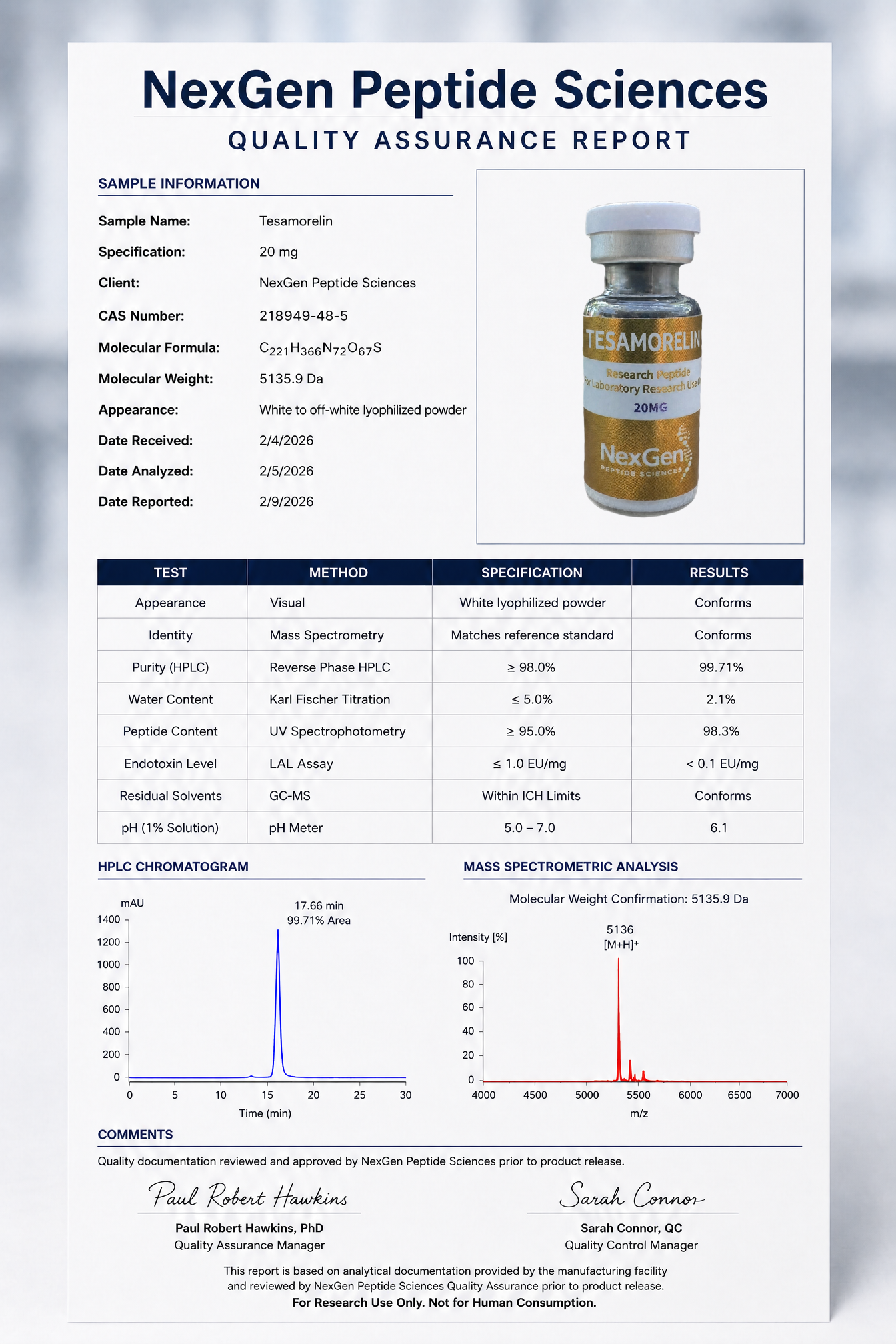 Image 2 of 2
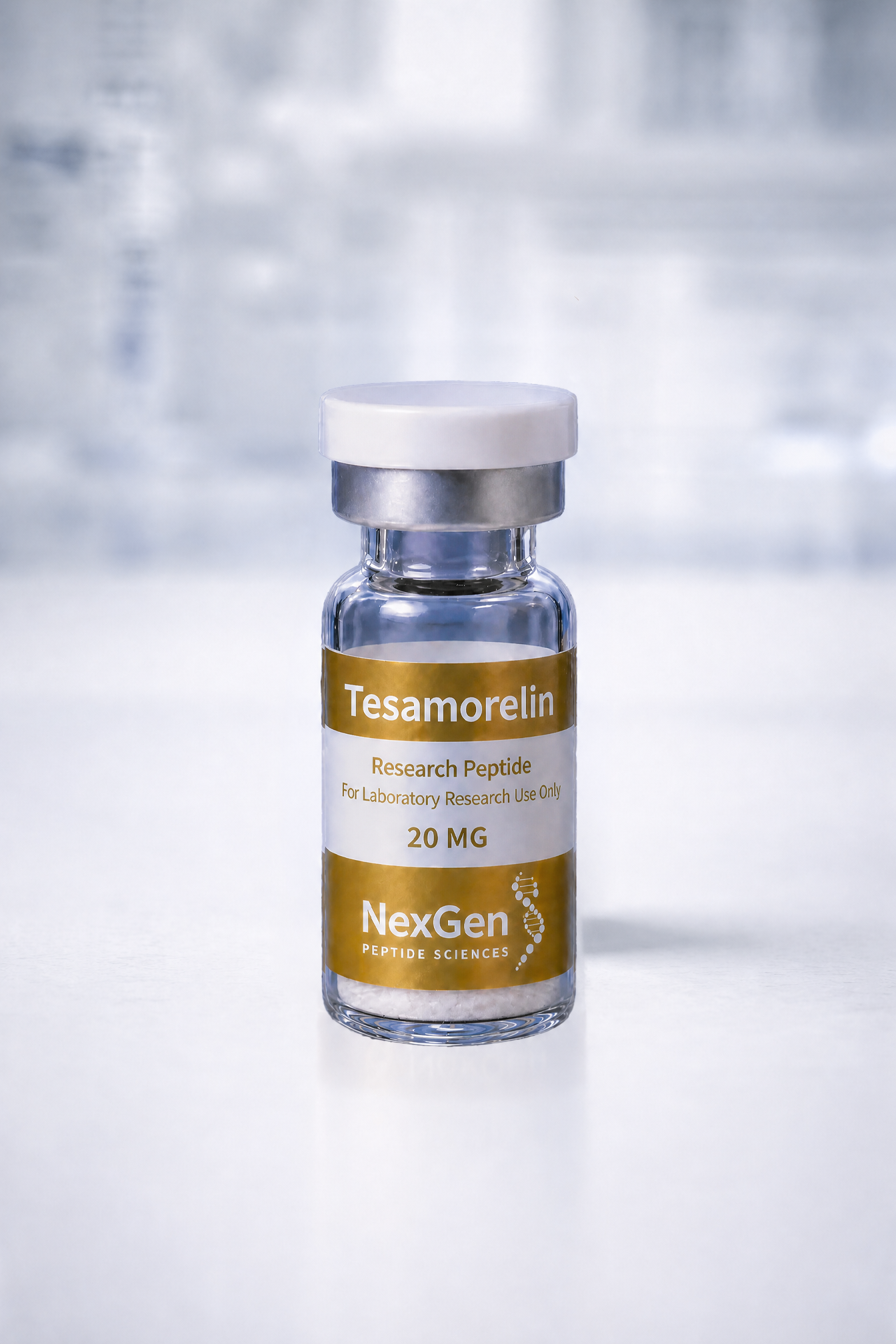
Tesamorelin 20 MG
⭐ ⭐ ⭐ ⭐ ⭐ 5.0 /290 Based on verified feedback
1. Molecular Structure & Pharmacokinetics
Tesamorelin is a synthetic 44-amino acid peptide modeled exactly after endogenous human Growth Hormone-Releasing Hormone (GHRH).
The Structural Modification: A trans-3-hexenoic acid group is chemically attached to the N-terminal tyrosine residue.
The Purpose: Natural GHRH is broken down by the enzyme dipeptidyl peptidase-4 (DPP-4) within minutes. This modification blocks enzymatic cleavage, granting Tesamorelin a much longer half-lifeand making it highly effective for therapeutic use.
2. 🎯 How Tesamorelin Burns Fat: The Lipolytic Cascade
To explain exactly how it burns fat to your class, map out this clear 4-step biological cascade:
[Tesamorelin Injection]
       │
       ▼
[Binds to GHRH Receptors in Anterior Pituitary]
       │
       ▼
[Pulsatile Release of Endogenous Growth Hormone (GH)]
       │
       ▼
[Activation of Hormone-Sensitive Lipase (HSL)] ──► [Triggers Lipolysis]
Step 1: Physiological Pituitary Stimulation
Unlike taking raw, synthetic Human Growth Hormone (HGH), which overrides and shuts down your body's natural endocrine loop, Tesamorelin binds to GHRH receptors on the somatotroph cells of the pituitary gland. It prompts your body to release its own stored growth hormone in a natural, pulsatile manner.
Step 2: Receptor Binding & Enzyme Activation
The newly released growth hormone circulates through the bloodstream and binds to specific GH receptors located directly on the surface of fat cells (adipocytes). This binding activates an internal cellular messenger called adenylate cyclase, which increases levels of Cyclic AMP (cAMP).
Step 3: Triggering Hormone-Sensitive Lipase (HSL)
The rise in cAMP activates Hormone-Sensitive Lipase (HSL), the primary "gatekeeper" enzyme for fat burning. Active HSL immediately breaks down stored triglycerides (the form fat takes inside cells) into free fatty acids and glycerol, freeing them from the fat cell.
Step 4: Fatty Acid Oxidation
These newly freed fatty acids are released into circulation, where skeletal muscles and other tissues absorb and burn them for energy via beta-oxidation.
3. 🔥 Key Point: Why It Targets Deep Belly Fat (Visceral vs. Subcutaneous)
Your class will find its extreme selectivity fascinating. Tesamorelin does not significantly burn "pinchable" subcutaneous fat (the fat directly under the skin). Instead, it selectively targets Visceral Adipose Tissue (VAT)—the deep, dangerous fat packed around internal organs like the liver, heart, and intestines.
Higher Receptor Density: Visceral fat cells have a much higher concentration of Growth Hormone receptors compared to subcutaneous fat cells.
Blunting the Anti-Lipolytic Receptors: Visceral fat has fewer \(\alpha _{2}\)-adrenergic receptors (which normally prevent fat burning). This makes visceral fat highly sensitive to the fat-burning signals triggered by Tesamorelin.
4. 📊 Clinical Trial Data & Efficacy
The 15% Standard: In landmark, 26-week double-blind Phase III clinical trials, a 2mg daily dose of Tesamorelin reduced visceral fat by an average of 15% to 18%.
Liver Fat Reductions: Separate clinical data showed that by inducing lipolysis in visceral areas, it simultaneously cleared out hepatic fat (liver fat) by a relative 40%, drastically reversing signs of fatty liver disease.
The "Muscle-Sparing" Benefit: Unlike traditional calorie-restricted diets or GLP-1 medications (like semaglutide) where patients lose muscle along with fat, Tesamorelin preserves or increases lean muscle mass due to downstream IGF-1 elevation.
5. ⚠️ Clinical Drawbacks & Metabolic Nuance
To maintain objective scientific accuracy for your presentation, include these clinical safety notes:
The "Rebound" Effect: Clinical trials showed that if a patient stops taking Tesamorelin, visceral fat levels typically return to baseline within several months if lifestyle interventions (diet/exercise) are not maintained.
Glucose Monitoring: Because Growth Hormone naturally opposes insulin action, a small percentage of patients can experience increased fasting blood glucose or mild insulin resistance during therapy.
Product Details
• Compound: Tesamorelin
• Quantity: 20 mg
• Form: Lyophilized Powder
• Purity: ≥99% (if applicable)
• Storage: Store in a controlled laboratory environment, protected from light and moisture
Research Use Only
All products supplied by Nexgen Peptide Sciences are intended strictly for laboratory research use. They are not drugs, dietary supplements, food, cosmetics, not intended to diagnose, treat, cure, or prevent any disease or veterinary products, and are not for human or animal consumption.
Regulatory Status
Nexgen Peptide Sciences is a chemical supplier. NexGen Peptide Sciences is not a compounding pharmacy or chemical compounding facility as defined under Section 503A of the Federal Food, Drug, and Cosmetic Act, and is not an outsourcing facility as defined under Section 503B of that Act.
Intended Use and Handling
The products we offer are not intended for human use. They are intended for in-vitro and pre-clinical research purposes only. The customer acknowledges that risks exist in the handling, use, and distribution of these products, and certifies that it has the proper equipment, facilities, and personnel to manage those risks, and knowingly accepts them. These chemicals are not intended to be used, and should not be used, in inappropriate applications — including, without limitation, as food additives, drugs, cosmetics, or household chemicals, or in any application outside of in-vitro laboratory research, pre-clinical research, or laboratory chemical synthesis and materials testing.
Customer Responsibility
By purchasing these products, the customer agrees to the above. In the event the customer uses, or causes others to use, these products outside of these restrictions, the customer accepts all risk of doing so, absolves Nexgen Peptide Sciences of any responsibility for such actions, and agrees to indemnify and hold Nexgen Peptide Sciences harmless against any third-party claims arising from them.
This product is in powder form and is not reconstituted. All materials sold on this site are for laboratory research purposes only and are subject to our Terms and Conditions.
By purchasing, the buyer confirms this product will be used strictly for laboratory research purposes.
⭐ ⭐ ⭐ ⭐ ⭐ 5.0 /290 Based on verified feedback
1. Molecular Structure & Pharmacokinetics
Tesamorelin is a synthetic 44-amino acid peptide modeled exactly after endogenous human Growth Hormone-Releasing Hormone (GHRH).
The Structural Modification: A trans-3-hexenoic acid group is chemically attached to the N-terminal tyrosine residue.
The Purpose: Natural GHRH is broken down by the enzyme dipeptidyl peptidase-4 (DPP-4) within minutes. This modification blocks enzymatic cleavage, granting Tesamorelin a much longer half-lifeand making it highly effective for therapeutic use.
2. 🎯 How Tesamorelin Burns Fat: The Lipolytic Cascade
To explain exactly how it burns fat to your class, map out this clear 4-step biological cascade:
[Tesamorelin Injection]
       │
       ▼
[Binds to GHRH Receptors in Anterior Pituitary]
       │
       ▼
[Pulsatile Release of Endogenous Growth Hormone (GH)]
       │
       ▼
[Activation of Hormone-Sensitive Lipase (HSL)] ──► [Triggers Lipolysis]
Step 1: Physiological Pituitary Stimulation
Unlike taking raw, synthetic Human Growth Hormone (HGH), which overrides and shuts down your body's natural endocrine loop, Tesamorelin binds to GHRH receptors on the somatotroph cells of the pituitary gland. It prompts your body to release its own stored growth hormone in a natural, pulsatile manner.
Step 2: Receptor Binding & Enzyme Activation
The newly released growth hormone circulates through the bloodstream and binds to specific GH receptors located directly on the surface of fat cells (adipocytes). This binding activates an internal cellular messenger called adenylate cyclase, which increases levels of Cyclic AMP (cAMP).
Step 3: Triggering Hormone-Sensitive Lipase (HSL)
The rise in cAMP activates Hormone-Sensitive Lipase (HSL), the primary "gatekeeper" enzyme for fat burning. Active HSL immediately breaks down stored triglycerides (the form fat takes inside cells) into free fatty acids and glycerol, freeing them from the fat cell.
Step 4: Fatty Acid Oxidation
These newly freed fatty acids are released into circulation, where skeletal muscles and other tissues absorb and burn them for energy via beta-oxidation.
3. 🔥 Key Point: Why It Targets Deep Belly Fat (Visceral vs. Subcutaneous)
Your class will find its extreme selectivity fascinating. Tesamorelin does not significantly burn "pinchable" subcutaneous fat (the fat directly under the skin). Instead, it selectively targets Visceral Adipose Tissue (VAT)—the deep, dangerous fat packed around internal organs like the liver, heart, and intestines.
Higher Receptor Density: Visceral fat cells have a much higher concentration of Growth Hormone receptors compared to subcutaneous fat cells.
Blunting the Anti-Lipolytic Receptors: Visceral fat has fewer \(\alpha _{2}\)-adrenergic receptors (which normally prevent fat burning). This makes visceral fat highly sensitive to the fat-burning signals triggered by Tesamorelin.
4. 📊 Clinical Trial Data & Efficacy
The 15% Standard: In landmark, 26-week double-blind Phase III clinical trials, a 2mg daily dose of Tesamorelin reduced visceral fat by an average of 15% to 18%.
Liver Fat Reductions: Separate clinical data showed that by inducing lipolysis in visceral areas, it simultaneously cleared out hepatic fat (liver fat) by a relative 40%, drastically reversing signs of fatty liver disease.
The "Muscle-Sparing" Benefit: Unlike traditional calorie-restricted diets or GLP-1 medications (like semaglutide) where patients lose muscle along with fat, Tesamorelin preserves or increases lean muscle mass due to downstream IGF-1 elevation.
5. ⚠️ Clinical Drawbacks & Metabolic Nuance
To maintain objective scientific accuracy for your presentation, include these clinical safety notes:
The "Rebound" Effect: Clinical trials showed that if a patient stops taking Tesamorelin, visceral fat levels typically return to baseline within several months if lifestyle interventions (diet/exercise) are not maintained.
Glucose Monitoring: Because Growth Hormone naturally opposes insulin action, a small percentage of patients can experience increased fasting blood glucose or mild insulin resistance during therapy.
Product Details
• Compound: Tesamorelin
• Quantity: 20 mg
• Form: Lyophilized Powder
• Purity: ≥99% (if applicable)
• Storage: Store in a controlled laboratory environment, protected from light and moisture
Research Use Only
All products supplied by Nexgen Peptide Sciences are intended strictly for laboratory research use. They are not drugs, dietary supplements, food, cosmetics, not intended to diagnose, treat, cure, or prevent any disease or veterinary products, and are not for human or animal consumption.
Regulatory Status
Nexgen Peptide Sciences is a chemical supplier. NexGen Peptide Sciences is not a compounding pharmacy or chemical compounding facility as defined under Section 503A of the Federal Food, Drug, and Cosmetic Act, and is not an outsourcing facility as defined under Section 503B of that Act.
Intended Use and Handling
The products we offer are not intended for human use. They are intended for in-vitro and pre-clinical research purposes only. The customer acknowledges that risks exist in the handling, use, and distribution of these products, and certifies that it has the proper equipment, facilities, and personnel to manage those risks, and knowingly accepts them. These chemicals are not intended to be used, and should not be used, in inappropriate applications — including, without limitation, as food additives, drugs, cosmetics, or household chemicals, or in any application outside of in-vitro laboratory research, pre-clinical research, or laboratory chemical synthesis and materials testing.
Customer Responsibility
By purchasing these products, the customer agrees to the above. In the event the customer uses, or causes others to use, these products outside of these restrictions, the customer accepts all risk of doing so, absolves Nexgen Peptide Sciences of any responsibility for such actions, and agrees to indemnify and hold Nexgen Peptide Sciences harmless against any third-party claims arising from them.
This product is in powder form and is not reconstituted. All materials sold on this site are for laboratory research purposes only and are subject to our Terms and Conditions.
By purchasing, the buyer confirms this product will be used strictly for laboratory research purposes.