 Image 1 of 2
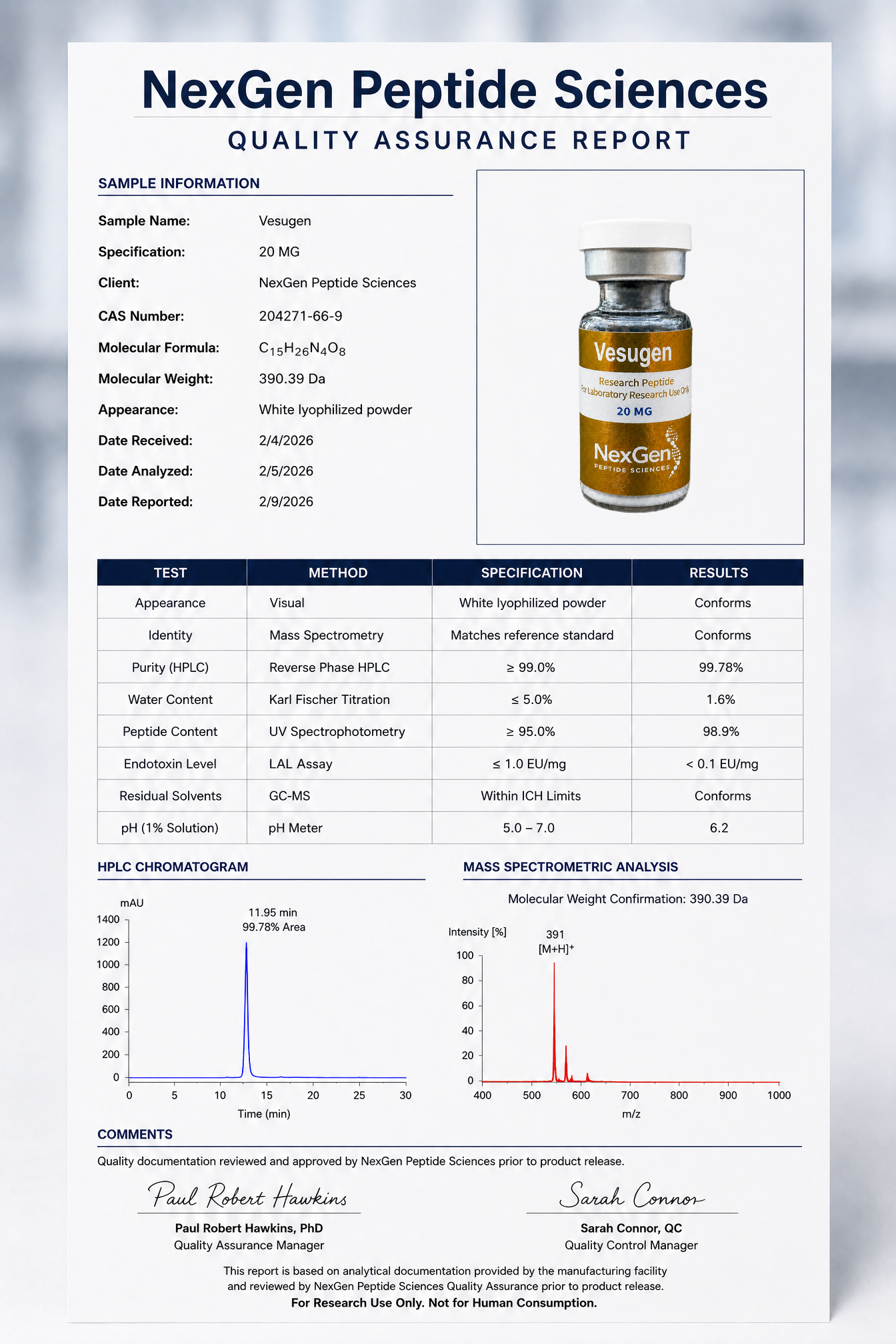 Image 2 of 2
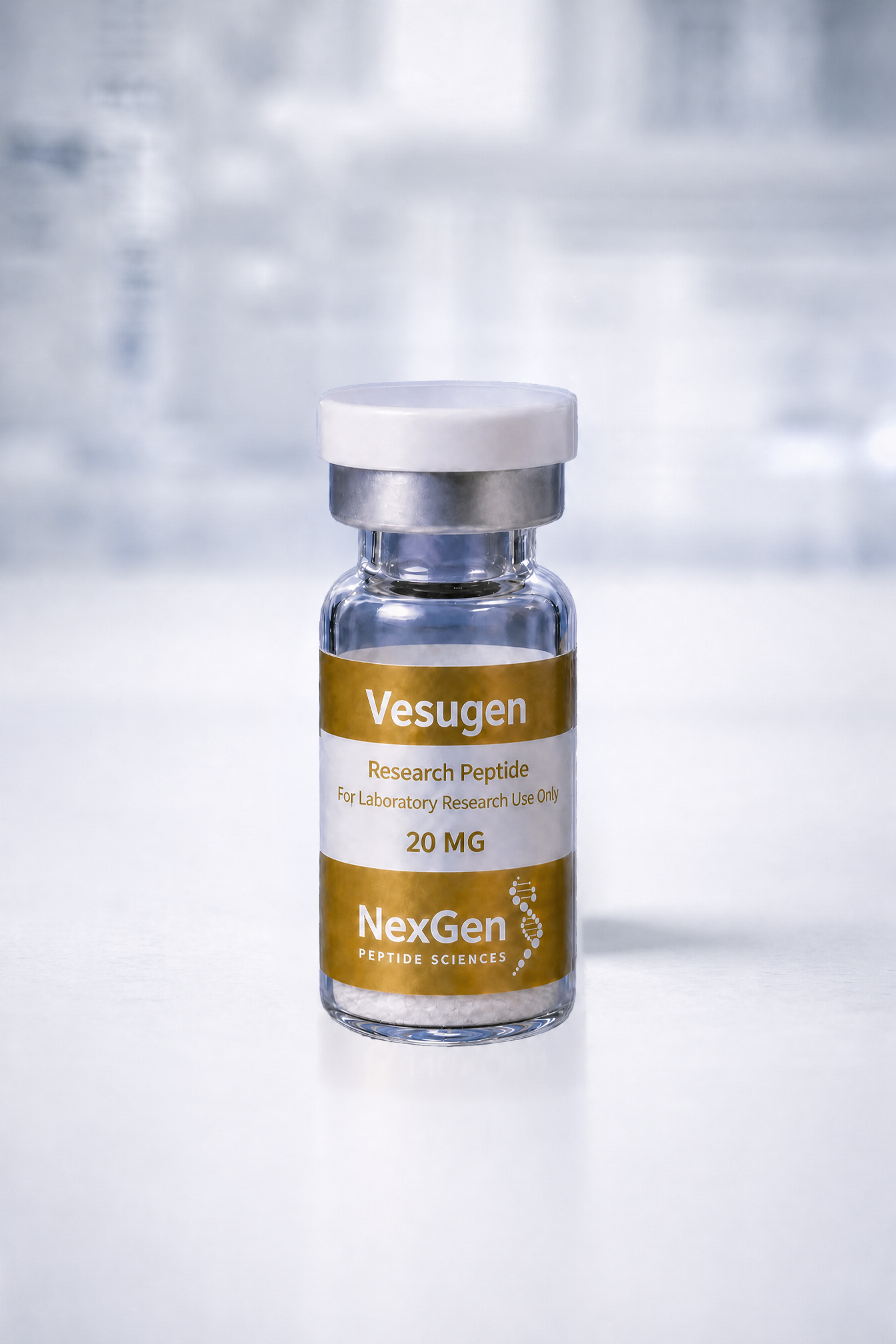
Vesugen 20 MG
⭐ ⭐ ⭐ ⭐ ⭐ 4.9/7 Based on verified feedback
Vesugen is a synthetic peptide bioregulator with the amino acid sequence Lys-Glu-Asp (KED). Developed by the Khavinson group at the St. Petersburg Institute of Bioregulation and Gerontology, it is primarily studied for its potential vascular, neurological, and anti-aging properties.
Core Characteristics and Benefits
Vascular Support: Research suggests Vesugen may interact with vascular endothelial cells, promoting blood vessel integrity and aiding in the study of atherosclerosis.
Neurological Function: Studies have explored its impact on the central nervous system, where it may support neuron survival, memory function, and neuroplasticity.
Cellular Aging: Classified as a geroprotective compound, it is investigated for its ability to modulate specific genes and slow down age-associated cellular decline.
Vesugen is a peptide bioregulator derived from animal aorta tissues. It is part of the broader family of peptide-based bioregulators that aim to improve cardiovascular health, especially in aging populations.
Vesugen is designed to support and restore the normal function of the vascular system by influencing the repair and regeneration of endothelial cells, which line the blood vessels.
By promoting vascular health, Vesugen has potential applications in treating or preventing cardiovascular diseases, improving blood circulation, and reducing the risk of conditions like atherosclerosis, hypertension, and stroke.
Most Common Uses
Vesugen is primarily investigated for its role in supporting cardiovascular health and combating age-related vascular decline. One of its primary purported uses is the normalization of blood vessel function. The peptide is also often associated with improving blood circulation and flow, a benefit that is consistently mentioned across various sources, indicating a key area of interest in its application. It’s also thought to support the health and strength of endothelial cells, which line the blood vessels and are essential for proper vascular function.
Vascular-Related Conditions
Furthermore, Vesugen is suggested to be potentially beneficial for a range of conditions related to vascular health. These include atherosclerosis, a condition characterized by the buildup of plaque in the arteries; coronary heart disease, involving the narrowing or blockage of the heart’s arteries; hypertension, or high blood pressure; hypertonia, another term for high blood pressure; encephalopathy, a general term for brain disease, damage, or malfunction; vegetative-vascular dystonia, a condition involving the autonomic nervous system; hypercholesterolemia, characterized by high levels of cholesterol in the blood; and varicose veins, which are enlarged and twisted veins.
Blood Flow, Oxygenation, and Vascular Repair
Beyond these specific conditions, Vesugen has been described as having the potential to enhance blood flow, repair leaky blood vessels, decrease edema (swelling caused by excess fluid), reduce hypoxia (lack of oxygen), and even support the blood-brain barrier, which protects the brain from harmful substances. Research has also investigated its use in the treatment of lower limbs chronic arterial insufficiency in older adults, indicating a specific area of clinical study. Additionally, Vesugen has been explored for its effectiveness in treating vasculogenic erectile dysfunction, which can be a manifestation of atherosclerosis, highlighting another targeted clinical application.
Anti-Aging and Geroprotective Effects
Another significant area of interest in Vesugen research is its potential role in anti-aging and geroprotection. Studies have suggested that it may slow the rate of aging based on biological age indicators, which are measurable markers that reflect an individual’s physiological age. Its geroprotective effect has been particularly noted in patients with organic brain syndrome, suggesting a potential benefit for this specific population in mitigating age-related decline.
Cellular and Metabolic Support
Research further suggests that Vesugen may influence cellular processes associated with both cellular aging and metabolism, indicating a broader impact beyond just vascular function. This influence may extend to potentially impacting lipid and glucose metabolism, suggesting a role in maintaining metabolic health. Additionally, Vesugen has been speculated to contribute to the maintenance of the extracellular matrix (ECM), the structural framework of tissues, which is important for tissue regeneration and repair. Its potential to support the recovery of vascular tissues following injury or degeneration also points to a role in regenerative processes.
Cardiac and Cognitive Function
Moreover, it has been associated with decreasing cardiac arrhythmia and angina attacks in individuals with coronary heart disease, as well as normalizing blood pressure in patients with hypertension. In specific populations, such as individuals working in harmful conditions, Vesugen has been suggested to improve memory, attention, thinking, perceptual motor reactions, and mental capacity, potentially reducing the degree of aging.
Therapeutic Potential
The multitude of these purported uses, particularly those related to improving blood flow and vascular health, suggests that this is a primary area of focus for Vesugen’s application. The connection to aging may arise from the well-established link between age-related decline in vascular function and overall health. It is plausible that compromised blood circulation, whether due to aging or disease, leads to peptide deficiencies and impaired protein synthesis in blood vessels, creating an environment where Vesugen could potentially play a role in normalizing function and restoring these essential processes.
Vascular Effects
Vesugen is often linked to improved blood flow, which plays a role in many of its reported benefits. It may also help repair leaky blood vessels, which can ease swelling and support overall tissue health. Strengthening vascular function in this way may also reduce issues like edema and low oxygen levels in tissue. Some sources suggest Vesugen helps maintain the blood-brain barrier, which acts as a protective filter for the brain.
Research has shown that Vesugen promotes nitric oxide (NO)-dependent relaxation and prostaglandin I2 (PGI2)-IP-mediated vasorelaxation, both processes that help widen blood vessels and support better circulation. It’s also been observed to influence the production of several proteins in the endothelium, such as SIRT1, endothelin-1, connexin, Ki67, Cx43, VEGF, and p53. These proteins are tied to vascular health, aging, and conditions like atherosclerosis and restenosis.
Cellular Effects
At the cellular level, Vesugen has been found to stimulate the proliferation of both immune and stem cells, suggesting a role in tissue repair and immune system modulation. In T helper cells, which are part of the immune system, it increases the expression of Ki-67, a marker linked to cell growth. In studies focused on accelerated aging, Vesugen helped restore cell structure and boosted their ability to multiply. There’s also evidence it can protect lab-grown neurons from aging-related changes and promote dendritogenesis, or the growth of neuron branches, hinting at possible neuroprotective effects.
It may influence how vascular cells behave by activating pathways tied to repair and maintenance, and it’s thought to affect nitric oxide (NO) production, important for healthy blood vessel function. Vesugen might also encourage cellular renewal by impacting how stem cells grow and specialize, helping support tissue-specific healing. Some findings suggest it could help preserve mitochondrial health and play a part in regulating metabolism at the cellular level. Overall, it appears to affect cell behavior through changes in gene activity, protein production, and how cells communicate within vascular and connective tissues.
Product Details:
• Compound: Vesugen
• Quantity: 20 mg
• Form: Lyophilized Powder
• Purity: ≥99% (if applicable)
• Storage: Store in a controlled laboratory environment, protected from light and moisture
Research Use Only
All products supplied by Nexgen Peptide Sciences are intended strictly for laboratory research use. They are not drugs, dietary supplements, food, cosmetics, not intended to diagnose, treat, cure, or prevent any disease or veterinary products, and are not for human or animal consumption.
Regulatory Status
Nexgen Peptide Sciences is a chemical supplier. NexGen Peptide Sciences is not a compounding pharmacy or chemical compounding facility as defined under Section 503A of the Federal Food, Drug, and Cosmetic Act, and is not an outsourcing facility as defined under Section 503B of that Act.
Intended Use and Handling
The products we offer are not intended for human use. They are intended for in-vitro and pre-clinical research purposes only. The customer acknowledges that risks exist in the handling, use, and distribution of these products, and certifies that it has the proper equipment, facilities, and personnel to manage those risks, and knowingly accepts them. These chemicals are not intended to be used, and should not be used, in inappropriate applications — including, without limitation, as food additives, drugs, cosmetics, or household chemicals, or in any application outside of in-vitro laboratory research, pre-clinical research, or laboratory chemical synthesis and materials testing.
Customer Responsibility
By purchasing these products, the customer agrees to the above. In the event the customer uses, or causes others to use, these products outside of these restrictions, the customer accepts all risk of doing so, absolves Nexgen Peptide Sciences of any responsibility for such actions, and agrees to indemnify and hold Nexgen Peptide Sciences harmless against any third-party claims arising from them..
This product is in powder form and is not reconstituted. All materials sold on this site are for laboratory research purposes only and are subject to our Terms and Conditions.
By purchasing, the buyer confirms this product will be used strictly for laboratory research purposes.
⭐ ⭐ ⭐ ⭐ ⭐ 4.9/7 Based on verified feedback
Vesugen is a synthetic peptide bioregulator with the amino acid sequence Lys-Glu-Asp (KED). Developed by the Khavinson group at the St. Petersburg Institute of Bioregulation and Gerontology, it is primarily studied for its potential vascular, neurological, and anti-aging properties.
Core Characteristics and Benefits
Vascular Support: Research suggests Vesugen may interact with vascular endothelial cells, promoting blood vessel integrity and aiding in the study of atherosclerosis.
Neurological Function: Studies have explored its impact on the central nervous system, where it may support neuron survival, memory function, and neuroplasticity.
Cellular Aging: Classified as a geroprotective compound, it is investigated for its ability to modulate specific genes and slow down age-associated cellular decline.
Vesugen is a peptide bioregulator derived from animal aorta tissues. It is part of the broader family of peptide-based bioregulators that aim to improve cardiovascular health, especially in aging populations.
Vesugen is designed to support and restore the normal function of the vascular system by influencing the repair and regeneration of endothelial cells, which line the blood vessels.
By promoting vascular health, Vesugen has potential applications in treating or preventing cardiovascular diseases, improving blood circulation, and reducing the risk of conditions like atherosclerosis, hypertension, and stroke.
Most Common Uses
Vesugen is primarily investigated for its role in supporting cardiovascular health and combating age-related vascular decline. One of its primary purported uses is the normalization of blood vessel function. The peptide is also often associated with improving blood circulation and flow, a benefit that is consistently mentioned across various sources, indicating a key area of interest in its application. It’s also thought to support the health and strength of endothelial cells, which line the blood vessels and are essential for proper vascular function.
Vascular-Related Conditions
Furthermore, Vesugen is suggested to be potentially beneficial for a range of conditions related to vascular health. These include atherosclerosis, a condition characterized by the buildup of plaque in the arteries; coronary heart disease, involving the narrowing or blockage of the heart’s arteries; hypertension, or high blood pressure; hypertonia, another term for high blood pressure; encephalopathy, a general term for brain disease, damage, or malfunction; vegetative-vascular dystonia, a condition involving the autonomic nervous system; hypercholesterolemia, characterized by high levels of cholesterol in the blood; and varicose veins, which are enlarged and twisted veins.
Blood Flow, Oxygenation, and Vascular Repair
Beyond these specific conditions, Vesugen has been described as having the potential to enhance blood flow, repair leaky blood vessels, decrease edema (swelling caused by excess fluid), reduce hypoxia (lack of oxygen), and even support the blood-brain barrier, which protects the brain from harmful substances. Research has also investigated its use in the treatment of lower limbs chronic arterial insufficiency in older adults, indicating a specific area of clinical study. Additionally, Vesugen has been explored for its effectiveness in treating vasculogenic erectile dysfunction, which can be a manifestation of atherosclerosis, highlighting another targeted clinical application.
Anti-Aging and Geroprotective Effects
Another significant area of interest in Vesugen research is its potential role in anti-aging and geroprotection. Studies have suggested that it may slow the rate of aging based on biological age indicators, which are measurable markers that reflect an individual’s physiological age. Its geroprotective effect has been particularly noted in patients with organic brain syndrome, suggesting a potential benefit for this specific population in mitigating age-related decline.
Cellular and Metabolic Support
Research further suggests that Vesugen may influence cellular processes associated with both cellular aging and metabolism, indicating a broader impact beyond just vascular function. This influence may extend to potentially impacting lipid and glucose metabolism, suggesting a role in maintaining metabolic health. Additionally, Vesugen has been speculated to contribute to the maintenance of the extracellular matrix (ECM), the structural framework of tissues, which is important for tissue regeneration and repair. Its potential to support the recovery of vascular tissues following injury or degeneration also points to a role in regenerative processes.
Cardiac and Cognitive Function
Moreover, it has been associated with decreasing cardiac arrhythmia and angina attacks in individuals with coronary heart disease, as well as normalizing blood pressure in patients with hypertension. In specific populations, such as individuals working in harmful conditions, Vesugen has been suggested to improve memory, attention, thinking, perceptual motor reactions, and mental capacity, potentially reducing the degree of aging.
Therapeutic Potential
The multitude of these purported uses, particularly those related to improving blood flow and vascular health, suggests that this is a primary area of focus for Vesugen’s application. The connection to aging may arise from the well-established link between age-related decline in vascular function and overall health. It is plausible that compromised blood circulation, whether due to aging or disease, leads to peptide deficiencies and impaired protein synthesis in blood vessels, creating an environment where Vesugen could potentially play a role in normalizing function and restoring these essential processes.
Vascular Effects
Vesugen is often linked to improved blood flow, which plays a role in many of its reported benefits. It may also help repair leaky blood vessels, which can ease swelling and support overall tissue health. Strengthening vascular function in this way may also reduce issues like edema and low oxygen levels in tissue. Some sources suggest Vesugen helps maintain the blood-brain barrier, which acts as a protective filter for the brain.
Research has shown that Vesugen promotes nitric oxide (NO)-dependent relaxation and prostaglandin I2 (PGI2)-IP-mediated vasorelaxation, both processes that help widen blood vessels and support better circulation. It’s also been observed to influence the production of several proteins in the endothelium, such as SIRT1, endothelin-1, connexin, Ki67, Cx43, VEGF, and p53. These proteins are tied to vascular health, aging, and conditions like atherosclerosis and restenosis.
Cellular Effects
At the cellular level, Vesugen has been found to stimulate the proliferation of both immune and stem cells, suggesting a role in tissue repair and immune system modulation. In T helper cells, which are part of the immune system, it increases the expression of Ki-67, a marker linked to cell growth. In studies focused on accelerated aging, Vesugen helped restore cell structure and boosted their ability to multiply. There’s also evidence it can protect lab-grown neurons from aging-related changes and promote dendritogenesis, or the growth of neuron branches, hinting at possible neuroprotective effects.
It may influence how vascular cells behave by activating pathways tied to repair and maintenance, and it’s thought to affect nitric oxide (NO) production, important for healthy blood vessel function. Vesugen might also encourage cellular renewal by impacting how stem cells grow and specialize, helping support tissue-specific healing. Some findings suggest it could help preserve mitochondrial health and play a part in regulating metabolism at the cellular level. Overall, it appears to affect cell behavior through changes in gene activity, protein production, and how cells communicate within vascular and connective tissues.
Product Details:
• Compound: Vesugen
• Quantity: 20 mg
• Form: Lyophilized Powder
• Purity: ≥99% (if applicable)
• Storage: Store in a controlled laboratory environment, protected from light and moisture
Research Use Only
All products supplied by Nexgen Peptide Sciences are intended strictly for laboratory research use. They are not drugs, dietary supplements, food, cosmetics, not intended to diagnose, treat, cure, or prevent any disease or veterinary products, and are not for human or animal consumption.
Regulatory Status
Nexgen Peptide Sciences is a chemical supplier. NexGen Peptide Sciences is not a compounding pharmacy or chemical compounding facility as defined under Section 503A of the Federal Food, Drug, and Cosmetic Act, and is not an outsourcing facility as defined under Section 503B of that Act.
Intended Use and Handling
The products we offer are not intended for human use. They are intended for in-vitro and pre-clinical research purposes only. The customer acknowledges that risks exist in the handling, use, and distribution of these products, and certifies that it has the proper equipment, facilities, and personnel to manage those risks, and knowingly accepts them. These chemicals are not intended to be used, and should not be used, in inappropriate applications — including, without limitation, as food additives, drugs, cosmetics, or household chemicals, or in any application outside of in-vitro laboratory research, pre-clinical research, or laboratory chemical synthesis and materials testing.
Customer Responsibility
By purchasing these products, the customer agrees to the above. In the event the customer uses, or causes others to use, these products outside of these restrictions, the customer accepts all risk of doing so, absolves Nexgen Peptide Sciences of any responsibility for such actions, and agrees to indemnify and hold Nexgen Peptide Sciences harmless against any third-party claims arising from them..
This product is in powder form and is not reconstituted. All materials sold on this site are for laboratory research purposes only and are subject to our Terms and Conditions.
By purchasing, the buyer confirms this product will be used strictly for laboratory research purposes.